
Wage boost comes for child-care workers
Advertisement
Read this article for free:
or
Already have an account? Log in here »
We need your support!
Local journalism needs your support!
As we navigate through unprecedented times, our journalists are working harder than ever to bring you the latest local updates to keep you safe and informed.
Now, more than ever, we need your support.
Starting at $15.99 plus taxes every four weeks you can access your Brandon Sun online and full access to all content as it appears on our website.
Subscribe Nowor call circulation directly at (204) 727-0527.
Your pledge helps to ensure we provide the news that matters most to your community!
To continue reading, please subscribe:
Add Brandon Sun access to your Free Press subscription for only an additional
$1 for the first 4 weeks*
- Enjoy unlimited reading on brandonsun.com
- Read the Brandon Sun E-Edition, our digital replica newspaper
*Your next Free Press subscription payment will increase by $1.00 and you will be charged $20.95 plus GST for four weeks. After four weeks, your payment will increase to $24.95 plus GST every four weeks.
Read unlimited articles for free today:
or
Already have an account? Log in here »
Hey there, time traveller!
This article was published 28/04/2023 (1250 days ago), so information in it may no longer be current.
WINNIPEG — Early childhood educators in Manitoba can expect to earn more money as of July.
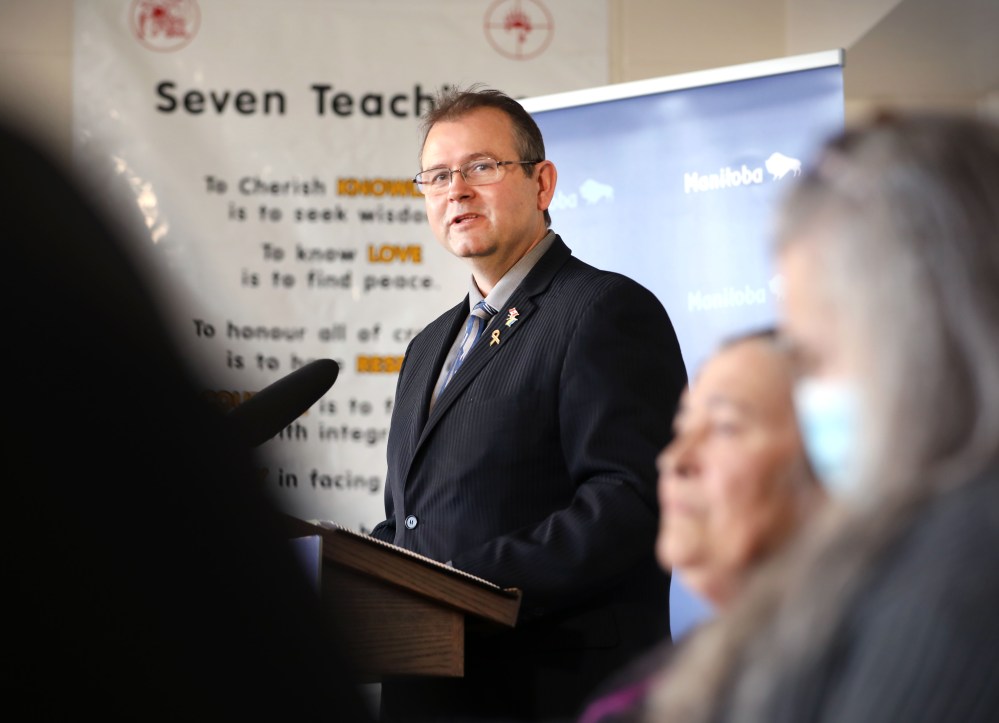
The federal government is putting up $52.8 million, while the province will pony up $3.3 million, to boost traditionally low salaries paid in the sector, to attract and retain staff, said Wayne Ewasko, Manitoba’s minister for early childhood learning.
“A lot of people, whether they are a child-care assistant or an [early childhood educator], they are getting into it because they love kids. But that’s not enough; not anymore,” he said at a news conference in Winnipeg.
Eligible child-care facilities will receive the new funding through operating grants.
The money will become available July 1 and build on a 12 per cent increase announced last year. In total, the province has promised raises worth 18 per cent over two years.
The announcement was met with positivity from Kirk Carr, president of the Brandon and District Labour Council.
“It’s great, these workers deserve every penny and more,” he said.
And while Brandon daycare executive director Lorraine McConnell was also pleased by the announcement, she said the details are still a little hazy, noting it’s unclear how the funding will be dispersed and delivered.
The province released a wage grid last year to establish salary guidelines for the various levels of early learning and child care professionals.
Ewasko did not have an updated version of the grid available Thursday.
Based on the previous guidelines, an entry-level early childhood educator who made $19.53 per hour last year could see their wage increase to $20.70 per hour with the additional funding.
Most facilities are responsible for setting their own wages, so the pay scale is not guaranteed.
“What we would want to see for early childhood educators would come in much higher than than that,” said Jodie Kehl, executive director of the Manitoba Child Care Association.
“There have been good investments in the last 22 months … but we need to do more. I would anticipate we will be seeing more details in terms of what this means in terms of the wage grid in the coming days.”
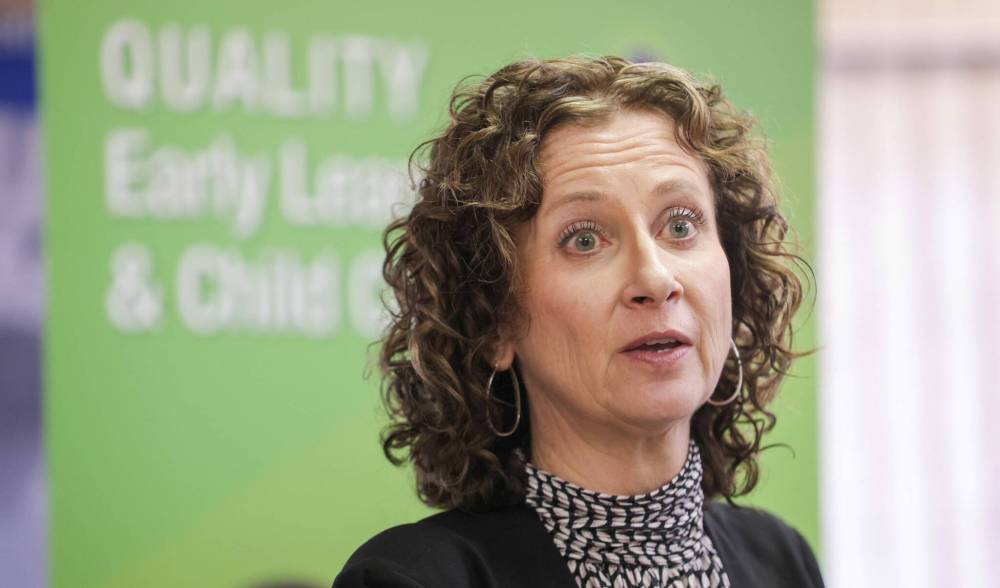
Jodie Kehl is the executive director of the Manitoba Child Care Association. (Winnipeg Free Press)
The association wants early child-care educators to earn at least $25 per hour, something Families Minister Rochelle Squires promised in 2021 when Manitoba signed a five-year, $1.2-billion agreement with the federal government.
“Every early childhood educator in the province of Manitoba has not forgotten that number,” Kehl said.
Ewasko said the province intends to hire a consultant to liaise with child-care providers and explore the potential of further raises and sector enhancements.
“I think we know what early childhood educators would say,” Kehl said. “We know what the market is saying right now. We know what we need to pay our early childhood educators to ensure we are not losing them to other industries.”
The province has about 1,100 child-care centres and has set a goal of 23,000 new spaces by March 31, 2026.
To meet that target, it must recruit 3,000 new workers, Ewasko said.
The province is taking steps, but there is a long way to go, Kehl said.
» Winnipeg Free Press, with files from The Brandon Sun