
Council approves tax hike on local hotels
Advertisement
Read this article for free:
or
Already have an account? Log in here »
We need your support!
Local journalism needs your support!
As we navigate through unprecedented times, our journalists are working harder than ever to bring you the latest local updates to keep you safe and informed.
Now, more than ever, we need your support.
Starting at $15.99 plus taxes every four weeks you can access your Brandon Sun online and full access to all content as it appears on our website.
Subscribe Nowor call circulation directly at (204) 727-0527.
Your pledge helps to ensure we provide the news that matters most to your community!
To continue reading, please subscribe:
Add Brandon Sun access to your Free Press subscription for only an additional
$1 for the first 4 weeks*
- Enjoy unlimited reading on brandonsun.com
- Read the Brandon Sun E-Edition, our digital replica newspaper
*Your next Free Press subscription payment will increase by $1.00 and you will be charged $20.95 plus GST for four weeks. After four weeks, your payment will increase to $24.95 plus GST every four weeks.
Read unlimited articles for free today:
or
Already have an account? Log in here »
Hey there, time traveller!
This article was published 03/05/2023 (1238 days ago), so information in it may no longer be current.
A representative of Manitoba’s hotel industry was unable to dissuade Brandon City Council from raising the city’s accommodation tax Monday evening.
The tax has charged those staying at Brandon hotels and motels $3 a night since it was introduced in 2012, but it will now be raised to a five per cent levy effective July 1.
The fee was first introduced to raise funds for capital improvements to the Keystone Centre and to attract larger events to the city to generate more stays at local accommodations. Not covered by the tax are short-term rentals facilitated through companies like Airbnb, though councillors discussed closing that loophole later this year.
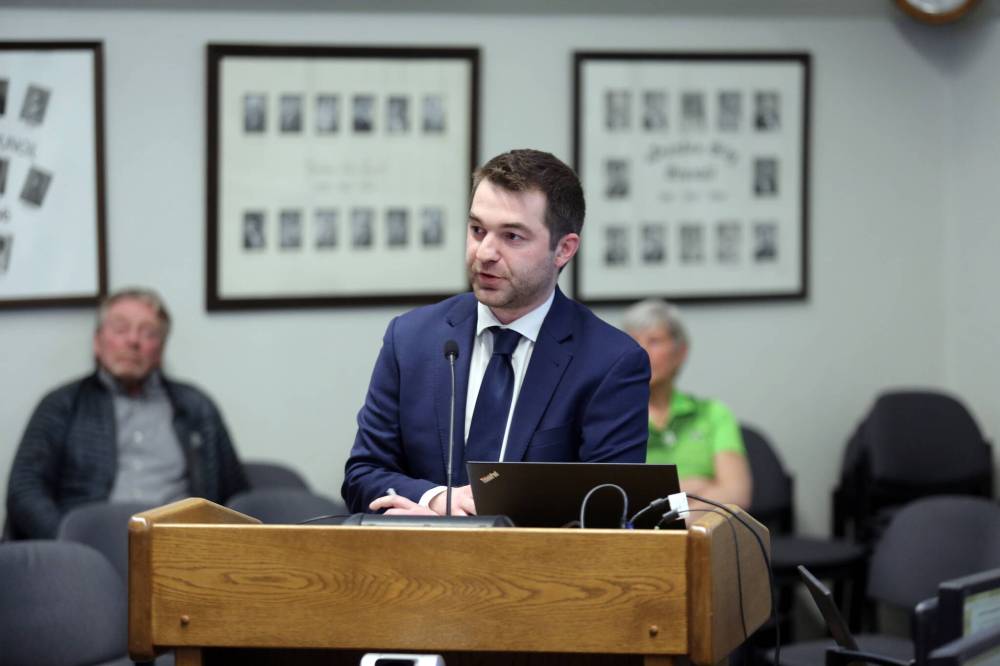
Ahead of the vote for the second and third readings of a bylaw authorizing the tax hike, Manitoba Hotel Association president and CEO Michael Juce tried to convince council the move would harm the organization’s members in the city more than it would help, especially with occupancy numbers still below what they were before the COVID-19 pandemic.
“Hotel occupancy rates in Brandon continue to lag provincial and national averages as well, as on any given night almost half of hotel rooms lie empty,” Juce said.
“To almost double the accommodation tax in one fell swoop would be adding additional pain and misery to a sector that has been through so much and is just starting to recover. Quite simply, this is the wrong time to raise taxes, and moving in this direction sends alarm bells to the broader business community.”
Juce also claimed raising the accommodation tax would make Brandon less competitive. As an example, he pointed to Alberta’s four per cent accommodation tax combined with a lack of provincial sales tax in that province.
On top of potentially affecting visitors to Brandon, Juce said the raised tax would affect residents taking staycations at local hotels as well.
“We urge council to bring forward short-term rental recommendations, as our members currently have a competitor that faces none of the same requirements of taxation that we do,” Juce said.
“Our members aren’t afraid of competition as every day they compete for business. However, it is very difficult to compete with someone who — if the bylaw is amended — has a five per cent head-start cost-wise each day, a different tax structure and no health and safety regulations to protect consumers.”
To level the playing field, Juce offered council his association’s assistance in developing rules for short-term rentals. According to him, this is a subject the association is engaging with the provincial government on as well.
The hotel association president said a considerable amount of funds raised by the tax is spent on capital expenses at the Keystone Centre, and it would be preferable to have all funds raised be used specifically to attract events to Brandon, especially since other industries also benefit from the venue but aren’t subject to a tax on their business.
Coun. Kris Desjarlais (Ward 2) disagreed, saying he believed the improvements to the venue have led directly to “heads in beds.”
Personally, Desjarlais said he and his family had never decided against staying somewhere because a community had an accommodation tax. He proposed a one-year study to assess whether the tax increase harms business for local hotels.
Though Juce said the current flat rate accommodation tax for Brandon gives it a competitive advantage against cities like Winnipeg that have a five per cent levy, he acknowledged the association’s members haven’t articulated that belief to him.
One of council’s longest-serving members and part of the group that introduced the accommodation tax more than a decade ago, Coun. Shawn Berry (Ward 7), said the city’s economic development department reported the funds available to attract events have been running low because of high demand for them.
“The point I want to make is this fund has brought a lot of events to Brandon,” Berry said.
“It’s brought a lot of extra heads to beds, which was the purpose of this, and it hasn’t cost hoteliers a dime out of their pocket. People who come to Brandon to stay at the hotels are the ones paying the hotel tax … they’re not going to drive 45 minutes to an hour down the road with gas at $1.69 a litre to save themselves three dollars.”
Earlier in the meeting, a Ward 5 resident identifying himself as James said he disagreed with the accommodation tax in principle but had suggestions to find a compromise that worked for both the city and hotels.
He proposed putting a cap on the maximum amount a customer can be charged at $15 per room, per night. This, he said, would ultimately force council to revisit the tax once inflation reaches the point where a five per cent charge would always be at $15 or more.
The bylaw as passed includes a one-time $250 tax credit for businesses this year to help with the transition process, but the resident also proposed instituting a grace period for new accommodation businesses before they must charge the tax to customers to incentivize prospective business owners to open new facilities.
According to Coun. Bruce Luebke (Ward 6), council started discussing raising the accommodation tax during its previous term but put plans on hold due to the COVID-19 pandemic.
» cslark@brandonsun.com
» Twitter: @ColinSlark