
Foster parents strapped by frozen allowances
Advertisement
Read this article for free:
or
Already have an account? Log in here »
We need your support!
Local journalism needs your support!
As we navigate through unprecedented times, our journalists are working harder than ever to bring you the latest local updates to keep you safe and informed.
Now, more than ever, we need your support.
Starting at $15.99 plus taxes every four weeks you can access your Brandon Sun online and full access to all content as it appears on our website.
Subscribe Nowor call circulation directly at (204) 727-0527.
Your pledge helps to ensure we provide the news that matters most to your community!
To continue reading, please subscribe:
Add Brandon Sun access to your Free Press subscription for only an additional
$1 for the first 4 weeks*
- Enjoy unlimited reading on brandonsun.com
- Read the Brandon Sun E-Edition, our digital replica newspaper
*Your next Free Press subscription payment will increase by $1.00 and you will be charged $20.95 plus GST for four weeks. After four weeks, your payment will increase to $24.95 plus GST every four weeks.
Read unlimited articles for free today:
or
Already have an account? Log in here »
Hey there, time traveller!
This article was published 19/05/2023 (1098 days ago), so information in it may no longer be current.
WINNIPEG — Frozen for more than a decade, Manitoba’s standard foster-parent allowances remain among the lowest in Canada, driving concerns that caregivers will be forced to make the “agonizing” decision to stop providing stable homes for children in need.
One, who asked to remain anonymous, said basic maintenance rates have not kept up with the soaring cost of living, forcing some to give up their participation in the system.
The parent’s rate — $27.45 per child per day — has been the same since 2012.
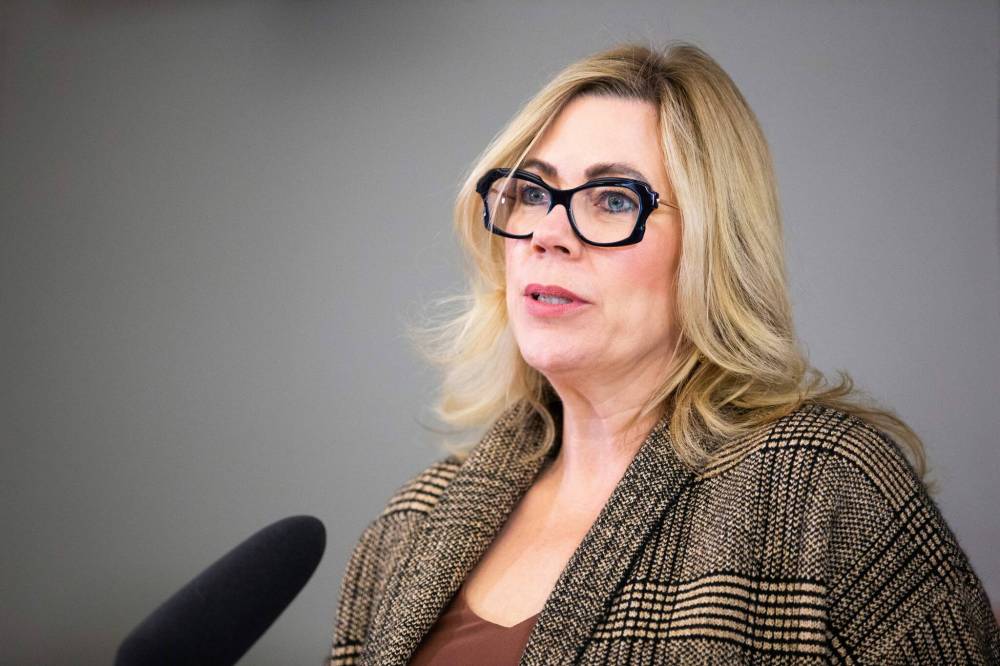
Families Minister Rochelle Squires says retaining foster families is a priority for the government. (Winnipeg Free Press)
“Foster parents are having to pay out of pocket. They’re subsidizing the province to care for kids, essentially,” the caregiver said. “At some point, it’s just not economically feasible. There’s nobody getting rich being a foster parent.
“It’s people who care about kids and want to help them. I think we’re being taken advantage of.”
The parent said the allowance fails to cover the cost of essentials such as food, clothing and utilities.
“It’s just mind-boggling and frustrating to all of us,” the parent said. “It doesn’t even come close to paying for the stuff you need to provide for the kids.”
Basic rates set by the province are about $22 to $32 per child per day (or roughly $746 to $1,064 per month), depending on age and geographic location.
Rates in northern Manitoba are on the higher end of the scale due to higher living costs.
Based on inflation, rates should be to closer to $40 a day, the parent said.
“We’re not asking for extra compensation,” they said. “We just want what it actually costs to do this and to acknowledge things have changed in the last 12 years.”
The rate they are paid was set when the NDP was in government. It did not change before the party was voted out in 2016, and hasn’t since the Tories were elected.
Child maintenance is no longer funded directly by the province, which sets the minimum rate. “Single-envelope” funding is provided to child and family services authorities, which can set rates at or above the standard.
The aim is to, in part, provide more flexibility to support families, said Families Minister Rochelle Squires.
Squires said retaining foster families is a priority for the government, and she will take a look at the standard for basic rates.
In this year’s budget, the government’s priorities included reunification, prevention and addressing inflation with an additional $14 million in funding for authorities, the minister said.
“We know there are inflationary challenges for every family across the province,” she said.
A 2019 report by then-auditor general Norm Ricard raised concerns the basic rates had been frozen since 2012 and failed to adequately compensate foster parents.
His report recommended the government promptly, and regularly afterward, review rates to ensure the costs of foster parents and place-of-safety caregivers — who provide emergency temporary care and protection — are covered.
The government informed the auditor general’s office the implementation was a “work in progress” as of Sept. 30, 2022.
That work is ongoing, said Squires.
Ricard’s report said Manitoba’s rates were either the lowest or second-lowest among 10 provinces for all age groups, except 11 year olds.
There were no detailed analyses to assess the sufficiency of the rates, Ricard found.
The report said special rates were set inconsistently within and across agencies.
Foster parents in Saskatchewan receive anywhere from $710 to $1,083 per child per month, depending on age and geographic location, following an increase last month.
B.C. hiked its monthly rates to $1,465 per child age 11 and under and $1,655 per child between the ages of 12 and 19.
Manitoba’s rate of children in foster care was the highest in Canada and five times the national average, according to 2021 census data. There were 4,905 children, from infants to age 14, in foster care, amounting to two per cent of all children in that age range. About nine in 10 were Indigenous.
The national average was 0.4 per cent. Saskatchewan had the second-highest rate (0.9 per cent).
For Manitoba, there was little change from previous censuses, with rates of 2.1 in 2016 and 1.9 in 2011.
The national average was 0.5 per cent in 2011.
In its latest annual report, Manitoba Families reported 6,333 children in foster homes as of March 31, 2022, down from 7,352 on the same date in 2017.
The foster parent who spoke to the Free Press believes low maintenance rates are deterring Manitobans from fostering children and feels no one is advocating for those who take on the role.
The Kinship and Foster Family Network of Manitoba did not respond to a request for comment.
Canadian Foster Family Association president Kevin Harris said his provincial counterparts have lobbied for rate increases.
In some provinces, rates have been stagnant for years, he noted.
“I don’t think the provincial governments really understand the situation of foster care or foster parents, and what it costs to raise a child,” said Harris, a foster parent who lives near Regina. “At the end of the day, children are the responsibility of a provincial government.
“You would hope they would have a greater interest in ensuring the needs of the child. It’s a shame foster parents have to fight for this.”
Most parents stop fostering due to a lack of support, but financial pressure can be a tipping point, said Harris.
Nahanni Fontaine, the Manitoba NDP’s critic for families, said she has spoken to child-welfare authority directors who are frustrated because funding or communication from the province is lacking.
She said the province must do a better job of creating a system that doesn’t commodify Indigenous children.
Liberal Leader Dougald Lamont said he has talked to families who are struggling under current maintenance rates.
“It makes the difference between whether people can care for a child or not,” he said.
» Winnipeg Free Press