
Co-ops struggle to keep housing affordable
Advertisement
Read this article for free:
or
Already have an account? Log in here »
We need your support!
Local journalism needs your support!
As we navigate through unprecedented times, our journalists are working harder than ever to bring you the latest local updates to keep you safe and informed.
Now, more than ever, we need your support.
Starting at $15.99 plus taxes every four weeks you can access your Brandon Sun online and full access to all content as it appears on our website.
Subscribe Nowor call circulation directly at (204) 727-0527.
Your pledge helps to ensure we provide the news that matters most to your community!
To continue reading, please subscribe:
Add Brandon Sun access to your Free Press subscription for only an additional
$1 for the first 4 weeks*
- Enjoy unlimited reading on brandonsun.com
- Read the Brandon Sun E-Edition, our digital replica newspaper
*Your next Free Press subscription payment will increase by $1.00 and you will be charged $20.95 plus GST for four weeks. After four weeks, your payment will increase to $24.95 plus GST every four weeks.
Read unlimited articles for free today:
or
Already have an account? Log in here »
Hey there, time traveller!
This article was published 10/06/2023 (1228 days ago), so information in it may no longer be current.
Hefty repair bills, increasing tax assessments that could force rents up, and lack of support from the provincial government — these are some of the challenges Brandon housing co-ops face as they struggle to keep affordable housing affordable.
Spruce Woods Housing Co-op is feeling a financial pinch, and its board president, Eva Cameron, worries that, if money can’t be found for repairs and maintenance, the co-op’s future will be in jeopardy.
“We won’t be affordable anymore,” Cameron said. “We’re going to have to raise rents. And unfortunately, that’s going to put some of our people out on the street.”
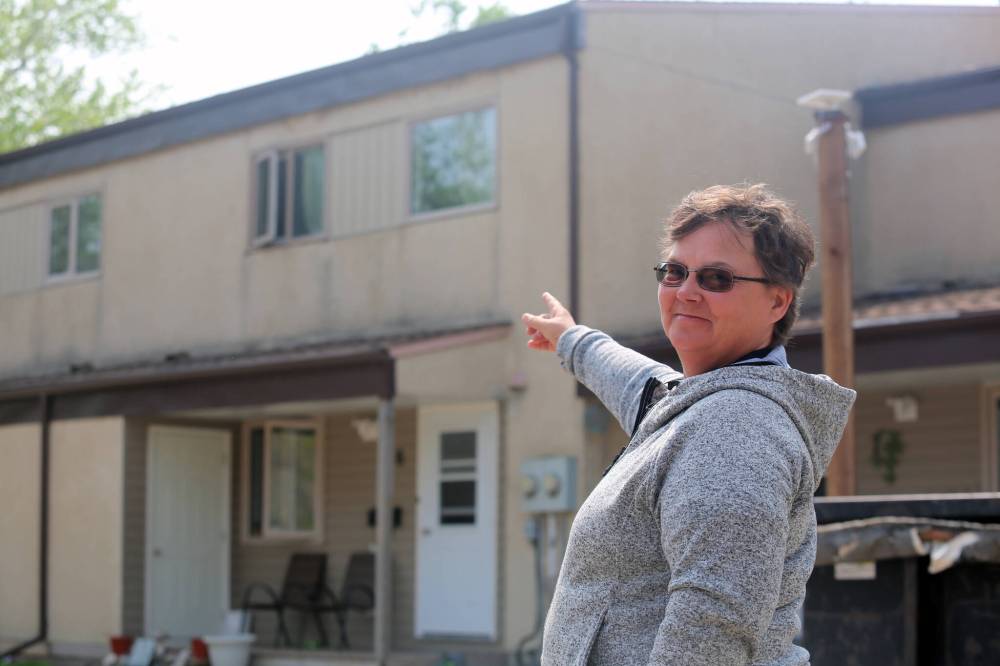
The co-op’s plight led Cameron to Brandon City Council chambers last month to ask for help. She asked council to waive the municipal portion of the complex’s property taxes for five years as it tries to secure $3.5 million for repairs.
That co-op and the Westman Seniors Housing Co-op are two affordable housing developments in Brandon finding it increasingly difficult to maintain low rents while making ends meet.
On a visit to Spruce Woods last month, Cameron showed the Sun some of the issues facing the 35-year-old complex, which is made up of an apartment block surrounded by rows of multi-unit townhouses.
There are 81 units and more than 150 people living at the co-op, which typically has a one- to two-year waiting list for new tenants. Cameron has been the president of the co-op’s board of directors since 2017, having lived at the complex for about 14 years.
She knows of at least one member who has lived at the co-op since it opened. In other cases, people have raised their families there, and in turn their kids have raised their own families there as well.
The first issue is evident when pulling into the parking lot — exposed rebar on crumbling sidewalks near a collection of potholes.
While the main apartment building has ramps to aid with accessibility, the parking lot does not.
Cameron explained accessibility wasn’t a requirement when the complex was first built.
Approximately one-quarter of the townhouses and the apartment building have received repairs to eavestroughs and to address mould and water seeping into basements, and windows and siding have been replaced. This work used up the money in the co-op’s reserve fund.
Until 2021, the co-op received funding from Manitoba Housing that was used to pay a portion of residents’ rents so they only had to pay 30 per cent. Since that funding ran out, the co-op has subsidized some residents’ rent while it helps them get on rent-assist programs, although Cameron said progress has been slow.
Though Cameron is nominally retired, she said she and some fellow directors put in long days, up to 16 hours, carrying out various tasks so the co-op doesn’t have to hire as much outside help.
“We have staff,” Cameron said. “We could probably have a few more staff. But right now, we’re watching dollars. We’re helping out where we can help out.”
For projects that need outside help, Cameron said good relationships have been formed with contractors who are giving the co-op a bit of a break on their bills.
On top of the physical work, Cameron said she spends a lot of time researching and writing grant applications.
They’ve received funding for summer students to help with maintenance, grants from Efficiency Manitoba to make their buildings consume less energy and resources to build vegetable garden boxes for its residents, among other things.
Another possible source of funding is the Canada Mortgage and Housing Corporation’s preservation funding for community housing. The maximum funding for each project under the program is $50,000, though up to $75,000 is available on a case-by-case basis.
Still facing millions of dollars in necessary work, Cameron went before city council to ask for a reprieve on the co-op’s property taxes for the next half-decade. Doing so would save the co-op about $30,000 a year.
“When we’re looking at three-and-a-half million, $30,000 a year sounds small, but it adds up and it’s big for us,” Cameron said. “Thirty thousand dollars can do a lot for us. Several new windows, a couple roofs.”
While the City of Brandon does not currently offer a tax credit to previously existing affordable housing developments, it does offer them for new developments.
Qualifying affordable housing developments can get a credit from the city equal to a percentage of the municipal taxes they would normally pay.
Speaking to the Sun last month, Brandon’s community housing and wellness co-ordinator, Shannon Saltarelli, said she doesn’t recall any other pre-existing co-ops making the kind of request that Spruce Woods did.
“As more housing co-ops are aging out of their financial agreement with Manitoba Housing, they’re going to be in the same situation as the Spruce Woods Housing Co-op where they don’t have the operational stability and operational funding … and so they’ve really been left on their own,” Saltarelli said.
“After that agreement is over, you’re under no obligation to remain affordable. They as a board chose to be good a community-minded housing co-op and remain affordable.”
She said talks are intensifying at the provincial level to help maintain current housing stock.
Though Saltarelli won’t be part of the decision on whether to grant tax relief, she said Spruce Woods had a good delegation and raised good questions about how to maintain existing affordable housing.
Coun. Heather Karrouze (Ward 1), who represents the part of the city where the co-op is located, told the Sun by email last month she hoped Brandon could find a way to help.
“I hope that as a municipal government concerned with the well-being of our residents, that we are able to assist Spruce Woods in achieving their goals in whatever way we can; their success translates into lives impacted for the better,” she wrote.
Part of the frustration with their situation, Cameron told city council, is there are plenty of programs for new developments, but not for complexes like theirs. Following the request, Cameron said she was hopeful the city would deliver some relief.
However, Mayor Jeff Fawcett has told Cameron that council wouldn’t make a decision on Spruce Woods’ tax break request until next year, during budget deliberations, news that Cameron described as “really disappointing.”
In a phone interview Friday, Fawcett explained this year’s budget has already been finalized. However, he said staff are working on finding a way to help co-ops like Spruce Woods.
“It is important that we try to do what we can to keep affordable housing units in operation,” Fawcett said. “We’ve done an awful lot of work with that particular group in making sure we’re bringing it up with the province. They’re well aware of it.”
The mayor praised Spruce Woods for exploring all possible avenues of support and said the city is lobbying higher levels of government for support too.
Spruce Woods’ board has also met with representatives at the provincial level, including the deputy minister of families.
On May 10, Families Minister Rochelle Squires announced $1.4 million in funding to support privately operated non-profit housing complexes at the end of their operating agreements with the province.
A spokesperson from the minister’s office said the province is considering flowing some of the announced funding to housing operators whose agreements expired in previous years.
In an emailed statement, Manitoba NDP housing critic Nahanni Fontaine wrote the government has a role to play in maintaining affordable housing.
“Housing co-ops are an important part of the affordable housing market. They offer residents more say and control in a housing market where home ownership is becoming increasingly out of reach for many working families,” Fontaine wrote.
“The province has a role to play in supporting communities advocating for affordable house and collaborating with other levels of government to maintain affordable housing. But instead of helping renting families in a cost-of-living crisis, the PCs raised taxes for renters, sold off affordable housing and raised monthly hydro bills.”
Two years ago, Cameron said Spruce Woods successfully appealed a large assessment increase to the complex’s property value and it has remained at a reasonable amount since. She said she was worried the assessment would go “sky high” after her co-op completed renovations.
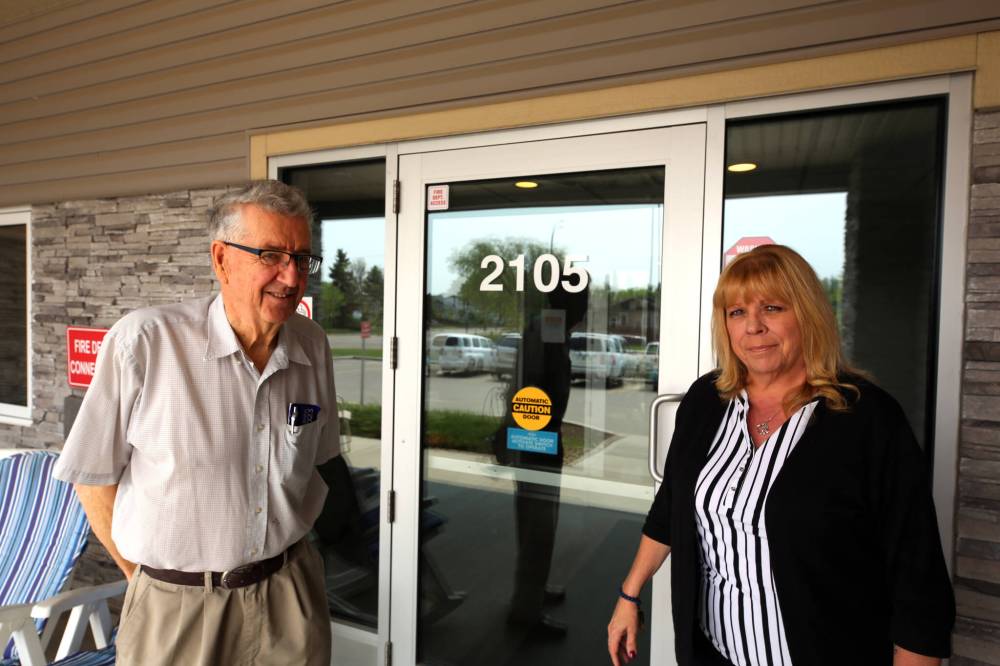
The issue of assessed value has been a much bigger problem for another housing co-op in Brandon, which has a 360-person waiting list.
One of the beneficiaries of the tax credit for newer developments is the Westman Seniors Housing Co-op, which opened one building at 620 McDiarmid Dr. in 2013 and another at 2105 Brandon Ave. in 2018 for a total of 117 suites.
The entirety of the McDiarmid Drive building is considered affordable housing. At the other building, three-quarters of the suites are affordable, with the last quarter made up of market-value suites.
A two-bedroom corner suite on McDiarmid with a parking stall and laundry access comes to $880. A similar affordable suite at the Brandon Avenue building is around $1,011 — the maximum the co-op is legally allowed to charge for the space.
Last year, the Sun reported on appeal hearings before the Municipal Board, where the seniors’ co-op fought against what they felt were unreasonable increases to their assessments.
The co-op’s housing manager, Melody Osudar, said she can’t remember a time when her job didn’t involve some kind of ongoing tax appeal.
Those assessments were driving up the amount of property tax the seniors’ co-op would have to pay. By extension, it would increase how much in rent the co-op would have to charge its residents.
Last June, the co-op had a hearing with the Municipal Board for its 2019 assessment — a delay caused by the COVID-19 pandemic. They didn’t hear the result of their appeal until Jan. 18, 2023.
The co-op had originally appealed to the City of Brandon’s Board of Revision to reconsider the assessment amount and succeeded. However, the provincial assessor appealed that decision to the Municipal Board, setting up last year’s hearing.
One of the major sticking points for the co-op was how the province calculates its income.
When new members join the co-op, they make a payment to buy a share in the co-op that is returned when someone passes away or moves out.
The president of the co-op’s board, Harvey Douglas, told the Sun that this money is just held onto and not spent, but the provincial assessor considers those funds to be an equity taxable in the same manner as funds paid into a life lease.
For example, someone moving into a one-bedroom suite at the McDiarmid building would make an equity payment of $17,900.
“It doesn’t affect what they pay for rent,” Douglas said. “You see, on life lease, the more you put down, the less your rent is.”
Ultimately, the Municipal Board delivered a mixed result. The assessment for the McDiarmid property remained the same as the previous assessment. For the Brandon Avenue property, the assessment value was set higher than it was before, but approximately $811,000 lower than the provincial assessor was seeking.
Since the hearing took so long to be arranged, the co-op was retroactively charged $3,000 for the increase in their taxes. It also had to raise rents by four-and-a half per cent as a result.
The co-op is now going through the same process for their 2023 assessment. It once again successfully appealed to the city’s Board of Revision and the provincial assessor is appealing that result to the Municipal Board.
The Brandon Avenue building is facing a rise from an assessed value of $5.978 million to around $7.3 million. The McDiarmid building would see an increase from approximately $2.67 million to around $2.8 million.
Even if they wanted to raise rents to cover costs, Douglas said many units are at or near the maximum rent allowed.
“We did a bunch of cuts in our budget this year because of the taxes,” Osudar said. “The budget was unfortunately completed before we found out we were being appealed again.”
The Westman Seniors’ Housing Co-op is still waiting to find out the date of their appeal hearing.
The Municipal Board declined to comment for this story, writing in an email “the board does not comment on matters and will not provide someone available to speak with you.”
However, a spokesperson for the province’s newsroom provided some explanation by email for why equity deposits are counted as income.
“On properties where tenants contribute an initial equity deposit (e.g. $50,000) plus pay a monthly rental, provincial assessors adjust the monthly rental to account for the benefit to the owner, who is able to invest the deposit and gain a return on investment on those funds as added income,” the spokesperson wrote.
“The practice of adjusting the rental revenue based on the deposit has been confirmed by the Manitoba Municipal Board in a previous appeal decision and once again in a recent decision. This methodology is consistently applied to life leases, co-ops and apartment properties where tenants pay a substantial equity deposit to the owner and thereby pay a reduced monthly rental.”
There are a couple of major sources of difficulties for housing providers in the province, according to Manitoba Non-Profit Housing Association executive director Christina Maes Nino.
“One issue is that costs are going up and the other issue is that incomes are not going up,” she said. “And so there isn’t a way for low-income or middle-income tenants to pay for those costs, which is, I think, an issue that the private sector as well as the non-profit sector.”
She said her organization is lobbying the province on a couple fronts to provide support for housing co-ops.
The first is asking for the establishment of a provincial capital fund dedicated to helping pay for preservation and upkeep work at existing co-ops.
Nino estimated there are 23,000 housing units in Manitoba built from the 1970s through 1990s in similar circumstances to Spruce Woods. Maintaining them, she argued, would be cheaper than just building new ones.
“We also need new units, but if we don’t preserve what exists there’s not much point in building new,” she said.
The association is also asking for more flexibility and greater funding for the province’s agreements with co-ops. The amount of tax dollars the province might lose by doing so, Nino said, is less than the cost of losing out on access to affordable housing.
“Co-ops definitely offer a really strong solution,” Nino said. “There’s been some recognition and support, but it’s still not enough.”
» cslark@brandonsun.com
» Twitter: @ColinSlark