
Ottawa funds swine fever prevention
Advertisement
Read this article for free:
or
Already have an account? Log in here »
We need your support!
Local journalism needs your support!
As we navigate through unprecedented times, our journalists are working harder than ever to bring you the latest local updates to keep you safe and informed.
Now, more than ever, we need your support.
Starting at $15.99 plus taxes every four weeks you can access your Brandon Sun online and full access to all content as it appears on our website.
Subscribe Nowor call circulation directly at (204) 727-0527.
Your pledge helps to ensure we provide the news that matters most to your community!
To continue reading, please subscribe:
Add Brandon Sun access to your Free Press subscription for only an additional
$1 for the first 4 weeks*
- Enjoy unlimited reading on brandonsun.com
- Read the Brandon Sun E-Edition, our digital replica newspaper
*Your next Free Press subscription payment will increase by $1.00 and you will be charged $20.95 plus GST for four weeks. After four weeks, your payment will increase to $24.95 plus GST every four weeks.
Read unlimited articles for free today:
or
Already have an account? Log in here »
Hey there, time traveller!
This article was published 07/08/2023 (1133 days ago), so information in it may no longer be current.
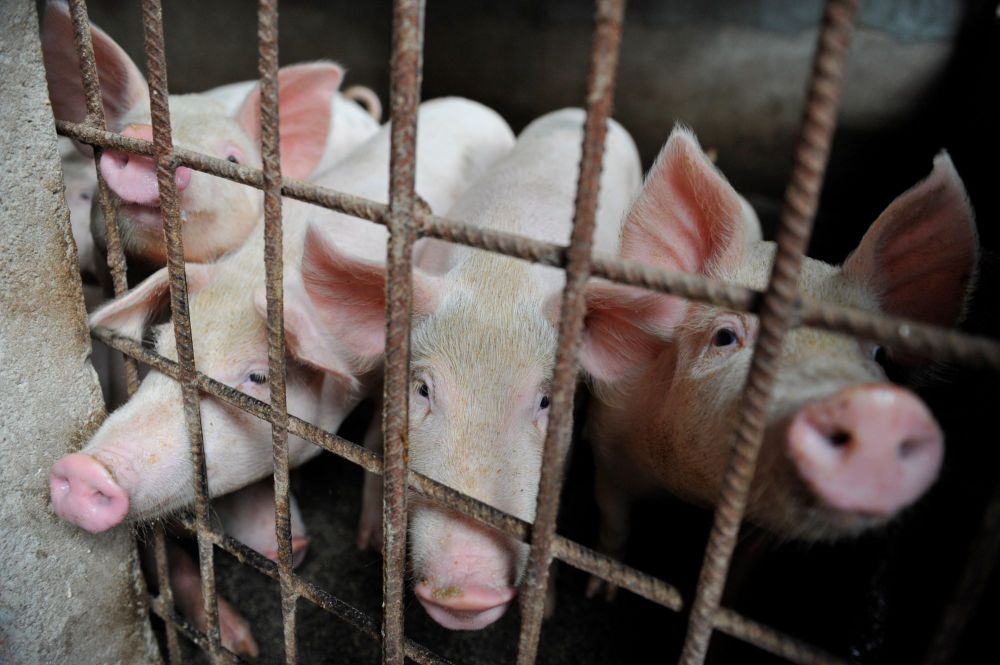
The federal government is set to invest $944,340 in the Manitoba Pork Council to safeguard the pork industry — whose exports were valued at $4.8 billion — against the potential threat of African swine fever (ASF).
The funding is provided through the African Swine Fever Industry Preparedness Program (ASFIPP) and is targeted to bolster preparedness efforts within the province.
Agriculture and Agri-Food Minister Lawrence MacAulay stated the importance of strong collaboration between federal, provincial and territorial governments, along with industry stakeholders.
“Such collaboration continues to be vital as we prioritize prevention and preparedness activities in the face of this devastating animal disease. We will continue to work diligently to safeguard the pork sector and ensure it remains resilient should an outbreak occur,” said MacAulay.
Manitoba Pork Council general manager Cam Dahl, in an interview with the Brandon Sun, stressed the severity of the impact African swine fever could have on the province.
“Twenty-two thousand Manitobans depend on jobs tied to the pork sector, contributing about $2.3 billion annually to the economy. The consequences of a severe outbreak or border closures could lead to a recession in the province, making it crucial for both the government and industry organizations to collaborate and allocate resources to minimize potential impacts,” Dahl said.
He disclosed that one major focus of the investment will be on eradicating wild pigs in Manitoba. These invasive species not only cause ecological and environmental damage but also act as potential reservoirs for diseases like African swine fever. Therefore, approximately $600,000 of the announced funds will be dedicated to getting rid of the invasive wild pigs.
Dahl added that the investment will be used to refine and build emergency management plans in close collaboration with the province and agencies like the Canadian Food Inspection Agency.
“It will also support outreach efforts to smaller producers, which covers the city of Brandon, to help improve their biosecurity measures and protect against the risk of an outbreak. Brandon is a critical city for the pork sector in Manitoba because the city produces about five million out of the eight million pigs Manitoba produces, making the city a pivotal location for the hog sector, and many of those 22,000 jobs that I talked about are in Brandon,” he said.
Manitoba Pork chair Rick Préjet expressed gratitude for the federal government’s support and engagement in preparatory work with producers and staff.
“African swine fever poses a tremendous risk to our province’s hog sector, and we need to do everything we can to ensure that we are prepared in the event that horrible day comes upon us. We want to commend the federal government for not only stepping up with funding to support producers and our sector, but for their continued engagement on preparatory work with our producers and our staff to ensure that we are best prepared for an outbreak,” said Préjet.
Maple Leaf Foods, a major pork producer in Brandon, commended the government’s efforts, adding that it has been actively engaged in a comprehensive ASF preparedness initiative for several years. While ASF doesn’t pose a risk to humans or other animals, it can be devastating to pig populations and presents a critical threat to the pork industry.
Maple Leaf vice-president of ASF planning and preparedness Cindy Trask told the Sun that the recent announcement to support the Manitoba
Pork Council’s efforts is essential in advancing critical work to mitigate, prepare and respond in case ASF is ever detected in Canada.
“We have established detailed response strategies and invested in barns to improve biosecurity, while also pursuing compartmentalization strategies to mitigate export disruptions in case of an ASF confirmation in Canada. ASF would have a devastating impact on the entire Canadian pork industry, and Maple Leaf Foods is proud to be part of the collaborative effort to advance Canada’s overall preparedness plan,” Trask said.
African swine fever is a highly contagious and deadly viral disease that affects both domestic and wild pigs. It poses no threat to human health and does not impact food safety. Since 2018, ASF has spread through parts of Asia and Europe and has most recently been detected in the Caribbean. However, it has never been found in Canada or the United States.
Efforts made to get further details on the investment from the Office of the Minister of Agriculture and Agri-Food were unsuccessful, as press secretary Simon Lafortune did not respond to telephone calls, messages and email.
Also, an Agriculture and Agri-Food Canada Media Relations spokesperson did not respond to inquiries made to their office on the development.
» X: @AbiolaOdutola
Local
LOAD LOCAL ARTICLES