
BU faces $3 million deficit
Advertisement
Read this article for free:
or
Already have an account? Log in here »
We need your support!
Local journalism needs your support!
As we navigate through unprecedented times, our journalists are working harder than ever to bring you the latest local updates to keep you safe and informed.
Now, more than ever, we need your support.
Starting at $15.99 plus taxes every four weeks you can access your Brandon Sun online and full access to all content as it appears on our website.
Subscribe Nowor call circulation directly at (204) 727-0527.
Your pledge helps to ensure we provide the news that matters most to your community!
To continue reading, please subscribe:
Add Brandon Sun access to your Free Press subscription for only an additional
$1 for the first 4 weeks*
- Enjoy unlimited reading on brandonsun.com
- Read the Brandon Sun E-Edition, our digital replica newspaper
*Your next Free Press subscription payment will increase by $1.00 and you will be charged $20.95 plus GST for four weeks. After four weeks, your payment will increase to $24.95 plus GST every four weeks.
Read unlimited articles for free today:
or
Already have an account? Log in here »
Hey there, time traveller!
This article was published 25/09/2023 (1087 days ago), so information in it may no longer be current.
With rising expenses and no expectation of equitable provincial funding, the Brandon University administration is contending with a $3 million deficit heading into budget season.
Scott Lamont, BU’s vice-president of administration and finance, delivered this report during a Saturday morning Board of Governors meeting, where he revealed that the estimated increase in expenses for the 2024-25 academic year will be $4.5 million while the expected jump in revenue is only $1.5 million.
While there are several factors that explain this projected $3 million deficit, Lamont said the biggest variable is BU’s stagnant provincial operating grant, which is their largest source of revenue.
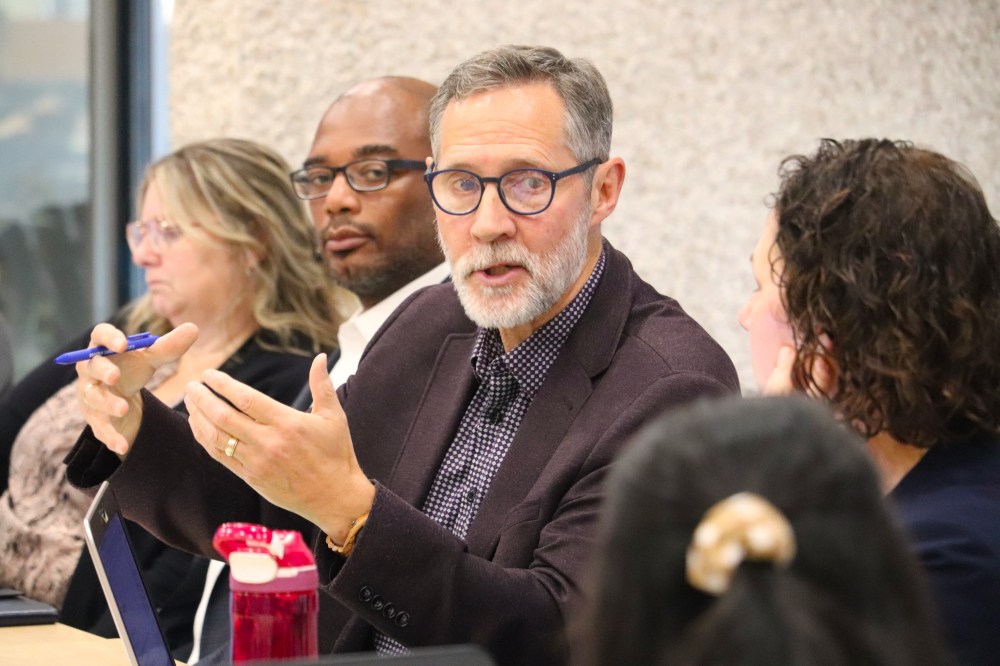
“Our operating grants decreased over the last four, five years by 2.5 per cent while inflation went up 8.5 per cent,” he told the board over the weekend.
“At a certain point, you run out of options to find the ways to balance the budget … while you’re trying to offer additional services.”
Government funding was also a concern for BU as it shaped the 2023-24 budget, with the province’s $42 million operating grant representing a 3.9 per cent increase from the previous year.
However, post-secondary schools like the University of Winnipeg and the University of Manitoba received a 20.2 per cent and 10.8 per cent boost, respectively, that same year, despite smaller schools like BU also battling rising inflation and declining enrolment due to the COVID-19 pandemic.
Since BU officials haven’t heard any word to the contrary since last March, they are heading into the 2024-25 budget season expecting their provincial grant will remain at or around 2023-24 levels.
BU president David Docherty expressed frustration, stating provincial government officials haven’t offered a clear explanation for this uneven distribution of grants.
“If we had a funding formula that was transparent and we knew it, then we could say, ‘Okay, this is why we got three points. This is why you in Winnipeg got 20 per cent.’ But there was never any discussion of that,” Docherty said. “To this day, we’ve been told different things by different people, none of which make any sense.”
Complicating matters is the provincial election, which will result in a prolonged period of government reorganization no matter which party wins on Oct. 3.
Lamont also mentioned that BU’s salaries and benefits — which account for roughly 75 per cent of its expenses — could fluctuate based on ongoing contract negotiations with the faculty association and other support staff unions.
“So this coming year … is the first year, or one of the few years, when we won’t know the salaries of any of our employees. Not one of them,” Lamont said. “So that’s what we have to figure out now.”
However, Lamont revealed that there are some bright spots in BU’s economic forecast, particularly when it comes to tuition fees (its second highest source of revenue).
While the university endured a steady decline in student enrolment due to COVID restrictions — culminating with a nine per cent drop in domestic, non-Indigenous pupils for 2022-23 — that figure has started to trend upwards.
For this fall semester, Lamont said that credit hours for first-year students are up by 15.9 per cent, which is a tell-tale sign that campus life is returning to normal after several disruptive years of remote learning and social distancing.
Lamont ended his presentation by admitting that a lot of the figures included in his report will change in the coming months, especially since staffing plans and workload requirements won’t be finalized until later this year.
And while the BU administration will look at other ways of making up he $3 million shortfall, Lamont said he believes the best way to balance the budget by March is with provincial funding that compares equitably with larger Winnipeg-based universities.
» kdarbyson@brandonsun.com