
Indigenous group urges feds to expropriate Turtle Crossing
Advertisement
Read this article for free:
or
Already have an account? Log in here »
We need your support!
Local journalism needs your support!
As we navigate through unprecedented times, our journalists are working harder than ever to bring you the latest local updates to keep you safe and informed.
Now, more than ever, we need your support.
Starting at $15.99 plus taxes every four weeks you can access your Brandon Sun online and full access to all content as it appears on our website.
Subscribe Nowor call circulation directly at (204) 727-0527.
Your pledge helps to ensure we provide the news that matters most to your community!
To continue reading, please subscribe:
Add Brandon Sun access to your Free Press subscription for only an additional
$1 for the first 4 weeks*
- Enjoy unlimited reading on brandonsun.com
- Read the Brandon Sun E-Edition, our digital replica newspaper
*Your next Free Press subscription payment will increase by $1.00 and you will be charged $20.95 plus GST for four weeks. After four weeks, your payment will increase to $24.95 plus GST every four weeks.
Read unlimited articles for free today:
or
Already have an account? Log in here »
Hey there, time traveller!
This article was published 18/10/2023 (1062 days ago), so information in it may no longer be current.
Representatives of Manitoba Indigenous groups are urging the federal government to expropriate the land containing the unmarked burial sites of children on the grounds of the former Brandon Indian Residential School. The land is currently part of the privately-owned Turtle Crossing Campground located along the Assiniboine River on Grand Valley Road.
The request for expropriation came during a meeting with the federal Crown-Indigenous relations minister last week.
On Monday, Manitoba Keewatinowi Okimakanak said on its Facebook page that Grand Chief Garrison Settee, Norway House Cree Nation Chief Larson Anderson and Pimicikamak Cree Nation Chief David Monias had met with Minister Gary Anandasangaree last Friday “on the urgent matter of protecting burial sites of MKO citizens in the areas of former residential schools such as the former Brandon [Indian Residential School].”
The post said the leaders asked the federal government to communicate with Manitoba’s new NDP government that Ottawa would contribute to the costs of the lands being expropriated.
MKO said the communities with residents known or suspected of being buried at the Brandon site are God’s Lake First Nation, Norway House Cree Nation, Bunibonibee Cree Nation, Pimicikamak Cree Nation, Sayisi Dene First Nation, Nisichawayasihk Cree Nation, Northland Denesuline First Nation and Sapotaweyak Cree Nation.
This move comes after MKO and Sioux Valley Dakota Nation — which has been involved in efforts to identify burial sites and create a memorial at the location — issued a joint statement on Aug. 1 criticizing the provincial government for not granting the site protection under the Heritage Resources Act.
Mark Kovatch, the owner of Turtle Crossing Campground where the burial sites are located, told the Sun on Tuesday that he has been working towards establishing a memorial site and that Indigenous groups have been obstructing his efforts.
He called the request for his land to be expropriated “a political ploy.” According to him, he had an agreement in place four years ago with former Sioux Valley Chief Vince Tacan, the City of Brandon and the province to develop the site but since current Chief Jennifer Bone was elected, the community has been unwilling to work with him.
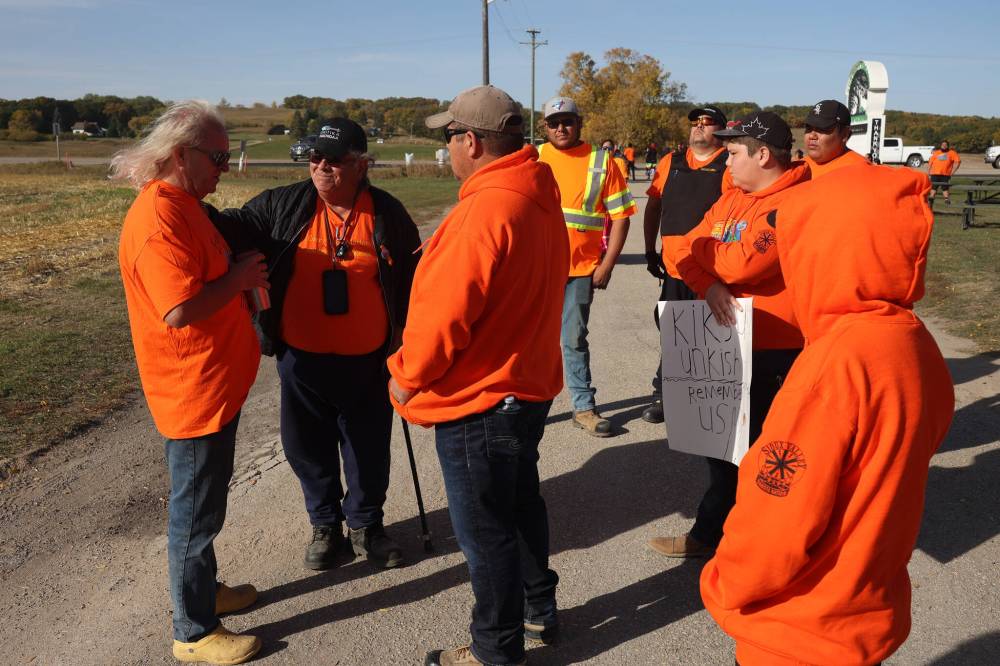
In September 2022, Bone led a protest march to the campground after alleging that Kovatch had denied access to the site so that other unmarked burial sites could be located.
Bone and Tacan are both running to be Sioux Valley’s next chief along with another former chief, Katherine Whitecloud, with the community heading to the polls this Thursday.
The Sun was unable to reach Anandasangaree, Settee or Bone for comment before deadline.
Kovatch said he’s not worried that his land will end up being expropriated.
The desire for Kovatch and his wife, he said, is to maintain the campground as an affordable place for families to spend the day or go camping. He said his difficulties with the situation prompted him to put documents and other information about the burial sites on the campground’s website so that people can learn the truth.
“A good portion of our not only day use, but campers as well, are members of the First Nations peoples from around the province because, you know, it’s a beautiful park,” he said. “So for them to expropriate the land, they’d only be hurting their own community.”
Visitors to the campground are allowed to visit the burial sites and perform ceremonies six days a week without having to pay an entrance fee, he said.
He said a fence was established around the burial sites about three weeks ago with the help of the City of Brandon. Four campsites near the burial sites have been decommissioned and a fifth has been adjusted.
The next step, Kovatch said, is getting the province to move forward with him on a heritage study.
“What we want to do is hire an archeological firm to come in and do some more ground penetrating radar to make sure we know exactly where the boundaires are for the cemetery,” Kovatch said. “Then they also need to do the work that’s required by the province for the heritage study, so we can go ahead with the development.”
Ryan Nickel, Brandon’s director of planning and buildings, said by phone that the fence erected at the site is movable and not set into the ground.
That’s important, Nickel said, because if further study reveals other burial sites, it will allow for the fence to be moved without disturbing the ground.
While Brandon isn’t leading the effort on the site, Nickel said the city’s role is to work with the property owner and First Nations partners to identify the final boundaries of the cemetery.
Brandon Mayor Jeff Fawcett said the move was consistent with MKO’s previous actions regarding the site and had confirmed with staff from the organization that it was a reiteration of its position for the new minister — appointed to the role in July — and for the new provincial government, which was elected earlier this month.
He said he hoped an amicable solution could be found between all parties that didn’t result in the expropriation of land and that the city would be following up on the subject with the new Crown-Indigenous relations minister and the new provincial government.
» cslark@brandonsun.com
» X: @ColinSlark