
COVID era leaves lasting impact on restaurants
Advertisement
Read this article for free:
or
Already have an account? Log in here »
We need your support!
Local journalism needs your support!
As we navigate through unprecedented times, our journalists are working harder than ever to bring you the latest local updates to keep you safe and informed.
Now, more than ever, we need your support.
Starting at $15.99 plus taxes every four weeks you can access your Brandon Sun online and full access to all content as it appears on our website.
Subscribe Nowor call circulation directly at (204) 727-0527.
Your pledge helps to ensure we provide the news that matters most to your community!
To continue reading, please subscribe:
Add Brandon Sun access to your Free Press subscription for only an additional
$1 for the first 4 weeks*
*Your next subscription payment will increase by $1.00 and you will be charged $20.00 plus GST for four weeks. After four weeks, your payment will increase to $24.00 plus GST every four weeks.
Read unlimited articles for free today:
or
Already have an account? Log in here »
Hey there, time traveller!
This article was published 08/11/2023 (877 days ago), so information in it may no longer be current.
The year was 2019, and Zelalem Asefaw had embarked on her culinary venture, Tana Ethiopian Cuisine, a restaurant where up to 50 patrons enjoyed communal dining. Unknowingly, she was stepping onto the precipice of a pandemic.
Just before the world-changing arrival of COVID, Asefaw said her restaurant was filled with conversations and shared meals. But when the pandemic descended, it brought a chilling silence.
“Before COVID, my business was flourishing, but now, it’s a constant struggle,” she told the Sun. “People stopped coming because of COVID and the increasing cost of foodstuffs. You can see that everywhere is empty now.”
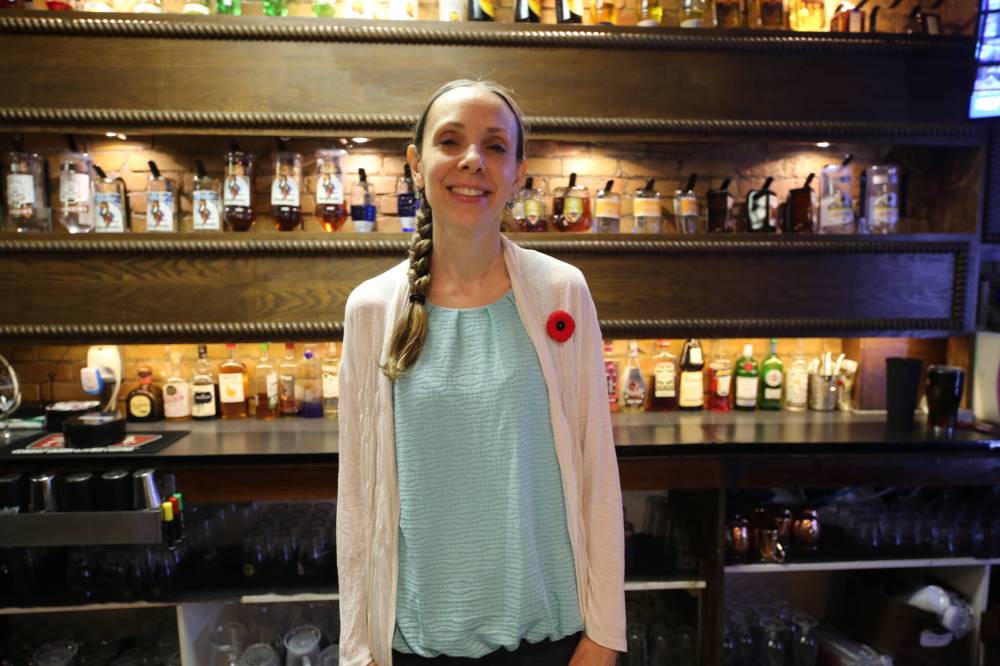
The Dock on Princess general manager Erin Wells says people's dining habits have changed, and lunch remains subdued, mainly because of altered work habits. (Photos by Abiola Odutola/The Brandon Sun)
The entrepreneur said she had to discontinue the buffet service, which used to attract many immigrants to her restaurant, when the demand dropped drastically, and the once-thriving restaurant now struggles to attract customers.
Today, Asefaw is among the restaurant owners in Brandon who are navigating turbulent waters, pleading for an extension of the Canada Emergency Business Account repayment’s January deadline. “If I have to pay everything by January, I would be left with nothing to run the business in the face of ongoing challenges,” she said. “The cost of foodstuffs keeps rising, and an extension is crucial to help us keep the doors open.”
Though the traffic at The Dock on Princess is better than at Tana Ethiopian Cuisine, its general manager, Erin Wells, said the restaurant has not returned to its pre-COVID levels.
While there was an increase in Christmas parties in late 2022 due to eased restrictions, Wells notes that people’s dining habits have changed, and lunch remains subdued, mainly because of altered work habits.
“We saw a change in January 2023, with more people coming out,” she told the Sun. “However, our restaurant is still not as busy as it used to be before COVID because we still record an average of about 50 customers daily compared to pre-COVID when we had like 75 people in the pub, another 25 up here. We’d have 100 people over lunch.”
To survive the COVID era, Wells said The Dock had to operate with reduced resources, involving fewer staff members taking on more responsibilities. It also had to explore various promotional and event ideas to attract customers, trying to identify activities that would pique people’s interest and offer them something different, such as music events among other creative offerings.
Like other restaurant owners, Wells also said that extending the CEBA repayment deadline would provide much-needed relief as business owners continue to navigate this challenging landscape. “It’s important to recognize that we haven’t returned to the pre-COVID norm; instead, we find ourselves back at square one,” she said. “It’s clear that many restaurants may find it challenging to meet the repayment deadline, potentially leading to severe financial difficulties and even closures.”
To Lee’s Buffet owner Yen Nau Chen, the dynamics of the restaurant business have been permanently altered by the advent of COVID.
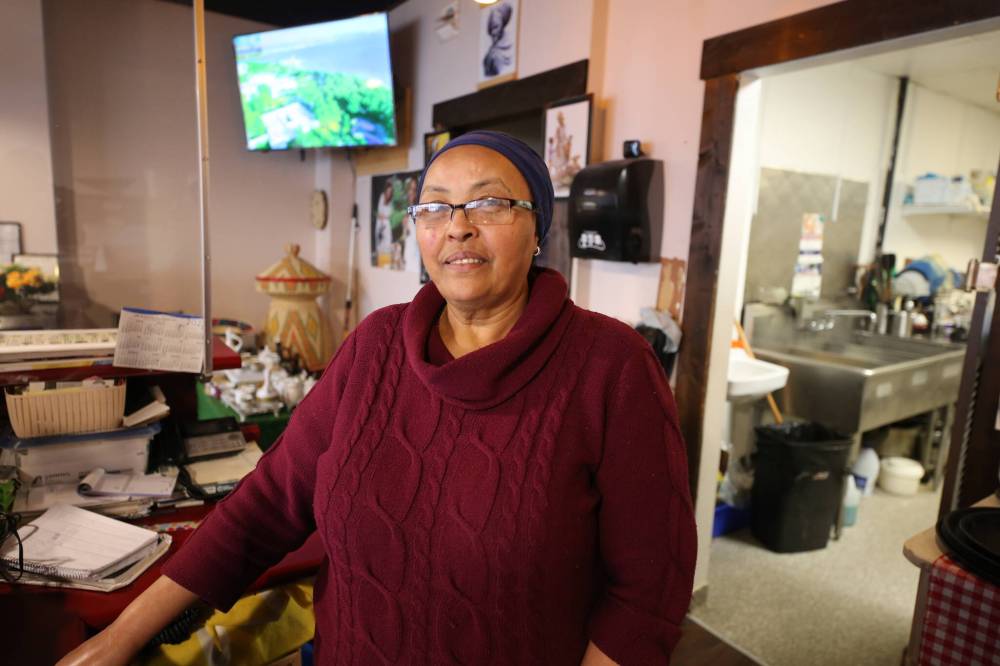
Tana Ethiopian Cuisine owner Zelalem Asefaw says people stopped coming because of COVID and the increasing cost of food.
“People’s concerns about the virus linger, evident in both our patrons and some of our staff who continue to wear masks and gloves,” he said. “The difference is stark when compared to pre-COVID times when such precautions were unnecessary for serving and interacting with customers.”
He explained that the most significant impact had been the extra costs incurred due to COVID, adding that it not only drove up prices across the board but also led to increased labour expenses. “Balancing these rising costs without overly burdening our customers has become a challenging endeavour. In the past, a lunch might have cost around $10, but now it easily surpasses $20,” he said.
When discussing the decline in foot traffic and reduced dining out, Chen said, “I believe it’s not a matter of people lacking the financial means. Rather, the issue lies in the skyrocketing costs of living. People have the funds, but the high prices have made it difficult to spend freely.
“Operating our business is itself a challenge, particularly when managing staff and ensuring a welcoming environment for our customers. The added responsibilities related to COVID, like increased sanitation measures, have driven up operational costs significantly.”
Before the pandemic, Chen said his restaurant used to serve around 150 to 200 customers daily – and surprisingly, this number has remained relatively consistent despite the pandemic. However, there’s been a shift in the demographics of his clientele.
“In the past, our restaurant attracted a predominantly senior audience. Today, we notice a different trend, with a younger crowd taking the place of the seniors. While some seniors still visit, it’s less frequently, perhaps once or twice a month. The younger generation seems less apprehensive about the virus, and their desire to socialize and dine out has reemerged,” Chen told the Sun.
The owner of Komfort Kitchen, Derek Woychyshyn, offered a different perspective. Despite facing significant challenges during the pandemic, he said his restaurant’s consistency, a local connection with the community, and innovation during COVID, such as frozen dinners, have kept his business thriving.
“We’d land at approximately 150 customers per day. However, in the current climate, we’ve experienced about a 20 per cent increase in our daily average, with approximately 170 to 180 customers frequenting our establishment daily,” Woychyshyn said. “We recently witnessed exceptional numbers on a particular weekend, serving 304 meals on a Friday, 298 on Saturday, and hosting 250 guests for a buffet event on Sunday.”
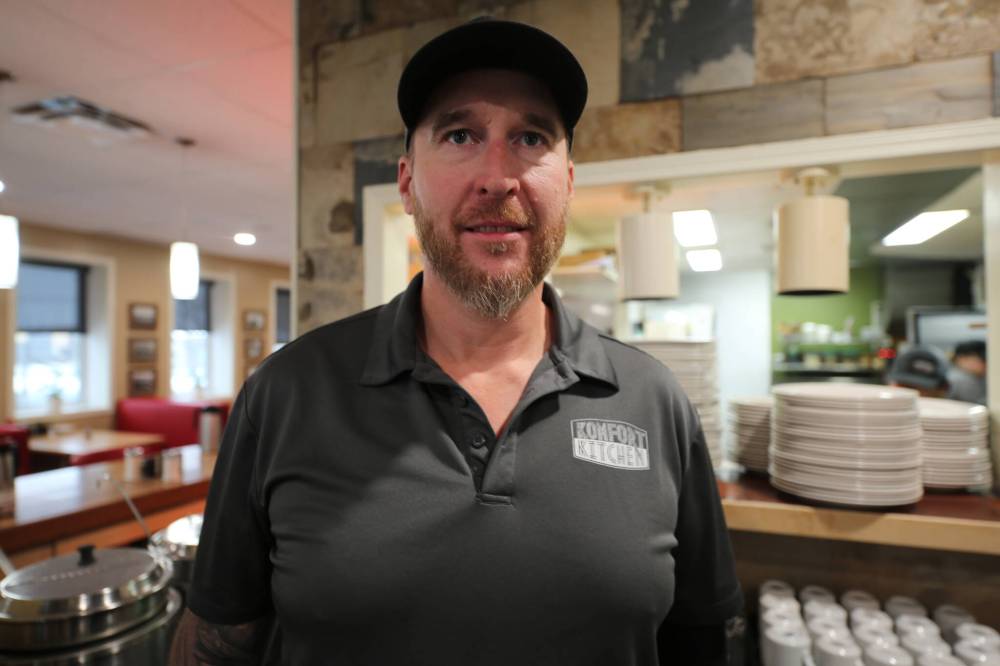
The owner of Komfort Kitchen, Derek Woychyshyn, says the restaurant has experienced about a 20 per cent increase in its daily average, with about 170 to 180 customers frequenting each day.
While the experiences of these restaurant owners differ, there is a common thread running through their stories – the profound impact of COVID-19 on their businesses.
“Labour expenses constitute a significant portion of our operational costs – approximately 50 per cent – while the cost of food makes up about 25 per cent. Balancing the books in light of these mounting expenditures is a continuous struggle,” Woychyshyn said.
“There’s the ongoing concern of rising costs in other areas, such as insurance, property taxes, utility bills, and more. It appears that prices are consistently on the rise, with no sign of relief in sight. As business owners, we must navigate this perpetual challenge of staying afloat while remaining competitive and affordable for our valued customers.”
» aodutola@brandonsun.com
» X: @AbiolaOdutola