
Joan Didion and the legacy of New Journalism
» Neelin Views
Advertisement
Read this article for free:
or
Already have an account? Log in here »
We need your support!
Local journalism needs your support!
As we navigate through unprecedented times, our journalists are working harder than ever to bring you the latest local updates to keep you safe and informed.
Now, more than ever, we need your support.
Starting at $15.99 plus taxes every four weeks you can access your Brandon Sun online and full access to all content as it appears on our website.
Subscribe Nowor call circulation directly at (204) 727-0527.
Your pledge helps to ensure we provide the news that matters most to your community!
To continue reading, please subscribe:
Add Brandon Sun access to your Free Press subscription for only an additional
$1 for the first 4 weeks*
- Enjoy unlimited reading on brandonsun.com
- Read the Brandon Sun E-Edition, our digital replica newspaper
*Your next Free Press subscription payment will increase by $1.00 and you will be charged $20.95 plus GST for four weeks. After four weeks, your payment will increase to $24.95 plus GST every four weeks.
Read unlimited articles for free today:
or
Already have an account? Log in here »
Hey there, time traveller!
This article was published 18/12/2023 (1043 days ago), so information in it may no longer be current.
This upcoming Dec. 23 marks the second anniversary since Joan Didion, award-winning novelist, essayist, and pioneer of New Journalism, passed away. Nevertheless, her art, her thoughts, and her impact on journalism remain.
Joan Didion’s work caught the world’s attention in the late 1960s, but her career started several years prior, in 1956. During her senior year at the University of California, Berkely, Didion won first place in the “Prix de Paris” essay contest sponsored by Vogue. She was awarded a job at Vogue as a promotional copywriter, where she worked for seven years — until 1963, when she finished her Vogue career as an associate feature editor.
In 1968, Didion’s first non-fiction book, “Slouching Towards Bethlehem,” was published. “Slouching” is a collection of magazine pieces interlacing her shrewd observations of the pervasive counterculture in 1960s America with her personal experiences in California. The collection is a poignant criticism of American society, filled with irony and impressive prose. This remains one of the earliest and most prominent examples of New Journalism. Didion would continue to write piercing novels, and intelligent essays and plays, but the journalism world was forever impacted by “Slouching.”
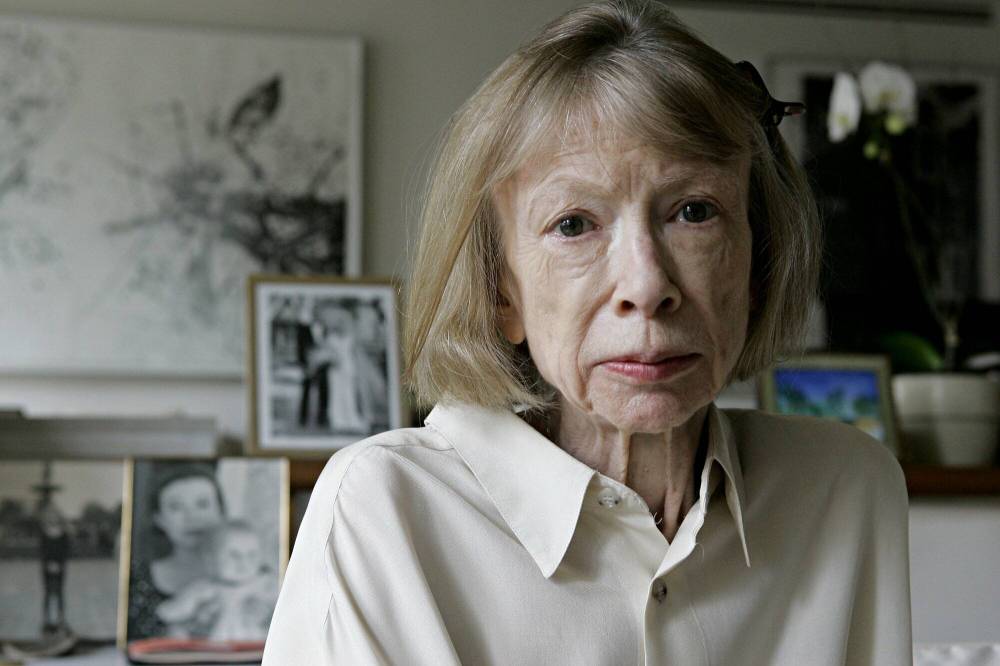
Author Joan Didion is one of the founders of New Journalism, which used literary techniques to tell stories in a way not previously done in journalism. Contemporary journalists, and readers, are indebted to the pioneers of the movement, writes Arden Hebert. (The Associated Press)
“Slouching Towards Bethlehem” was an immediate success. It would not officially be categorized as “New Journalism” until a few years later, but that didn’t matter, people knew it was different. New Journalism would later be described as using four literary techniques to differentiate it from traditional journalism: identifying scene, dialogue, point-of-view, and status detail. Slouching used all of them, and she wasn’t alone. A new “group” was forming, a movement, one that would inspire and impact the journalism world in ways that were never seriously considered before.
The writer credited with the beginning of the New Journalism movement, Tom Wolfe, saw it as a way to re-ignite the public’s interest in journalism and the news by using literary techniques that were unconventional in journalism at the time. In the 1960s and ’70s, a group of intelligent writers started using subjective perspective and substantial imagery to immerse themselves in the stories they reported. Pioneers in New Journalism believed it not only to be just as effective as objective journalism, but even more so. The New Journalists were confident in their belief that objectivity did not necessarily guarantee truth and that objective reports could potentially be more misleading than stories told from a clearly stated personal point of view. The profession is very uncompromising, and this new movement challenged it; and it really started to take shape in 1973, when the first official “New Journalism” collection was released by Tom Wolfe titled “The New Journalism,” which featured writing by himself, Truman Capote, Norman Mailer, Gay Talese, Joan Didion and more. It offered journalism that read like a novel.
The aforementioned writers succeeded in strengthening people’s interest in journalism, as well as inspiring others to begin working in the field. The Neelin Journalism Team, as well as everyone reading this article, has benefited from the work of Didion and Wolfe, along with every other journalist in some way, whether it be from information or inspiration. There are brave and talented people all over the world right now who are risking their lives to report the news, and whether they do this objectively or subjectively, it shows how important it is to acknowledge the brilliant people who keep the world informed.
» Arden Hebert is a grade eleven student at École secondaire Neelin High School