
Budget, infrastructure hot topics at ward meeting
Advertisement
Read this article for free:
or
Already have an account? Log in here »
We need your support!
Local journalism needs your support!
As we navigate through unprecedented times, our journalists are working harder than ever to bring you the latest local updates to keep you safe and informed.
Now, more than ever, we need your support.
Starting at $15.99 plus taxes every four weeks you can access your Brandon Sun online and full access to all content as it appears on our website.
Subscribe Nowor call circulation directly at (204) 727-0527.
Your pledge helps to ensure we provide the news that matters most to your community!
To continue reading, please subscribe:
Add Brandon Sun access to your Free Press subscription for only an additional
$1 for the first 4 weeks*
- Enjoy unlimited reading on brandonsun.com
- Read the Brandon Sun E-Edition, our digital replica newspaper
*Your next Free Press subscription payment will increase by $1.00 and you will be charged $20.95 plus GST for four weeks. After four weeks, your payment will increase to $24.95 plus GST every four weeks.
Read unlimited articles for free today:
or
Already have an account? Log in here »
Hey there, time traveller!
This article was published 12/01/2024 (978 days ago), so information in it may no longer be current.
This year’s budget will be the most difficult for the City of Brandon in years, Ward 2 residents heard at a ward meeting at the North End Community Centre on Thursday evening.
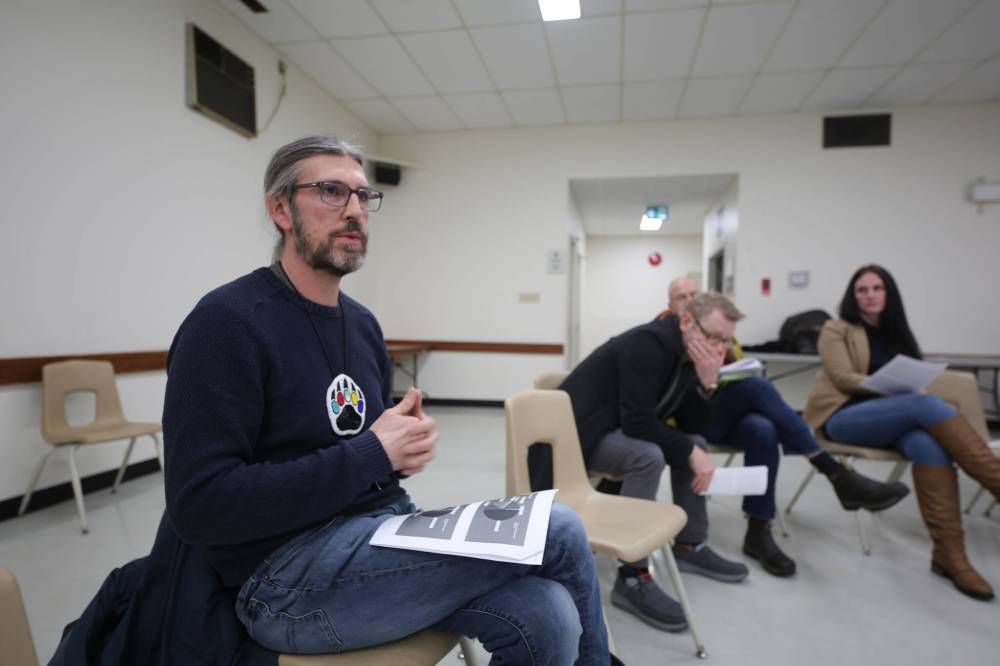
Coun. Kris Desjarlais (Ward 2) told a crowd of 22 people made up of both city employees and constituents that normally ward meetings are held after the budgeting process, but that he would take the opportunity to offer a preview of the document.
He said Brandon is facing a problem a lot of Canadian municipalities are in that existing infrastructure isn’t enough to allow the city to continue growing and the Wheat City doesn’t have enough in reserves to pay for replacements.
On top of that, items on the city’s capital budget are getting more expensive due to inflation hiking the cost of goods and wages.
Using the southeast drainage project as an example, Desjarlais said current drainage infrastructure in that part of the city isn’t enough to handle the amount of water falling on it.
The city decided that the infrastructure needed to be improved, Desjarlais said, but the project was not budgeted for and so the city was required to take on debt to pay for it.
Cory Schermann, Brandon’s chief financial officer and general manager of corporate services, handed out copies of the 2024 proposed budget and explained it for the benefit of attendees.
According to him, Brandon needs to increase its tax revenues by around $5.3 million coming into 2024, around an 11.2 per cent boost.
That doesn’t mean, however, that the city will increase taxes by 11.2 per cent, as some of those increases will come from Brandon continuing to grow its tax base as well as assessment increases.
Desjarlais said Brandon has typically grown at around one per cent per year, but that it would need to grow at a larger rate in order to offset some of the costs associated with that growth.
The handout included a brief rundown of how much it is projected to cost for the city to provide services for the average family owning a residential home valued at around $281,000 in the projected 2024 budget. The combined cost of policing, infrastructure, recreation, transit and other services for that household is around $2,167, or around $5.94 per day.
As someone who considers himself a progressive, Desjarlais said he will find this year’s budget talks especially difficult because of the tough decisions the city will have to make on what it can and cannot afford.
One of the residents present asked when the city expects to hear from the provincial and federal governments on what money they’ll be sending Brandon’s way this year.
City manager Ron Bowles told her that Ottawa typically funds only large projects and those grants, like for the municipal water treatment plant and the outdoor sports complex, are years in the making.
While the previous provincial government ended the seven-year-long municipal funding freeze last year and the new government has promised to keep raising funding, Bowles said the province has talked about its own financial challenges and hasn’t yet said by how much funding will continue to escalate.
Bowles used the proposed project to renovate the downtown Library/Arts Building as an example, saying council will need to decide whether it can afford to proceed with it if it does not receive funding from higher levels of government.
Residents mentioned they were disappointed with the state of the sidewalks in the ward, both downtown and in the flats between the CPKC Rail tracks and the Assiniboine River.
Multiple residents from the flats also expressed disappointment that many of the improvements targeted for their ward are aimed at the downtown core and not their neighbourhood.
They mentioned the demolition of the Eighth Street Bridge and the failure to replace it as well as the removal of an off-ramp from the First Street Bridge to the flats as examples. One resident said that the lack of infrastructure is difficult for many flats residents as there aren’t many services accessible by foot and many seniors in the area can’t take advantage of bike paths.
“It feels like the isolation of a community,” another resident said.
The city’s general manager of development services, Mark Allard, said the city is trying to improve its active transportation routes for pedestrians and cyclists to make it easier to travel without a vehicle.
Desjarlais said the city tried to get federal funding for an Eighth Street Bridge replacement, but was unsuccessful. He added that some of the money put aside in a reserve to replace the bridge was used for other purposes in last year’s budget, but that some funds remain for the city to use to make other transportation improvements in the ward.
A contributing factor to Brandon Transit’s ongoing service review, general manager of operations Patrick Pulak said, is to identify service gaps like those brought up by residents.
He said city council will be briefed on the consultant’s work next month and public consultation will begin in April, with an eye toward presenting the completed report this fall. The consultancy firm has been at work for approximately four months.
“Brandon’s in that weird position where we’re not a big city, but we’re not a small town,” Pulak said. “A lot of cities this size don’t have a transit system.”
What separates Brandon from some of those communities, he said, is the presence of post-secondary institutions like Brandon University and a strong industrial sector.
Asked why the city hired a consultant to carry out the review, Pulak said the people who work for the city are not experts in the subject matter and that leaving it to municipal staff wouldn’t lead to positive results.
Also up for the discussion was the Brandon Community Cadet program. Desjarlais said this year’s budget proposes to shift funding from private downtown security to the cadet program.
Brandon Police Service Insp. Greg Hebert said two cadets hired for the program last year have since been hired as full police officers and the city is hiring to replace them.
Hebert told a resident that the exact role of the cadets is being determined both through conversations with the Brandon Police Association and through the province as it looks to define the role of cadet programs legislatively.
The cadets are intended to handle lower-acuity calls, calling in sworn officers to deal with more serious situations. Though their services are currently focused downtown, Hebert said their operations would likely expand to other neighbourhoods as the city hires more cadets.
Present to answer questions about the transitional housing project on 16th Street North were Ross Robinson of the John Howard Society of Brandon and Shannon Saltarelli, the city’s community housing and wellness co-ordinator.
Robinson said that because of funds received from various levels of government, the operators of the facility — which will also include a sobering centre — will be in good financial shape to keep the facility in good condition even if rental fees aren’t steady due to the short-term nature of tenants’ stays before they transition to other housing.
During the conversation about housing, a couple of residents remarked that there was a Manitoba Housing duplex near their home that has sat empty for the last two years.
Desjarlais said social housing was not a priority of the previous provincial government and the city is engaging new Brandon East NDP MLA Glen Simard and new Housing Minister Bernadette Smith to either get facilities like that occupied or repurposed.
» cslark@brandonsun.com
» X: @ColinSlark