
Cattle producers eye safeguards against theft
Advertisement
Read this article for free:
or
Already have an account? Log in here »
We need your support!
Local journalism needs your support!
As we navigate through unprecedented times, our journalists are working harder than ever to bring you the latest local updates to keep you safe and informed.
Now, more than ever, we need your support.
Starting at $15.99 plus taxes every four weeks you can access your Brandon Sun online and full access to all content as it appears on our website.
Subscribe Nowor call circulation directly at (204) 727-0527.
Your pledge helps to ensure we provide the news that matters most to your community!
To continue reading, please subscribe:
Add Brandon Sun access to your Free Press subscription for only an additional
$1 for the first 4 weeks*
- Enjoy unlimited reading on brandonsun.com
- Read the Brandon Sun E-Edition, our digital replica newspaper
*Your next Free Press subscription payment will increase by $1.00 and you will be charged $20.95 plus GST for four weeks. After four weeks, your payment will increase to $24.95 plus GST every four weeks.
Read unlimited articles for free today:
or
Already have an account? Log in here »
Hey there, time traveller!
This article was published 18/01/2024 (982 days ago), so information in it may no longer be current.
Manitoba Beef Producers is hoping to introduce more safeguards against cattle theft and fraud in the province, bringing Manitoba in line with its neighbours to the west.
The organization is looking at lobbying to have cattle inspection services expanded into Manitoba and for an RCMP officer dedicated to livestock and agriculture.
“We are a standout here in Western Canada and not having any of the measures in place that we see in our three western neighbouring provinces,” Matthew Atkinson, president of Manitoba Beef Producers, told the Sun.
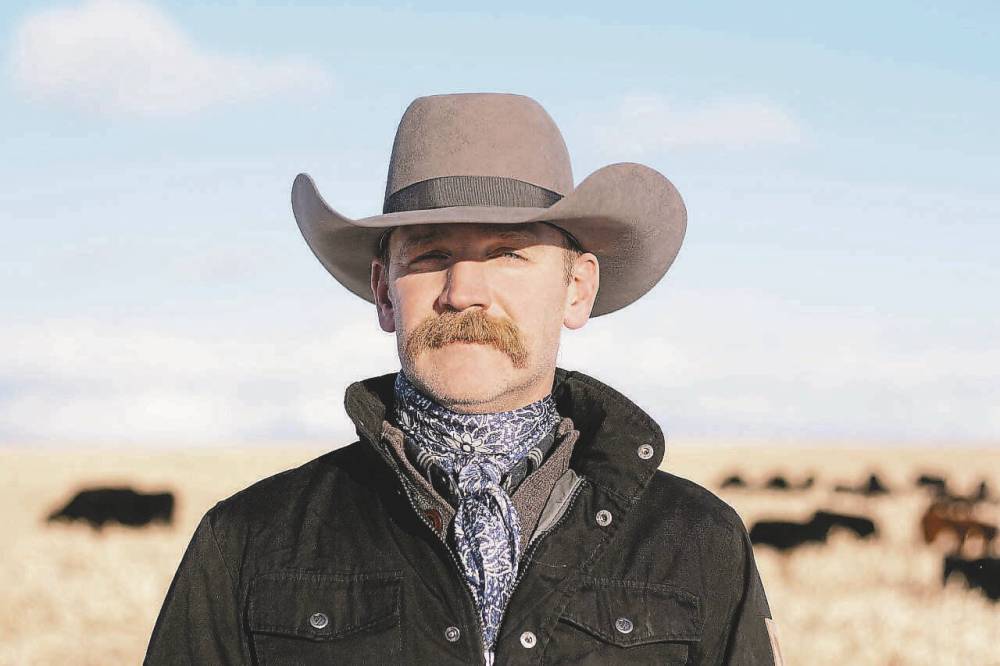
Matthew Atkinson, president of Manitoba Beef Producers, said the organization is hoping to have more discussion about introducing safeguards against cattle theft and fraud at its AGM on Feb. 8 in Brandon. (File)
Atkinson, who owns a cow-calf farm near Neepawa, said the organization has faced some pressure due to the increasing value of cattle, which makes the industry more appealing to criminals, and also from neighbouring provinces that have already invested in safeguard measures.
While he emphasized that the organization serves Manitoba producers and not other provinces, he said that not keeping in line with other provinces and having limited resources to tackle instances of theft and fraud could continue to cause more issues for the industry.
“If that is starting to limit folks’ willingness to do business in Manitoba, then that becomes a problem too,” he said.
According to statistics provided by Manitoba RCMP, 13 investigations into cattle theft cases were opened in 2022. Seven cases involved theft over $5,000, while six involved theft under $5,000. The total number of investigations for 2021 was six, and in 2020 there were 10.
Currently, Manitoba does not have a provincial cattle inspection service. Atkinson said inspection services in Saskatchewan often end up inspecting a lot of Manitoba cattle, but technically they don’t have jurisdiction over Manitoba livestock. Alberta has an agreement with Saskatchewan for Saskatchewan to inspect Alberta’s cattle on their behalf, and vice versa.
“Because we don’t have anybody here, we don’t have really any safeguards in place like that,” Atkinson said.
Inspection services go hand in hand with an RCMP position dedicated to livestock, said both Atkinson and Jason Pollock, CEO of Livestock Services of Saskatchewan.
“The fact that Manitoba Beef Producers is looking at this is really critical to the industry’s health and it’s important, in my opinion, that they assess the addition of an RCMP resource as well as some form of inspection that goes beyond just an RCMP resource,” Pollock said in an interview with the Sun.
In the fall of 2020, Saskatchewan added an RCMP officer position dedicated to livestock investigations. The role of the officer, Pollock explained, is to be a link between the RCMP and the industry. Having an officer knowledgeable about cattle theft helps ensure that cases are dealt with timelier, especially when other RCMP officers may not be as familiar with the industry and are spread thin with other duties, Pollock said.
Both Atkinson and Pollock said theft and fraud in the cattle industry go beyond just the typical cattle rustling with trailers scooping up pastured cows and driving away. The industry is also seeing more white-collar crime in the form of “paper cows,” a scam in which money is received for animals that never end up being delivered or never existed in the first place.
Branding and tagging are options to help track cattle, but there are no laws requiring branding in Manitoba and while electronic Canadian cattle identification agency tags do provide some information about the owner of a given animal, they can be cut out of cattle by people trying to steal them, Atkinson said.
“It’s always a concern if somebody could remove that tag if they did actually want a cow to disappear,” he said.
An inspection service with people who are well-versed in cattle stock and can recognize any irregularities in loads of cattle during sales are valuable for catching potential fraud, but also for keeping an eye on diseases, he added.
While a provincial inspection service does come with a fee to producers, Pollock said the value of such a service is not only reassurance to producers but also to investors.
“One of the key values that we provide to the industry is assurance services,” Pollock said. “Banks and finance companies and creditors can lend money into the Saskatchewan market for the purchase of cattle, knowing that there’s an inspection team, coupled with RCMP resources, that are looking out for ownership and for security interests.”
Issues like costs and advantages, as well as the process for putting legislation in place to require inspection services in Manitoba, are topics the organization hopes will facilitate a good discussion among Manitoba producers at their AGM in early February, Atkinson said.
“It has been split among the producers in the province in the past, but it is important that we look at the options here, especially when we start to get pressures seeing that perhaps we’re losing out on some financing options in Manitoba, seeing it as a liability here without that level of inspection.”
But provincial politics and differing opinions from producers aside, there is consensus that losing cattle to fraud or theft hits any producer hard.
“If you have some calf selling for a couple of thousand dollars, only a very small percentage of that — and it varies throughout the operations — is actually profit,” Atkinson said. “So, it’s really devastating to a producer to lose a number of head… That whole gross value of calves accounts to zero profit or a loss for that year very quickly.”
General manager of Manitoba Beef Producers, Carson Callum, added that the devastation affects more than just the bottom line of producers.
Producers, Callum told the Sun, “care deeply about their animals. And when they’re taken, it can be really hard on their mental health as well.”
The Manitoba Beef Producers’ AGM, tradeshow and banquet is scheduled for take place on Feb. 8 at the Victoria Inn hotel in Brandon.
» gmortfield@brandonsun.com
» X: @geena_mortfield