
Chamber, CUPE support school division tax hike
Advertisement
Read this article for free:
or
Already have an account? Log in here »
We need your support!
Local journalism needs your support!
As we navigate through unprecedented times, our journalists are working harder than ever to bring you the latest local updates to keep you safe and informed.
Now, more than ever, we need your support.
Starting at $15.99 plus taxes every four weeks you can access your Brandon Sun online and full access to all content as it appears on our website.
Subscribe Nowor call circulation directly at (204) 727-0527.
Your pledge helps to ensure we provide the news that matters most to your community!
To continue reading, please subscribe:
Add Brandon Sun access to your Free Press subscription for only an additional
$1 for the first 4 weeks*
- Enjoy unlimited reading on brandonsun.com
- Read the Brandon Sun E-Edition, our digital replica newspaper
*Your next Free Press subscription payment will increase by $1.00 and you will be charged $20.95 plus GST for four weeks. After four weeks, your payment will increase to $24.95 plus GST every four weeks.
Read unlimited articles for free today:
or
Already have an account? Log in here »
Hey there, time traveller!
This article was published 09/03/2024 (928 days ago), so information in it may no longer be current.
Both the Brandon Chamber of Commerce and CUPE 737 voiced their support for Brandon School Division trustees’ proposed 2.92 per cent property-tax increase at Thursday’s school board meeting.
The board agreed by consensus last month during its preliminary budget deliberations to increase the education property tax for 2024-25. It is set to officially approve the budget at its meeting next Monday.
For the owner of an average single-family residential home with an assessed value of $281,000, the 2.92 per cent will mean an increase of $25.36 on their property-tax bill, according to the administration.
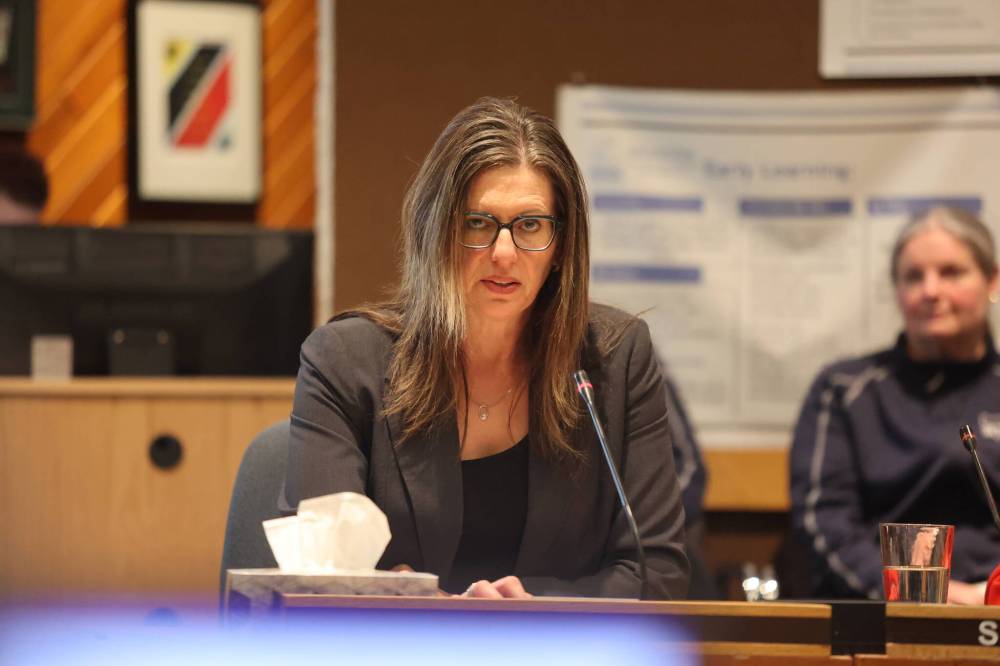
Brandon Chamber of Commerce president Lois Ruston speaks during Thursday evening's Brandon School Division board of trustees meeting. Ruston told trustees that a 2.92 per cent increase in education property taxes is not easy for businesses to absorb, but the impact is outweighed by the importance of students graduating "with the skills that are needed for them to work and enter the workforce." (Abiola Odutola/The Brandon Sun)
Chamber president Lois Ruston admitted the economic climate is challenging, but said the chamber appreciates the importance of ensuring quality education is delivered.
“We certainly encourage tax increase only when necessary and required, because it’s very difficult for businesses currently,” Ruston told the Sun. “Another 2.92 per cent on property taxes is difficult, but it is more important for students to graduate with the skills that are needed for them to work and enter the workforce.”
CUPE Local 737 president Jamie Rose expressed satisfaction with the proposed increase, highlighting its potential benefits for education in the Brandon area, including hiring of additional support staff.
The Canadian Union of Public Employees represents workers in health care, emergency services, education, early learning and child care, municipalities, social services, libraries, utilities, transportation, airlines and more.
“We’re happy that there’s an increase in property taxes to provide quality education,” Rose said after the meeting. “We’re pleased that the board decided to stop using contractors for janitorial services at Crocus Plains School and transferred to our members to do the cleaning.”
He acknowledged the financial support received from both the federal and provincial governments, providing the board with additional resources to enhance the education system.
Rose noted the division had been underfunded for the last seven years by the PC government.
“We need to catch up and I don’t think 2.92 per cent is too big because we need people to be educated. If we don’t have educated people in Manitoba, our communities are not gonna thrive.”
During her presentation at the budget consultation meeting, which drew 12 people from the public, Ruston made a case for active sharing of results from the Continuous Improvement Plan to showcase the quality of education and value for money.
“We believe the Brandon school system could be a leader in Manitoba and encourage you to find ways to illustrate the quality of our education and value for money,” she said.
Ruston stressed the importance of transparent management of reserve funds, aligning them with planned activities, and providing clear explanations to citizens. The chamber proposed collaboration with BSD as an advocacy partner to address the challenges posed by the city’s growth and ensure adequate school facilities.
“Let’s explore the use of public-private partnerships to potentially reduce overall costs and accelerate the development of needed projects to meet community needs,” Ruston said. “The chamber continues to encourage the reinstatement of funding for the Comprehensive Health Care Aide (CHCA) program because it allows students to enter the workforce in the health-care industry, which is one of our economy’s largest needs.”
Brandon Teachers’ Association president Tammy Tutkaluk presented quotes from a teacher survey highlighting the challenges educators face with large class sizes and complex compositions.
One of the quoted teachers stated: “I am not keeping up and my students are suffering as a result. I don’t know if I can do this year after year with no reductions to class size with these needs. I am feeling as though my roles and responsibilities have increased significantly over the past few years.”
Another quote said: “I feel as though more demands are put on me as the needs of the students have skyrocketed. I am stressed and feel constantly overwhelmed. I would not hesitate to find another job if I could.”
Tutkaluk stressed the need for changes, including increasing the classroom teacher allotment, restoring English as an Additional Language (EAL) positions, and providing additional resources for literacy, numeracy, guidance counsellors, psychologists and clinical support.
While acknowledging the hard work of Brandon’s teachers in meeting diverse student needs, the BTA president underscored the strain on educators.
“The school board should commit more additional resources,” she said. “The teachers have done an incredible job in meeting the needs of an ever-increasing diversity of students.”
In an interview with the Sun, board chair Linda Ross addressed concerns raised by both the chamber and teachers’ association, acknowledging the difficulties faced by teachers due to increased diversity in learning needs and classroom challenges.
Expressing commitment to smaller class sizes, Ross pointed to the constraints imposed by four years of austere budgets. She highlighted ongoing discussions with the province for additional funds, citing an 8.5 per cent increase primarily due to rising enrolment.
“This government has made things better. We did get an eight-and-a-half per cent increase,” Ross said.
On public-private partnerships for infrastructure projects, Ross was cautious based on past experiences when the initiative was announced by the former PC government. She emphasized the need for careful consideration when engaging in such partnerships.
In April 2023, the provincial government announced a plan to build nine schools under a public-private partnership model, commonly called a P3 system. The nine schools were to be awarded under a single tender, and the developer would be in charge of ongoing major maintenance, such as roofs and ventilation systems, for up to 30 years, as well as the initial construction.
But in comments made last December, Premier Wab Kinew said P3 schools are expensive because all the cost is upfront, instead of stretched out over a long period with a mortgage, and the NDP would “probably” abandon the plan.
“The P3 model was discarded because, upon reviewing similar initiatives in other jurisdictions, particularly in the Maritimes, it hadn’t been proven to be cost-effective in the long run,” Ross told the Sun. “When you have publicly funded schools, they belong to the division, whereas with public-private partnerships, the ownership dynamics vary depending on the agreement.”
In some cases, she noted, the division doesn’t retain ownership of the buildings; instead, there’s a leasing arrangement, raising questions about maintenance responsibilities and legal obligations.
However, Ross said, “This doesn’t rule out the possibility of other collaborative projects between public entities like school divisions and private partners. While the idea of a private-public partnership for building schools was taken off the table due to its perceived drawbacks, it doesn’t negate the potential for various other partnerships.”
» aodutola@brandonsun.com
» X: @AbiolaOdutola