
Vacancy rates triple for health-care aides
Advertisement
Read this article for free:
or
Already have an account? Log in here »
We need your support!
Local journalism needs your support!
As we navigate through unprecedented times, our journalists are working harder than ever to bring you the latest local updates to keep you safe and informed.
Now, more than ever, we need your support.
Starting at $15.99 plus taxes every four weeks you can access your Brandon Sun online and full access to all content as it appears on our website.
Subscribe Nowor call circulation directly at (204) 727-0527.
Your pledge helps to ensure we provide the news that matters most to your community!
To continue reading, please subscribe:
Add Brandon Sun access to your Free Press subscription for only an additional
$1 for the first 4 weeks*
- Enjoy unlimited reading on brandonsun.com
- Read the Brandon Sun E-Edition, our digital replica newspaper
*Your next Free Press subscription payment will increase by $1.00 and you will be charged $20.95 plus GST for four weeks. After four weeks, your payment will increase to $24.95 plus GST every four weeks.
Read unlimited articles for free today:
or
Already have an account? Log in here »
Hey there, time traveller!
This article was published 25/04/2024 (886 days ago), so information in it may no longer be current.
In nine months, Prairie Mountain Health spent nearly $15 million to pay private agencies for health-care aides — on top of almost $18.4 million it shelled out in the previous 12 months for the same reason, says Kyle Ross, the president of the Manitoba Government and General Employees’ Union.
Health-care aides work within the Prairie Mountain Health region at 52 facilities, including hospitals, lodges and personal care homes. Between 2019 and 2024, the vacancy rates of HCA positions almost tripled.
In 2019 there were 154 vacant HCA positions in the health region, with a vacancy rate of 11.84 per cent.
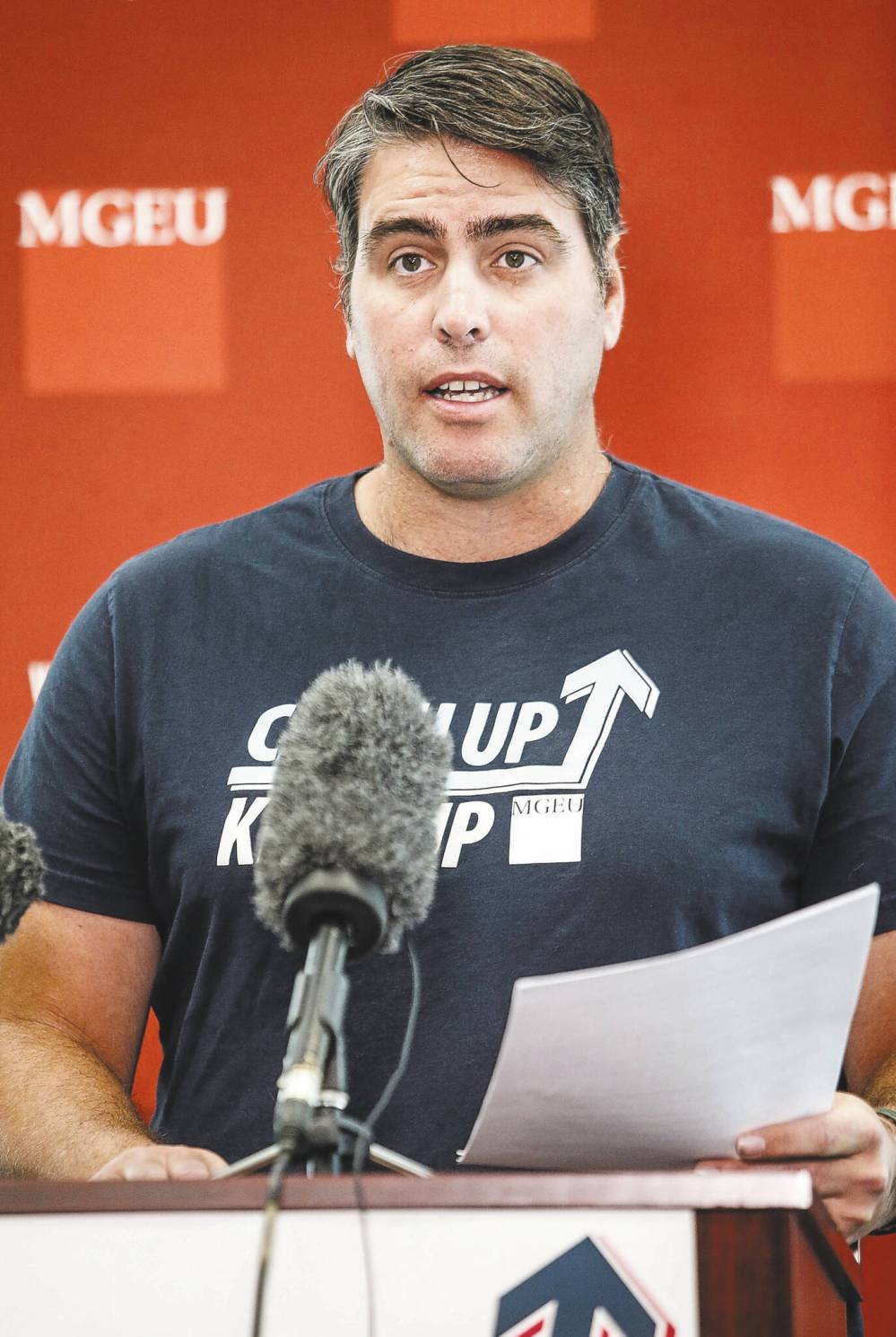
Manitoba Government and General Employees’ Union president Kyle Ross. (File)
Five years later, in 2024, the number jumped to 489 vacancies, which translates to a rate of 30.74 per cent, according to numbers obtained by MGEU through the Freedom of Information and Protection of Privacy Act (FIPPA) and provided to the Sun.
“I knew the numbers would be high, because we hear it from our workers,” said Ross. “But it was higher than I expected, I would say. And with a 30 per cent vacancy rate — or almost 31 per cent — that’s a lot of people, that’s a lot of jobs that can be filled and a lot of service provided to a lot of people,” he said.
To fill the vacancies, PMH turns to private agencies. Currently, the health region has agreements with 30 agencies in the province that provide HCAs through their services, a PMH spokesperson told the Sun in an email.
According to the information MGEU received from its FIPPA request, the amount that the health region has spent on agency HCAs has been steadily increasing.
During the fiscal year between 2022 and 2023, PMH spent $18,391,228 on agency HCAs, with almost half that amount ($8.4 million) on travel costs.
And in a nine-month period from April 1 to Dec. 31, 2023, PMH spent $14,899,755 on private HCAs, which included $6.9 million for travel costs.
It’s not a good use of taxpayer dollars, said Ross.
“I think they find it too easy to go straight to agency. The amount they spent is pretty outstanding, and if you look at the travel costs on top of that, they could actually invest some of those dollars into recruitment or into wages so people in their communities can do those jobs and make the jobs competitive,” said Ross.
A health-care aide provides direct care, personal assistance and support to patients who are ill, elderly or disabled.
They assist patients with bathing, grooming, dressing, toileting, answering call signals and serving meal trays while documenting care, ordering or stocking supplies and assisting those in their care to engage in activity programs.
The reason for such high vacancy rates, said Ross, comes down to wages, benefits and being treated with respect.
“Working in care homes and working serving people is a difficult, challenging job, but it faces different stresses. And I don’t think we pay them enough to be competitive in the market to take on those challenges,” he said.
“The people are choosing other work because it’s less stressful. It’s knowing that when you go to your shift, you won’t be mandated to stay for another shift.
“We need to hire people, and the only way to do that is to make the job competitive in the market so that people are choosing this work over other jobs.”
A top hourly wage for a health-care aide in PMH is $23.99 per hour. Working an average of 2,015 hours a year, the annual wage would be about $48,000.
Taking the $18 million spent by PMH in one year and dividing it by the annual wage equals 375 workers that could be hired within the health region.
“Current government didn’t create this problem, but it exists,” Ross said.

Prairie Mountain Health CEO Treena Slate. (File)
“I think the message for Prairie Mountain Health and Uzoma Asagwara (Manitoba’s health minister) is to put in the effort to understand this job,” he said.
“Uzoma and their government made a commitment to hiring 600 health-care workers. I think you have to make the job competitive in the market if you want to actually meet that commitment. It’s unfortunate that these jobs that fell so far behind … don’t get treated with the same respect as they used to.”
Asagwara told the Sun that Prairie Mountain Health is to be commended for addressing the health-care vacancy rates.
“Our plan, as people can see reflected in our 2024 budget, is to work with our partners across the health-care system, to work with regional health authorities to make strategic smart investments into folks having opportunities in their own communities,” Asagwara said.
“And so that means funding regional health authorities to have health-care aide training in their communities. We know that we need to take a grow-your-own approach, that when people are trained in their own communities they’re more likely to stay in practice in their communities.”
Prairie Mountain Health pays private agencies for HCAs as well as nurses. For the 2023-24 budget, PMH is expecting a deficit of close to $30 million, with three-quarters of that cost going to overtime and agency nurses.
Treena Slate, the health region’s CEO, said ongoing recruitment and retention challenges have made it necessary to use health-care aide agency services to continue to provide safe, quality care for clients, patients, and residents.
“Due to the size of our region, health-care aide agency costs in PMH have a significant component related to reimbursement of travel costs for agency staff,” Slate wrote in an email to the Sun.
“Further related to health-care agency cost increases, during COVID and respiratory outbreaks, PMH had to increase our health-care aide staffing levels as per provincial COVID guidelines, therefore we did have to reach out more to agency staff.
“With recent government funding to increase staffing levels in personal care homes, PMH has added recreation workers, rehab aides, and more HCA positions. We continue to recruit to fill these positions,” Slate said.
MGEU is in the bargaining process between health-care aides and the province. Ross said while he can’t provide an update, “they’re working with us, we’re working with them, we’re hopeful for a good outcome.”
» mmcdougall@brandonsun.com
» X: @enviromichele