
Teachers’ salaries to rise by over 12%
Advertisement
Read this article for free:
or
Already have an account? Log in here »
We need your support!
Local journalism needs your support!
As we navigate through unprecedented times, our journalists are working harder than ever to bring you the latest local updates to keep you safe and informed.
Now, more than ever, we need your support.
Starting at $15.99 plus taxes every four weeks you can access your Brandon Sun online and full access to all content as it appears on our website.
Subscribe Nowor call circulation directly at (204) 727-0527.
Your pledge helps to ensure we provide the news that matters most to your community!
To continue reading, please subscribe:
Add Brandon Sun access to your Free Press subscription for only an additional
$1 for the first 4 weeks*
*Your next subscription payment will increase by $1.00 and you will be charged $20.00 plus GST for four weeks. After four weeks, your payment will increase to $24.00 plus GST every four weeks.
Read unlimited articles for free today:
or
Already have an account? Log in here »
Hey there, time traveller!
This article was published 09/08/2024 (603 days ago), so information in it may no longer be current.
WINNIPEG — Manitoba’s first mega-contract for public school teachers will raise general wages by more than 12 per cent and establish a standardized salary scale for 2026-27.
By the end of the historic agreement, which combines 37 division-specific contracts and spans July 1, 2022 to June 30, 2026, the province’s most veteran and highly trained educators will earn upwards of $125,000, regardless of where they work.
“These salary figures are astronomical. Manitoba teachers are now among the highest-paid in the country, and Canada is already known for being relatively generous when it comes to teacher salaries,” said Cameron Hauseman, an associate professor of educational administration at the University of Manitoba.
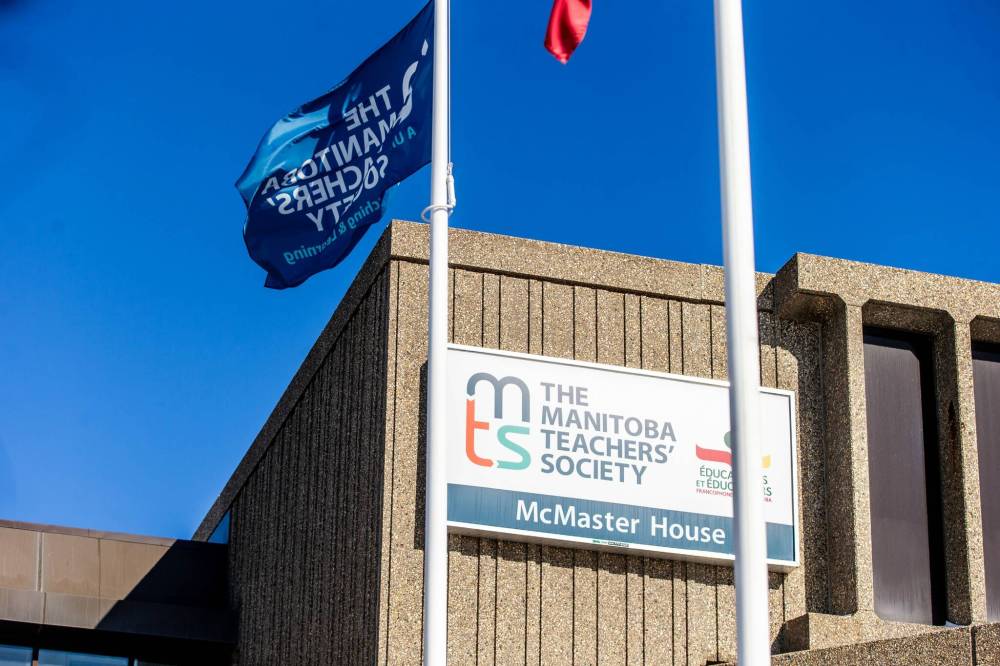
Hauseman said the new contract should entice more people to enter the teaching workforce at a time when schools are grappling with staffing shortages.
The Manitoba Teachers’ Society rallied its anglophone members — who have been without a contract for the last two school years — to vote on a new tentative collective agreement between Aug. 1 and Wednesday.
Ninety-five per cent of voters cast ballots in favour of the deal. The turnout rate was nearly 70 per cent.
Teachers endorsed annual salary hikes of 2.5 per cent, 2.75 per cent, three per cent, and three per cent with an additional “retention adjustment” of one per cent during the final year.
MTS said members can expect an overall increase of 12.85 per cent. Substitute rates are being topped up accordingly.
The public-sector union has long advocated for provincial bargaining to harmonize salaries and working conditions. The former Progressive Conservative government introduced legislative changes in 2020 to lay the groundwork for a singular, all-encompassing contract.
“When the extra one per cent came onto the salary offer from the employer’s organization, along with eventual harmonization of the collective salaries — those things sealed the deal for us,” lead negotiator Arlyn Filewich told teachers during a virtual briefing last month.
Filewich said staff members concluded binding arbitration was likely to yield a similar or worse deal, owing to a recent pattern in public-sector negotiations that does not include a “retention adjustment.”
An impasse in salary negotiations led union and employer representatives to schedule arbitration hearings for this fall. The parties continued to meet in the hopes of resolving an agreement beforehand. A deal on the now-official contract was reached July 11.
The deal covers all educators except employees of the Division scolaire franco-manitobaine and those who belong to MTS federal bargaining units in Sandy Bay Ojibway First Nation and Nelson House.
This includes the Brandon School Division. Reached by phone on Thursday, Supt. Mathew Gustafson said he needs to examine the contract before he knows what the implications of the new deal will be.
“I haven’t seen the actual document … Some of the initial things in terms of salary and those kind of things will build into our upcoming budget process in October,” Gustafson said. “That’s when we start doing that work. I will have to review some of our policies and procedures and make some adjustments within that.
The contract’s expiration will coincide with the September 2026 rollout of a new provincewide teacher salary schedule.
Under the harmonized grid, new hires with a bachelor’s degree in education will make more than $70,000 annually. Within a decade, those employees will earn six-figure salaries, even without additional credentials.
Teachers in the Frontier, Flin Flon and Kelsey school divisions will receive an additional $3,000 northern allowance.
In Thompson-area schools, employees will maintain status-quo salaries. These educators now no longer have to forfeit pay if they are unable to travel to work due to inclement weather.
The Manitoba School Boards Association highlighted new language in the agreement that is “in support of truth and reconciliation” in a news release Thursday.
Educators who teach at least 12 per cent of the time in an Indigenous language will be compensated with a $500 allowance.
The contract also guarantees paid leave for up to three days for traditional Indigenous ceremonial, cultural and spiritual observances.
Other non-salary articles include a 5.5-hour limit on instructional days and an increase in the minimum preparation time so teachers are entitled to 210 minutes of prep every cycle (typically a six-school day rotation) in 2025-26.
A single day off is to be credited for 50 hours of voluntary extracurricular activity, up to a maximum of three days.
Divisions will have to recognize professional development over the summer months and grant up to two more days of personal leave during the year.
Following an on-the-job injury, be it physical or psychological, teachers will be reimbursed with sick leave days and up to $1,000.
While describing the deal as a win for roughly 16,000 public school teachers, Hauseman questioned the absence of specific language surrounding class-size caps and composition.
The associate professor’s other criticism is the agreement’s generous pay and “advertising” for uncertified substitutes because he said it does not encourage certification.
Substitute pay is being standardized by geographical region for September 2025. When that grid comes into effect, employees with temporary teaching permits will earn 80 per cent of their certified colleagues’ wages.
» Winnipeg Free Press, with files from The Brandon Sun