
Pelican Lake gets wake-up call on invasive species threat
Advertisement
Read this article for free:
or
Already have an account? Log in here »
We need your support!
Local journalism needs your support!
As we navigate through unprecedented times, our journalists are working harder than ever to bring you the latest local updates to keep you safe and informed.
Now, more than ever, we need your support.
Starting at $15.99 plus taxes every four weeks you can access your Brandon Sun online and full access to all content as it appears on our website.
Subscribe Nowor call circulation directly at (204) 727-0527.
Your pledge helps to ensure we provide the news that matters most to your community!
To continue reading, please subscribe:
Add Brandon Sun access to your Free Press subscription for only an additional
$1 for the first 4 weeks*
*Your next subscription payment will increase by $1.00 and you will be charged $20.00 plus GST for four weeks. After four weeks, your payment will increase to $24.00 plus GST every four weeks.
Read unlimited articles for free today:
or
Already have an account? Log in here »
Hey there, time traveller!
This article was published 27/08/2024 (584 days ago), so information in it may no longer be current.
The RM of Prairie Lakes has considered implementing a program to prevent the spread of aquatic invasive species into Pelican Lake for about a year, but Reeve Darren Seymour said an incident a couple of weeks ago solidified its necessity.
After lobbying the provincial government for support, Seymour said a mobile watercraft cleaning station was dispatched to the lake, situated about 90 kilometres southwest of Brandon, on a couple of weekends.
“We actually did stop a boat that had zebra mussels present from getting on the lake,” Seymour said of an incident two weekends ago. “By that cleaning station being there, they stopped a boat and decontaminated it before it launched in the lake.”
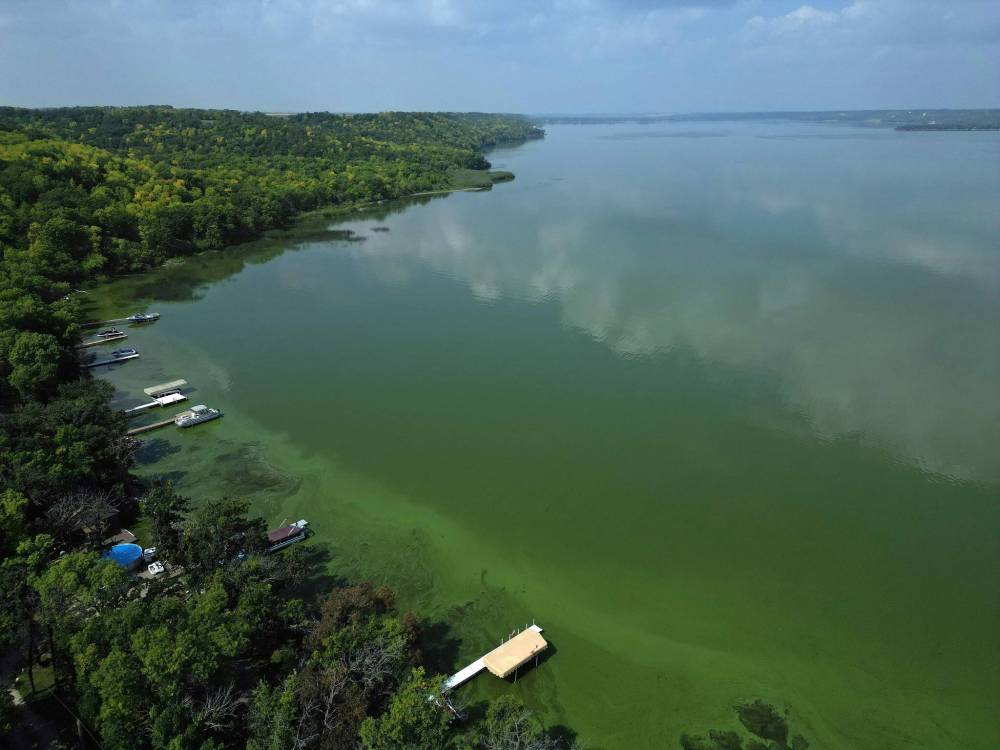
After watching the efforts to stop the spread of zebra mussels in Clear Lake in Riding Mountain National Park, as well as Sandy Lake a short distance to the south of there, and speaking with the leaders of those efforts, Seymour said the incident made reality hit home.
“There’s people out there that say, ‘Oh you’re never going to stop them,’” Seymour said. “Well, we can’t sit back and do nothing.”
He said a survey circulating among residents said “loud and clear” that Pelican Lake needs to be protected as a resource.
The rural municipality has posted a draft of its aquatic invasive species plan, which would go into effect next year, on its website. A community meeting will be held in Ninette on Sept. 8 so that residents and lake users can give feedback on the proposal.
Under the proposed program, regular users of the lake can pay $100 to get a decal they can place on their watercraft, signifying that they will restrict use of that craft to just Pelican Lake for the year. This will grant the users the ability to launch their craft from any launch on the lake.
One-time or irregular users of the lake would be required to launch their craft at Ninette and pay a fee to have it cleaned or inspected before entering Pelican Lake.
According to Seymour, the fees are being structured like this so that the costs are borne by users of the lake rather than taxpayers in the RM.
While there has been some criticism about the proposed fees, the reeve said they’re aimed at just recovering the costs of the program and not to make a profit. Should the actual costs to the RM be lower than expected, he said he’s open to lowering them.
More than a decade ago, aerators were installed in Pelican Lake to deal with algae in the water.
Seymour said that if zebra mussels were to get into the lake, the municipality is worried that they’ll plug up the aerators and potentially ruin the beaches.
“Our lake is better now than it’s ever been,” he said.
“I grew up as a kid coming there and to have the water clarity that we have right now at this time of year is really unheard of … The lake is healthy and, in turn, the fishing is healthy. We’re getting a lot of people coming to Pelican Lake to fish from all over the province, which is wonderful and we want to see that. But it’s also scary, because if we were to introduce zebra mussels, we may end up going backwards into a stale lake.”
The reeve also said that over the last couple of weeks, representatives from other municipalities have reached out to say that they’ve realized their communities need to take action as well.
“I think we’re slowly catching momentum,” Seymour said.
Earlier this year, the Sandy Lake Water Protection Working Group bolstered its existing inspection program.
When an inspected boat goes to leave the lake, the operator can purchase a $15 metal tie that attaches the boat to its trailer. If that boat returns, and still has its tag intact, that means the boat hasn’t launched elsewhere and it is free to launch again on Sandy Lake.
According to the president of the working group, Daryl Kines, the program has had “good buy-in and support from the community,” though there has been a bit of a cost to buy the ties and staff the inspection station.
While the working group wasn’t able to secure any federal funding, Kines said some provincial funding was obtained through the Urban/Hometown Green Team program.
Back in May, Kines told the Sun they were concerned that traffic on Sandy Lake might increase this year with Clear Lake closed to watercraft. However, he said it’s been hard to tell whether traffic has increased or remained on par with last year.
“We are definitely going to continue with the program next year and we encourage people who are in the program to have their boat tied to their trailer when they take it out of the water to store it,” Kines said.
“We’re also encouraging people who are around the lake with cottages to join our program if they have not already done so.”
He said he was glad to see other Westman groups taking the threat of aquatic invasive species seriously, though he would also like to see the province step up its own efforts.
By email, a spokesperson for Parks Canada said there were no updates on the results of continued searches for zebra mussels in Clear Lake or whether the agency would decide to use potash as a pesticide to attempt to kill any mussels currently present in a containment area around Boat Cove.
The RM of Prairie Lakes’s open house on the proposed aquatic invasive species program will be held at Ninette Community Place at 158 Queen St. North in Ninette at 10 a.m. on Sunday, Sept. 8.
» cslark@brandonsun.com
» X: @ColinSlark