
Developers want more changes to DCCs
Advertisement
Read this article for free:
or
Already have an account? Log in here »
We need your support!
Local journalism needs your support!
As we navigate through unprecedented times, our journalists are working harder than ever to bring you the latest local updates to keep you safe and informed.
Now, more than ever, we need your support.
Starting at $15.99 plus taxes every four weeks you can access your Brandon Sun online and full access to all content as it appears on our website.
Subscribe Nowor call circulation directly at (204) 727-0527.
Your pledge helps to ensure we provide the news that matters most to your community!
To continue reading, please subscribe:
Add Brandon Sun access to your Free Press subscription for only an additional
$1 for the first 4 weeks*
- Enjoy unlimited reading on brandonsun.com
- Read the Brandon Sun E-Edition, our digital replica newspaper
*Your next Free Press subscription payment will increase by $1.00 and you will be charged $20.95 plus GST for four weeks. After four weeks, your payment will increase to $24.95 plus GST every four weeks.
Read unlimited articles for free today:
or
Already have an account? Log in here »
Hey there, time traveller!
This article was published 05/09/2024 (782 days ago), so information in it may no longer be current.
Brandon is getting closer to implementing updated development cost charges (DCCs), but representatives from Brandon’s construction and business sectors say they’d like to see some changes made to the city’s most recent proposal before city council votes on whether to adopt it.
Last week, city staff presented their most recent proposal for increases to the DCCs it levies on developers as a contribution toward the construction of municipal infrastructure that will benefit them.
The charges went into effect in 2019 and have since then only seen adjustments tied to the consumer price index.
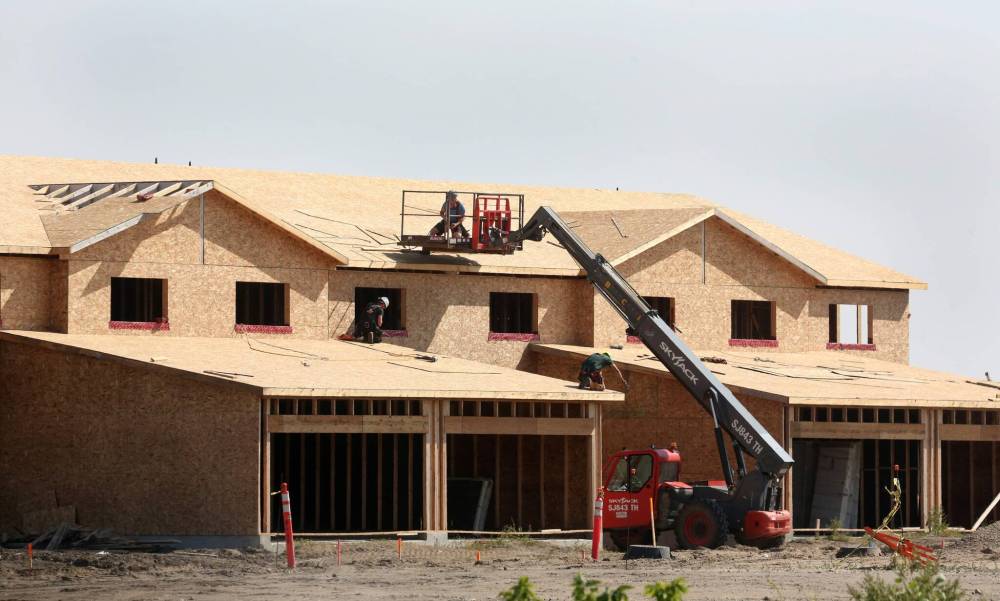
Late last year, an earlier proposal would have seen existing charges quadruple across the board.
This latest proposal would see rates go up by 1.8 to three times in so-called “growth areas” of the city and between 9.8 and 16.1 times in “established areas.”
In growth areas, the per-unit DCC for low-density housing would go up from $8,184 to $21,193, from $5,294 to $15,660 per high-density unit and from $4.70 per square foot for non-residential projects to $8.62.
In established areas, the per-unit DCC for low-density housing would go up from $911 to $12,805, from $589 to $9,462 per high-density unit and from $0.53 per square foot for non-residential projects to $5.21.
Established areas are parts of Brandon north of Richmond Avenue, west of 17th Street East, east of 34th Street and south of the Assiniboine River. Everything else is considered a growth area. Under the current rubric, DCCs in established areas are much lower than in growth areas.
One of the groups that was concerned with the early proposals was the Construction Association of Rural Manitoba. In January, executive director Shawn Wood said CARM was worried about how the initial proposal would hike the cost of development at a time when the country is trying to boost residential construction.
Earlier this week, Wood told the Sun that he’s glad the city has listened to some of their feedback, but there are more tweaks he’d like to see.
“They have a 20-year plan that those numbers are driven off of,” Wood said. “But what we don’t see is, in five years when we review this as posed by the city, what are our markers to say that we’re actually meeting those requirements?”
That concern is partially driven by the fact that when the charges were first implemented, they were supposed to be reviewed every three years. That hasn’t happened. The city’s most recent proposal recommends minor reviews every year and major reviews every five years.
“That’s a bit of our concern — are they going to hold through with meeting and consulting and seeing where that money is going?” Wood said. “It’s one thing to pay some money forward for that infrastructure, but if intersections don’t get changed in that time frame, what’s the accountability?”
He said that ultimately, it won’t be developers who bear the cost of these charges, as they still need to see a certain percentage of profit. Instead, those costs will trickle down to the consumer.
“We’re worried that this is going to stall some of that growth, especially when it comes to commercial and industrial,” he said. “If guys can build those buildings for less somewhere else, then are they going to build in Brandon?”
The city’s latest round of gathering feedback from developers on the proposed changes was scheduled to end on Wednesday.
Wood said on top of accountability, CARM is pushing to see a single price for DCCs across the entire city. If some areas or types of projects are exempted from paying toward certain kinds of projects, the concern is that it will increase the burden on the rest of the city.
Another of the changes made in the latest round of proposals was to assume that Brandon will get at least 50 per cent funding from higher levels of government for infrastructure projects.
At a special council meeting last week, city staff said the development sector had wanted to assume that the municipal, provincial and federal governments would each chip in one-third of the project costs.
Wood said that had been a request his organization had made after looking at historic infrastructure funding examples.
There is a risk under that funding assumption that if funding from higher levels of government is not received, more money will need to be collected through DCCs to fund projects.
Developers understand that risk, Wood said, and are willing to help lobby higher levels of government to play a financial role in these projects. He said he has noticed a greater effort from the city recently in lobbying senior levels of government for funding and it shows the power of the collaborative approach.
One of Brandon’s largest developers is the J&G Group, through its subsidiary VBJ Developments.
Reached by phone on Tuesday, VBJ vice-president of planning services Steve McMillan said they had been under the impression until a meeting last week that the plan was to move from the current divide between emerging and established areas to a single, city-wide set of DCCs.
While some infrastructure is already in place for infill developments, McMillan said considerations still have to be made for their impact on water treatment and underground piping.
McMillan said his company is digging into the new proposals to get a handle on them.
“It seems like we’re getting a break when that’s not the case,” he said. “The costs are there, it just takes a lot of work to go into it, to figure out who’s responsible for what cost.”
While some of the prices being charged for certain kinds of infrastructure seem to follow increases to construction costs and inflation, McMillan said others seem out of whack.
“When you look at the cost for drainage, wastewater and water treatment, they’ve gone up like 800 per cent on some of them,” he said.
“The land drainage that was allocated in 2018 was $9 million and then the new one this year is at $68 million … These are massive amounts of money that I guess somehow got lost five years ago.”
He agreed with Wood’s assessment that the bulk of these extra costs will ultimately be pushed onto the consumer.
“Banks have to see certain percentages of profit margin to get money lent,” he said. “That’s just how it works. I’m hearing new developments are getting subsidized by the general taxpayer. That’s not the case. We put in 100 per cent of all infrastructure at new developments at our cost and then we’re paying these off-site costs on top of that.”
McMillan also agreed with Wood’s call for greater accountability for infrastructure spending, referencing the city’s recent large increases to water and wastewater utility rates after going seven years between rate applications and racking up deficits in the meantime.
Lois Ruston, president of the Brandon Chamber of Commerce, said while the general understanding has been that DCCs would be going up, communication issues have muddied the waters around them and what they’ll be used to pay for.
“I think there’s a willingness and understanding from those who are looking to build more homes and develop our community that this needed to happen and that this increase was going to take place,” Ruston said. “It’s just unfortunately that they weren’t able to be involved and consulted with from the beginning.”
When the initial, larger increases were unveiled, Ruston said it raised alarm bells over the affordability of building in the city.
“We don’t want it to be seen that it’s simply not affordable to build here in Brandon,” she said.
Like the others, Ruston said accountability is needed for the funds collected through DCCs, citing both the water rates and hefty property tax increases an MNP report last year suggested were needed to keep Brandon financially sustainable.
“Currently, it makes it very difficult to plan,” she said. “It makes it difficult for a business to know what to anticipate and what additional costs they would be looking at to build in our community.”
In May, the Brandon Downtown BIZ asked council to exempt the city’s core from DCCs as it was feared that the increases could thwart efforts to revitalize the area. The latest proposal does not have any specific carve-outs, though it leaves room for council to exempt certain areas or project types from the charges if desired.
In an email, BIZ executive director Emmy Sanderson said while they would have liked to see a blanket downtown exemption, they understand the complexities and appreciate having been engaged on the issue.
“The new bylaw includes the ability for council to create offsets and discounts. As well, current incentives include DCC offsetting,” she said. “Both of these can achieve similar results, so we are optimistic about the ability to continue to promote development in the downtown.”
» cslark@brandonsun.com
» X: @ColinSlark
History
Updated on Thursday, September 5, 2024 12:42 PM CDT: Fixed listing of charges for established and growth areas listed under the wrong sections.