
Long-promised flood-prevention project in Manitoba under review with no timeline
Advertisement
Read this article for free:
or
Already have an account? Log in here »
We need your support!
Local journalism needs your support!
As we navigate through unprecedented times, our journalists are working harder than ever to bring you the latest local updates to keep you safe and informed.
Now, more than ever, we need your support.
Starting at $15.99 plus taxes every four weeks you can access your Brandon Sun online and full access to all content as it appears on our website.
Subscribe Nowor call circulation directly at (204) 727-0527.
Your pledge helps to ensure we provide the news that matters most to your community!
To continue reading, please subscribe:
Add Brandon Sun access to your Free Press subscription for only an additional
$1 for the first 4 weeks*
*Your next subscription payment will increase by $1.00 and you will be charged $20.00 plus GST for four weeks. After four weeks, your payment will increase to $24.00 plus GST every four weeks.
Read unlimited articles for free today:
or
Already have an account? Log in here »
Hey there, time traveller!
This article was published 17/10/2024 (563 days ago), so information in it may no longer be current.
WINNIPEG – A long-promised $600-million flood prevention project in Manitoba is now under review, and the provincial government has opened the door to redesigning it with no timeline for starting construction.
The NDP government said it has asked Ottawa to pause a decision on the plan, in order to fully consult First Nations and consider possible alternatives to the design. It would currently have two large outlet channels built to drain water from Lake Manitoba into Lake St. Martin then into Lake Winnipeg.
“The federal government had already expressed significant concerns,” Lisa Naylor, Manitoba’s minister of transportation and infrastructure, said Thursday.
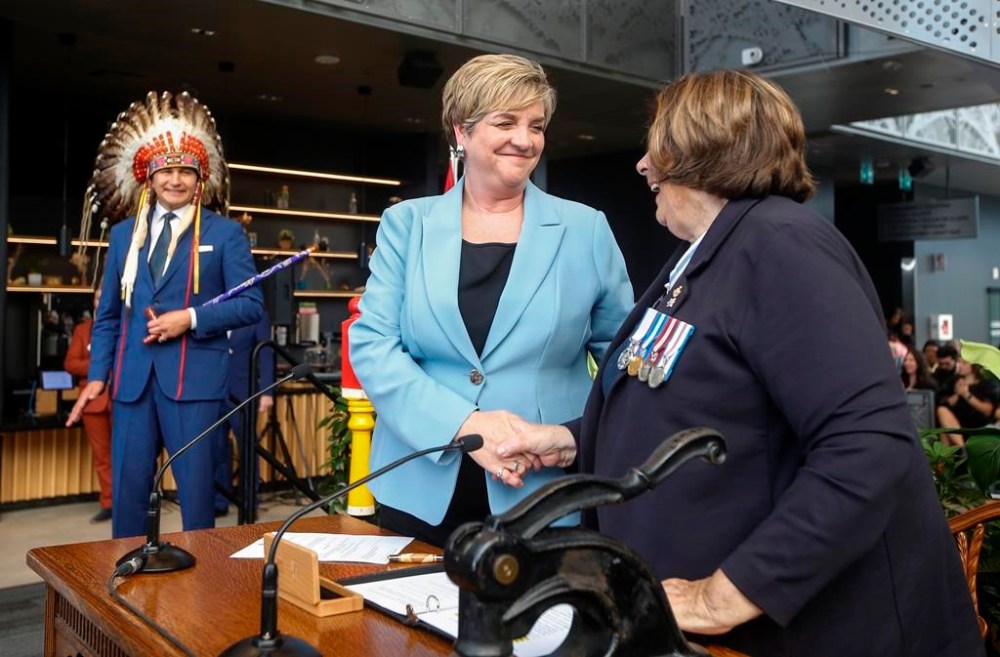
“If the federal government had withdrawn the licence because of the environmental impact, the project would be dead. And so, I don’t want to see that happen.”
The project has been talked about for more than a decade, following severe flooding in 2011 that forced thousands of people from their homes.
The former Progressive Conservative government promised in 2016 to build the project quickly but butted heads for years with federal regulators, who called for more consultation with First Nations that would be affected.
In 2022, a Court of Queen’s Bench judge ruled the government did not consult properly before setting up a right of way on Crown land for preparatory work, such as groundwater monitoring.
A report in June from the federal Impact Assessment Agency said the project’s environmental effects could be addressed, but it would have significant impact on Indigenous land use. The federal environment minister said he would refer the issue to cabinet for a decision.
Seeking a pause on that process will give the province time to address concerns of First Nations communities and Ottawa, Naylor said.
The Tories, now in Opposition, said there was consultation and the project needs to move ahead to prevent another disastrous flood in the region.
“I think there were hundreds and hundreds of consultations that have been done with First Nations,” interim party leader Wayne Ewasko said. Technical documents, including papers translated into Cree and Ojibway, were posted online and shared with community members, he added.
Naylor said the pause will also let the government consider changing the project’s design.
“A number of smaller mitigation projects have taken place over the years that may change what the outcome ultimately needs to look like,” she said.
The province is signing a memorandum of understanding on next steps with the Interlake Reserves Tribal Council, which represents several communities in the region.
Cornell McLean, chief of Lake Manitoba First Nation, said he’s pleased with the government’s commitment because there has been no meaningful consultation to date.
“There has been none, and they say there were text messages, phone calls, faxes. And I said, ‘Well, that’s not consultation,'” McLean said.
“If you want to have true consultation, it’s face-to-face, meaningful consultation.”
This report by The Canadian Press was first published Oct. 17, 2024.