
Work of ECEs subject of upcoming conference
Advertisement
Read this article for free:
or
Already have an account? Log in here »
We need your support!
Local journalism needs your support!
As we navigate through unprecedented times, our journalists are working harder than ever to bring you the latest local updates to keep you safe and informed.
Now, more than ever, we need your support.
Starting at $15.99 plus taxes every four weeks you can access your Brandon Sun online and full access to all content as it appears on our website.
Subscribe Nowor call circulation directly at (204) 727-0527.
Your pledge helps to ensure we provide the news that matters most to your community!
To continue reading, please subscribe:
Add Brandon Sun access to your Free Press subscription for only an additional
$1 for the first 4 weeks*
*Your next subscription payment will increase by $1.00 and you will be charged $20.00 plus GST for four weeks. After four weeks, your payment will increase to $24.00 plus GST every four weeks.
Read unlimited articles for free today:
or
Already have an account? Log in here »
Hey there, time traveller!
This article was published 22/10/2024 (529 days ago), so information in it may no longer be current.
Early educators aren’t just babysitters, and the interactions they have with children — as early as newborn babies — will impact their lives, says Dr. Jean Clinton, a child psychiatrist and keynote speaker for an upcoming conference in Brandon.
Clinton said she believes the role of the early childhood educator in care and education, is the most important in the education system. And this Friday, more than 400 people who work with children have registered to learn from her at the annual Westman Early Years Conference at the Victoria Inn.
“One of the challenges is that early childhood educators have not been the best advocates for their profession,” Clinton said.
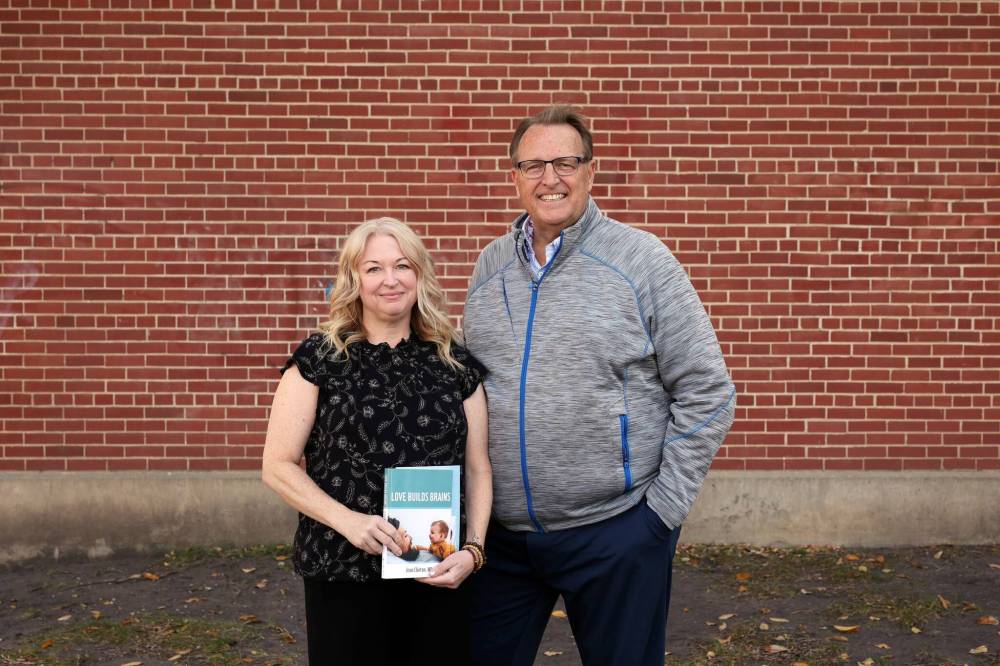
Shown here are Holly Orr, an early childhood educator in Westman and organizer of this year’s Westman Early Years Conference, and Lon Cullen, one of the creators of the conference. The conference runs Friday at the Victoria Inn. (Tim Smith/The Brandon Sun)
“They’ve been viewed as just babysitters. Now, babysitters count for a heck of a lot, but early childhood educators or assistants are professionals,” said Clinton in a phone interview with the Sun.
“I’ve been at this for almost 40 years,” she added, “and we’ve come such a long way, but we still have a long way to go, because people don’t know that the brain is so malleable in little ones.”
Clinton is a clinical professor of psychiatry and behavioural neurosciences of the Michael G. DeGroote School of Medicine at McMaster University in Hamilton, Ont. In the past, she has advised the Ontario government on reforms to that province’s education system.
Clinton is also author of a book called, “Love Builds Brains,” and said that the architecture of the brain — the areas that get wired and strengthened — is built by the experiences had by babies, toddlers and preschoolers.
Educators are “terrific” in terms of programming and looking after physical needs in childcare centres, but Clinton said she wants to help them to focus on relationships, “the nutrition of the brain.”
“So, it means things like, you don’t just have to ‘get through’ diapering and through feeding, because the diapering is actually the care that you’re there for,” Clinton said, adding that when a baby is crying, instead of thinking it is attention seeking — realize that it is “connection-seeking.”
“So, this is going to be very much about looking at some of the myths and saying, this is how you build responsive, nurturing, stable relationships with little ones,” she said.
“And the really good news is — I’m going to be wanting to change the brain of perhaps some of the early childhood educators in the room,” said Clinton.
Holly Orr, early childhood educator in Westman and organizer of this year’s conference, said she is looking forward to learning from Clinton, and so are the 420 participants of the conference that is now sold out and has a waiting list.
“The educators, assistants, directors, and managers who are coming have experience working with all ages — infant, toddler, preschool and school age up to 12 years old or so,” said Orr.
“But some of our educators have other responsibilities, so they might work with Child and Family Services, Big Brothers and Big Sisters, or Jordan’s Principal.”
The value for the educators, added Orr, is hearing a message of inspiration, support and reassurance about their roles that are incredibly important, and “so much more than daycare.”
“We’re working with parents to make sure they understand that we are not putting their children in a room and just watching them play,” Orr said, adding, “we are making sure that their development is on track, that they’re cared for and they feel as loved as they would at home — and they’ve got a nurturing and caring adult whose face lights up when they show up every morning.”
This Friday’s Westman Early Years conference was created a decade ago by a committee at the Brandon YMCA led by Lon Cullen, the facility’s CEO.
Cullen has an immense background in education, with 18 years as principal of three schools within the Brandon School Division and said education has always been a thread in his life, adding early childhood education is important.
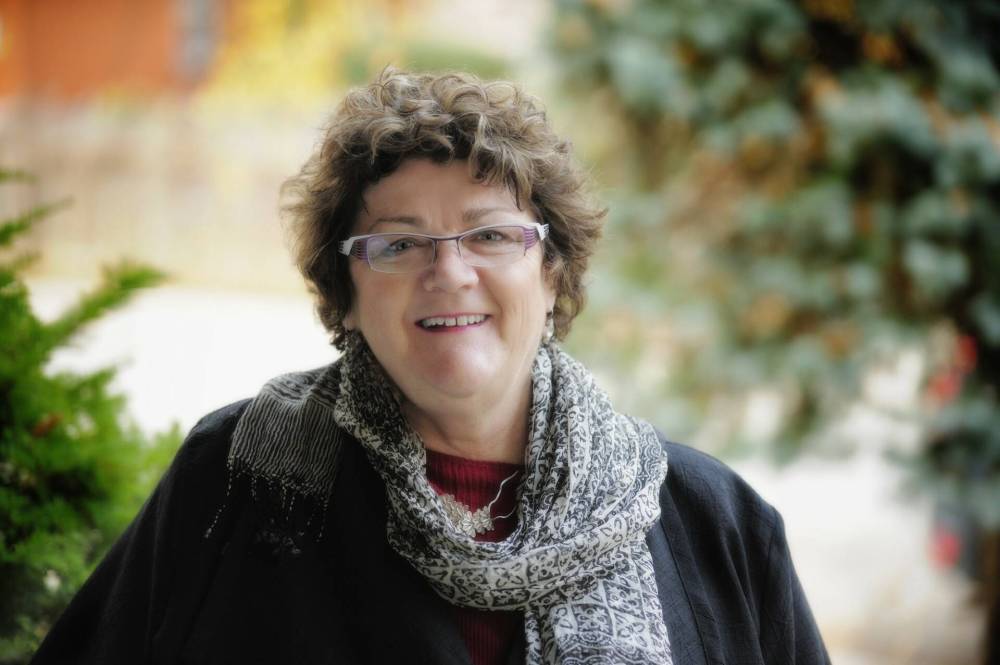
Dr. Jean Clinton, a child psychiatrist and clinical professor of psychiatry and behavioural neurosciences of the Michael G. DeGroote School of Medicine at McMaster University in Hamilton, Ont., is the scheduled keynote speaker for the conference. (Submitted)
“There’s lots of research out there that says kids who come through the (childcare) centres are better prepared for school than anywhere else,” Cullen said.
The first conference was set up 10 years ago as a professional development day for the Y’s staff who worked at the four childcare centres it had at the time. There were 50 people in attendance.
“It was just important to do,” said Cullen. “Teachers have professional development to stay current and up with the latest trends, why don’t we have the early childhood staff do the same thing?”
“We wanted to make sure that our staff had continuous education, but we also wanted to provide quality, affordable professional development in Brandon without having to travel to Winnipeg or pay money for a conference and flights — things like that,” Cullen said.
Holding a conference on a workday means having to close childcare centres, which is permitted by the Manitoba government. It has granted two professional development workdays per year for early childhood educators, childcare assistants, and home-based providers.
Orr, who also leads workshops, does consulting and teaches online courses for those who work with young children, said professional development needs to happen on an ongoing basis, because the work is so challenging.
“It is very hard,” said Orr. “It is emotionally exhausting, but very rewarding, otherwise, people wouldn’t do it. We don’t do it for the money, because we’re still working on increasing wages and recognition for our professionalism. It’s been better over the last couple of years, but it’s still a work in progress,” she said.
Clinton said she agreed, “they should be paid one heck of a lot more than they get. So, I will be spending some time on self care because the emotional state of the educator creates the weather in the class for the kids.
“It’s not selfish to look after yourself, it’s professional to look after yourself so that you can do your job better. And it’s not about going off to meditate on some high mountain in Peru, just simple mindfulness and self compassion,” Clinton said.
“They need to find and think about, ‘Where is my calm?’ You can lend your calm if you know where it is. It’s the importance of reaching out to others and having networks and communities of practice, so you’re not going this alone.”
» mmcdougall@brandonsun.com
» X: @enviromichele