
Charting a course in uncertain conditions
Advertisement
Read this article for free:
or
Already have an account? Log in here »
We need your support!
Local journalism needs your support!
As we navigate through unprecedented times, our journalists are working harder than ever to bring you the latest local updates to keep you safe and informed.
Now, more than ever, we need your support.
Starting at $15.99 plus taxes every four weeks you can access your Brandon Sun online and full access to all content as it appears on our website.
Subscribe Nowor call circulation directly at (204) 727-0527.
Your pledge helps to ensure we provide the news that matters most to your community!
To continue reading, please subscribe:
Add Brandon Sun access to your Free Press subscription for only an additional
$1 for the first 4 weeks*
*Your next subscription payment will increase by $1.00 and you will be charged $20.00 plus GST for four weeks. After four weeks, your payment will increase to $24.00 plus GST every four weeks.
Read unlimited articles for free today:
or
Already have an account? Log in here »
Hey there, time traveller!
This article was published 21/03/2025 (370 days ago), so information in it may no longer be current.
We are often told that when something appears to be too good to be true, it is. That could end up being the case with respect to the Manitoba government’s budget plans for the coming fiscal year.
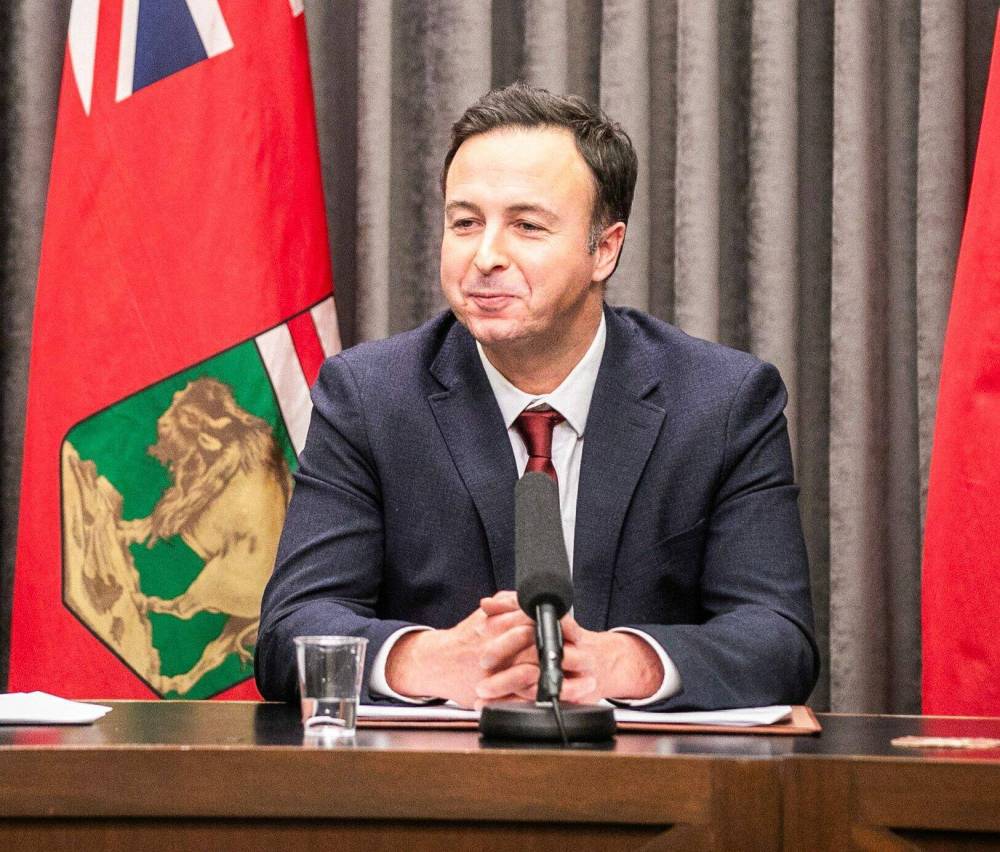
Yesterday afternoon, Finance Minister Adrien Sala delivered a budget speech that included a long list of spending plans, but was surprisingly short on how all that spending would be paid for. Notably absent from both the speech and the government’s “Budget in Brief” document was any mention of the projected deficit for the current (2024-25) and upcoming (2025-26) fiscal years.
In order to find that information, Manitobans would have to download the 146-page Budget 2025 document from the Manitoba government website and navigate through all the detailed information in that document. They would eventually discover that the projected deficit for the current (2024-25) fiscal year is $1.239 billion, which is much higher than the $796-million deficit estimate in Budget 2024 but slightly lower than the $1.3-billion estimate we were warned about last December.
Readers of the budget document would also learn that the projected deficit for the 2025-26 fiscal year is $794 million, which includes a $200-million revenue contingency. Without that reserve, the projected deficit for 2025-26 is just $594 million — a whopping $645 million less than the projected deficit for the current fiscal year.
That appears to be an astounding accomplishment on the government’s part, but it relies upon several revenue and expense assumptions that may be overly optimistic.
For example, Budget 2025 anticipates a $220-million profit for Manitoba Hydro, but that is a revenue guess that depends on how much precipitation we receive over the next several months. Last year, the government estimated that Hydro would earn $88 million, but the Crown corporation ended up with a projected loss of $77 million — causing a $165-million addition to the 2024-25 deficit.
Beyond revenue estimates that may be too rosy, the Budget 2025 document also reveals that federal transfers to the province are expected to rise by $820 million in the coming fiscal year. In fact, the document shows that the government expects to receive a total of $8.93 billion in federal transfers in 2025-26, which would amount to 35 per cent of all government revenues — its largest revenue stream by far.
The budget document also discloses that spending in 2025-26 is projected to increase by $1.344 billion, which is a 5.5 per cent increase and well above the current inflation rate.
Near the end of his budget speech, Sala said that his government remains on track to deliver a balanced budget in 2027. Given the expected rise in revenue transfers from the federal government, the plan may be feasible. After deducting monies set aside as “revenue contingencies,” the government is estimating that the deficit will drop to just $277 million in fiscal 2026-27, and will become a $60-million surplus in 2027-28.
It will be a remarkable achievement if it happens, but that is far from guaranteed. We are only in the earliest stage of trade wars against the world’s two economic superpowers, the United States and China. We don’t know how, when or even if those disputes will be resolved, nor do we know how much harm the Manitoba economy will suffer in the meantime.
Budget 2025 sets aside a large revenue contingency of $200 million as an apparent hedge against potential harm caused by the tariffs, but the document also estimates that the dispute could cost the government $559 million in revenue in fiscal 2025-26. If that happens — and there is no certainty as to whether it will or won’t — the government’s deficit projections and balanced budget plan will be derailed.
Viewed from that perspective, it is important to acknowledge that any budget is just a plan based on a series of assumptions, and that plans must often be amended in order to respond to changing circumstances. Canada is entering a period of significant economic uncertainty, instability and anxiety, and Manitoba is not immune from those challenges.
Sala and his team have done a commendable job in drafting a budget under such uncertain economic conditions.
Only time will tell, however, as to the impact those changing conditions may have on the current plan.