
Making the most of our medical resources
Advertisement
Read this article for free:
or
Already have an account? Log in here »
We need your support!
Local journalism needs your support!
As we navigate through unprecedented times, our journalists are working harder than ever to bring you the latest local updates to keep you safe and informed.
Now, more than ever, we need your support.
Starting at $15.99 plus taxes every four weeks you can access your Brandon Sun online and full access to all content as it appears on our website.
Subscribe Nowor call circulation directly at (204) 727-0527.
Your pledge helps to ensure we provide the news that matters most to your community!
To continue reading, please subscribe:
Add Brandon Sun access to your Free Press subscription for only an additional
$1 for the first 4 weeks*
*Your next subscription payment will increase by $1.00 and you will be charged $20.00 plus GST for four weeks. After four weeks, your payment will increase to $24.00 plus GST every four weeks.
Read unlimited articles for free today:
or
Already have an account? Log in here »
Hey there, time traveller!
This article was published 23/05/2025 (307 days ago), so information in it may no longer be current.
The thing about common sense, it is often said, is that it’s not really all that common.
In life, and most certainly in politics, it’s infallibly true that the path to accomplishing anything will almost never follow the simplest, most direct and most logical route. Decisions are the result of consultation, discussion and debate, and the inevitable insertion of competing interests and self-serving agendas into the collaborative process necessarily leads to compromises that complicate what was initially envisioned as a straightforward action to serve a very specific purpose.
In the end, the consensus solution might end up addressing a variety of individual needs without actually solving the problem at hand. As the old saying goes, a camel is a horse designed by a committee.
Given this tendency toward legislative and bureaucratic encumbrance, it’s both refreshing and encouraging to see government and service-providing agencies arrive at an action designed first and foremost to serve the greater public good, as seems to be the case in the decision to expand the powers and responsibilities of pharmacists in an effort to streamline Manitoba’s chronically overburdened health-care system.
The province announced last week that beginning in July, pharmacists will be empowered to prescribe certain medications, including contraceptives and some HIV treatments, directly to clients. It’s a common-sense initiative that will ease the administrative burden on doctors and allow patients to more easily access services that should not require a physician’s sign-off.
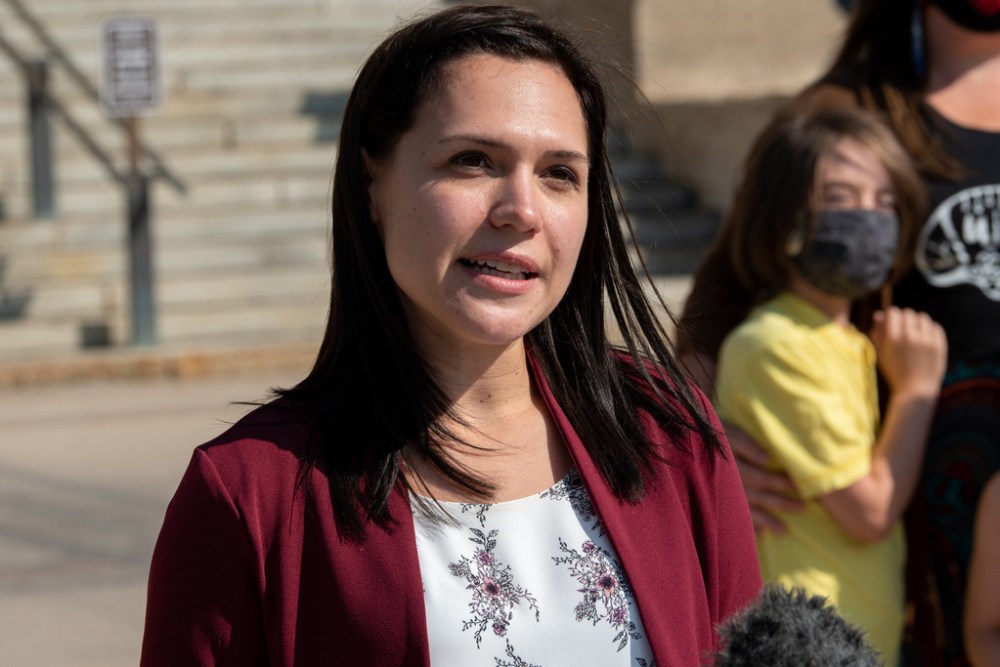
“We’ve been waiting for this for a very long time,” said Pharmacists Manitoba board member Marianna Pozdirca. “We have a health-care system that is strained and we have over 1,000 pharmacists in the province who are educated to do more than dispensing.”
While all pharmacists-in-training across Canada (except in Quebec) must complete the same standardized licensing exam, graduates in some other provinces — including Alberta and Saskatchewan — enter the profession with wider scopes of practice than pharmacists in Manitoba.
Manitoba, Ontario and the three territories are currently the only jurisdictions in Canada that do not allow pharmacists to prescribe birth control.
The change is overdue. As Liberal MLA Cindy Lamoureux (Tyndall Park) rightly pointed out, empowering pharmacists with expanded authority to prescribe should help to reduce wait times for patients seeking other services in clinics and hospital emergency rooms.
Health Minister Uzoma Asagwara called the change “a very reasonable expansion of scope for pharmacists in Manitoba,” adding that it’s important for those studying pharmacy in Manitoba to know they will, upon graduation, be able to practise to the full scope of their skills and abilities.
The bottom line is this: as was the case with expanding the responsibilities of nurse practitioners to include ordering and interpreting some diagnostic tests, prescribing medications and performing minor surgical procedures, any change that eases the burden on Manitoba’s stretched-thin physician ranks should be given serious consideration.
Matters jurisdictional and budgetary will need to be ironed out, of course, but the process should be focused on removing barriers and improving access — particularly for those residing in rural or remote areas, and those who don’t have a family doctor — rather than creating self-interest-driven impediments.
And as the government in this province — and, it seems, every other province — struggles in its ongoing and highly competitive effort to attract and retain physicians, those tasked with administering and funding the system should embrace opportunities to streamline and improve care whenever they present themselves.
In the race to provide Manitobans with the health care they deserve, the effort is better served by a horse than a camel.
» Winnipeg Free Press