
Council approves 3-year phase-in for DCCs
Advertisement
Read this article for free:
or
Already have an account? Log in here »
We need your support!
Local journalism needs your support!
As we navigate through unprecedented times, our journalists are working harder than ever to bring you the latest local updates to keep you safe and informed.
Now, more than ever, we need your support.
Starting at $15.99 plus taxes every four weeks you can access your Brandon Sun online and full access to all content as it appears on our website.
Subscribe Nowor call circulation directly at (204) 727-0527.
Your pledge helps to ensure we provide the news that matters most to your community!
To continue reading, please subscribe:
Add Brandon Sun access to your Free Press subscription for only an additional
$1 for the first 4 weeks*
*Your next subscription payment will increase by $1.00 and you will be charged $20.00 plus GST for four weeks. After four weeks, your payment will increase to $24.00 plus GST every four weeks.
Read unlimited articles for free today:
or
Already have an account? Log in here »
Hey there, time traveller!
This article was published 12/06/2025 (289 days ago), so information in it may no longer be current.
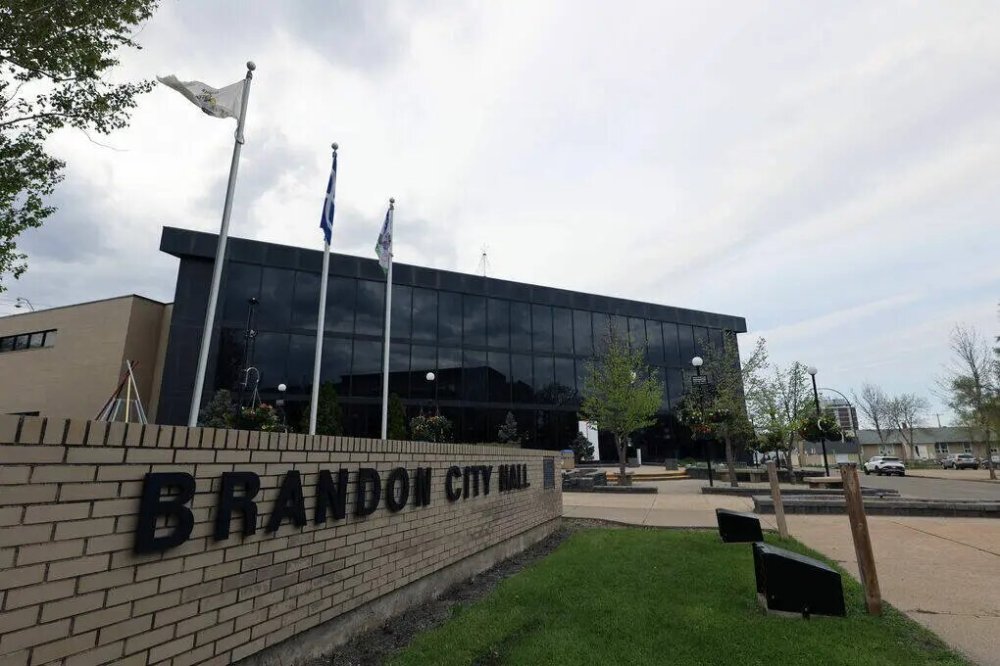
Brandon City Council approved its plan on Monday to give relief to high-density housing developments in the city.
Council amended its development cost charge bylaw so that fees to high-density units would increase over three years, rather than all at once as is planned for all other categories of development. Council voted unanimously for the amendment.
The City of Brandon plans to introduce the DCC hikes at a rate of 25 per cent in year one, 50 per cent in year two, and 100 per cent in year three.
In emerging areas of the city, this formula would translate so that the current $4,726 fee per unit would move to $8,459 in year one of the increase, $10,860 in year two and $15,661 in year three. In established areas, the current rate of $2,723 would rise to $4,408 in year one, $6,093 in year two, and end at $9,463 in year three, a table presented at council showed.
The three-year increase is planned to roll out with year one effective on the date the bylaw is passed, and years two and three effective on Jan. 1 of the next two years respectively.
Shawn Wood, executive director of the Construction Association of Rural Manitoba, told the Sun earlier this year that this timeline is leading developers to rush their projects in. He said that there is a noticable push to get projects going before the changes take effect.
“If you talk to the city now, about their requests on development and that sort of thing, they’ve seen an increase,” Wood said in May. “And the city won’t tell you the increase is because of DCCs, but I can tell you that, yeah, the increase to those requests is because the guys want to get them in before the DCCs take effect.”
If the bylaw was active today and applied to the The Edge Building 2, a 36-unit apartment building nearing completion in an emerging area south of Crocus Plains Secondary School and slated for move-in in September, the bylaw would add roughly $373,000 in extra costs for developers.
The money goes to the City of Brandon and is put into reserve. It is later used to pay for upgrades to assets like sewer and water lines, with the rationale that developments increase the pressure on these assets, and so money should be collected to pay for repairs.
Mayor Jeff Fawcett told the Sun earlier this year that the city is tight on housing, and high-density housing has been key to accommodating the population, which is quickly approaching 60,000. The city wants to ensure continued development of high-density projects.
Phasing in the costs over three years allows developers to better prepare for the increase, making for a smoother transition.
The proposed bylaw will now be forwarded to the Public Utilities Board for approval. Council does not know if the board will recommend any changes, and the process may take up to a year before the bylaw returns to council.
Should the PUB approve the bylaw, it will return to council for second and third readings before it can be officially adopted and brought into effect.
The proposed phase-in only applies to the increases that come from water and infrastructure rates in high-density projects.
» cmcdowell@brandonsun.com