
Hundreds of Lynn Lake evacuees arrive in Brandon
Advertisement
Read this article for free:
or
Already have an account? Log in here »
We need your support!
Local journalism needs your support!
As we navigate through unprecedented times, our journalists are working harder than ever to bring you the latest local updates to keep you safe and informed.
Now, more than ever, we need your support.
Starting at $15.99 plus taxes every four weeks you can access your Brandon Sun online and full access to all content as it appears on our website.
Subscribe Nowor call circulation directly at (204) 727-0527.
Your pledge helps to ensure we provide the news that matters most to your community!
To continue reading, please subscribe:
Add Brandon Sun access to your Free Press subscription for only an additional
$1 for the first 4 weeks*
- Enjoy unlimited reading on brandonsun.com
- Read the Brandon Sun E-Edition, our digital replica newspaper
*Your next Free Press subscription payment will increase by $1.00 and you will be charged $20.95 plus GST for four weeks. After four weeks, your payment will increase to $24.95 plus GST every four weeks.
Read unlimited articles for free today:
or
Already have an account? Log in here »
Hey there, time traveller!
This article was published 04/07/2025 (306 days ago), so information in it may no longer be current.
About 300 evacuees from Lynn Lake were expected to be lodged in Brandon by the end of Friday, with hundreds more scheduled to arrive today, a Red Cross official told the Sun.
Nearly 600 residents are being forced to leave their homes — two weeks after an initial wildfire evacuation ended — as a new blaze threatened to cut electricity to the northwestern Manitoba town.
Most of the evacuees are being flown in due to the distance — Brandon is nearly 778 kilometres by air and about 1,175 kilometres by road from Lynn Lake, a drive of more than 16 hours.
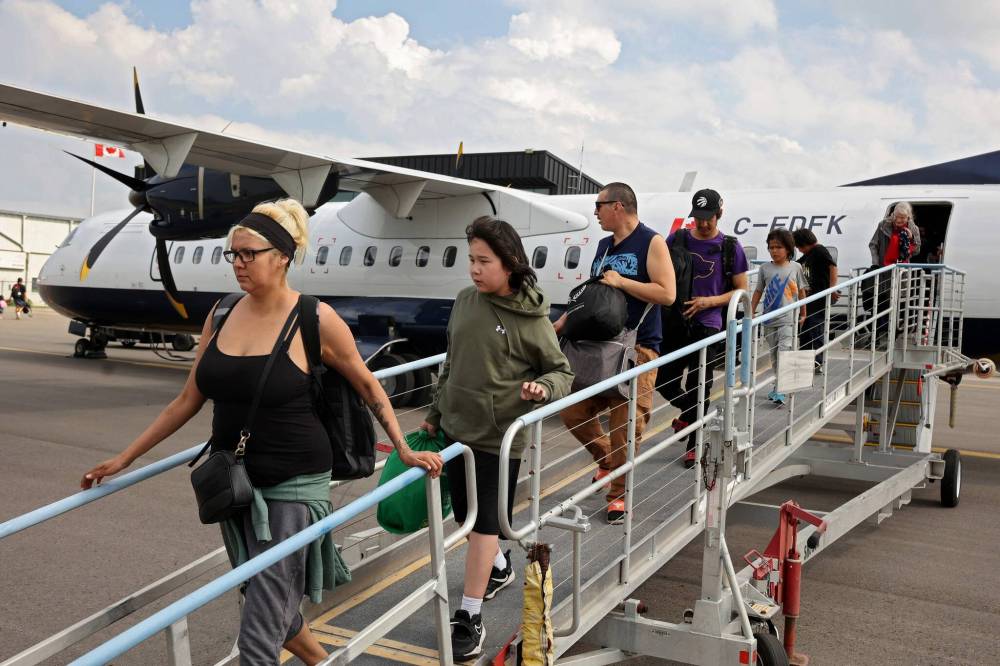
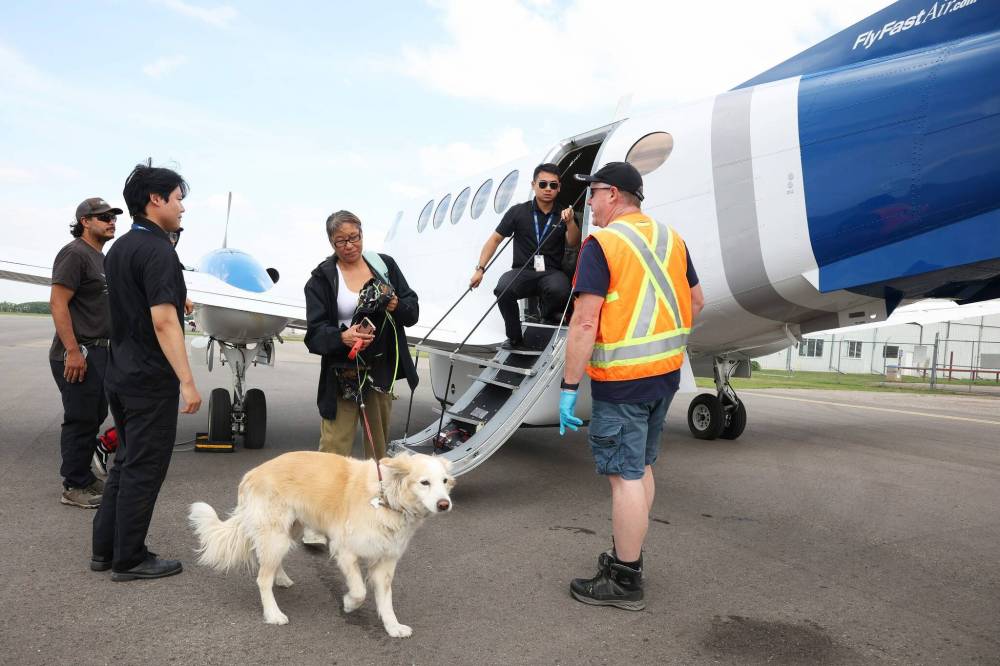
Evacuees from Lynn Lake arrive at the Brandon Municipal Airport on Friday afternoon after being forced from their homes for the second time this season. (Tim Smith/The Brandon Sun)
For many, including Trent Farrow and his family, it’s the second time in a matter of weeks they’ve been forced from home.
“We were home for about two weeks, and then we got sent out again,” said Farrow, who was among the first arrivals to land at Brandon Municipal Airport on Friday afternoon.
“We (have) nowhere to go, no vehicle and stuff. But you know, it worked out,” he said.
The Red Cross has set up a reception centre at the Victoria Inn hotel, where evacuees will be registered and moved to various hotels in the Wheat City — a notable improvement from the cot-based congregate shelters used during the previous evacuation in Thompson.
Farrow said his family of seven hadn’t even finished unpacking before being told to leave again. He said they were still in the middle of cleaning the house when the evacuation order came.
“It’s tough leaving home again,” he said. “But we’re safe. That’s what matters.”
Other evacuees expressed a mix of exhaustion, anxiety and reluctant acceptance.
“I felt overwhelmed,” said Marie Bighetty, who arrived around 4:30 p.m. with her family.
“It’s my first time in Brandon. I worry about my grandkids here because they’re so used to running around.”
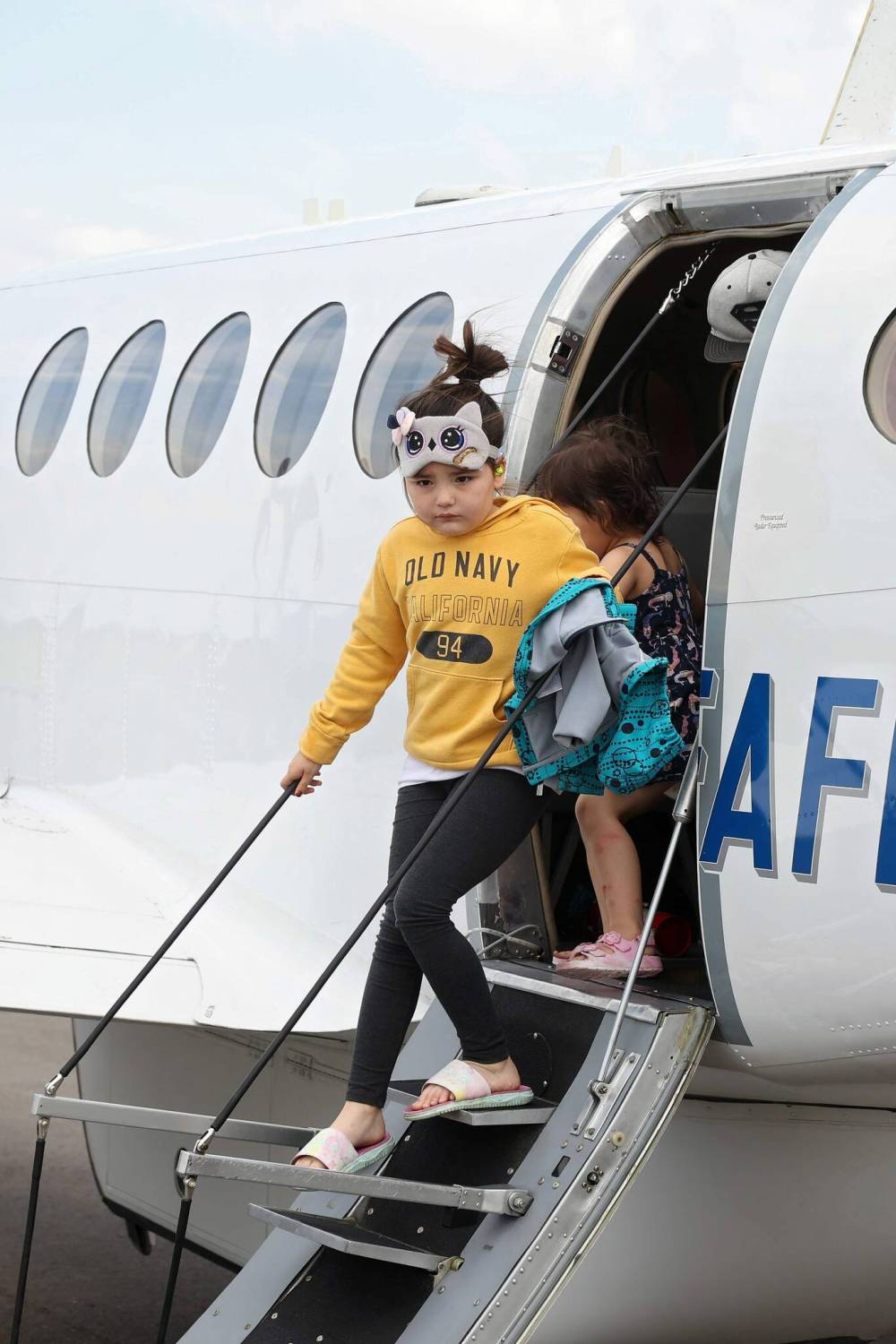
Her relative, Ryan Bighetty, voiced deeper frustrations.
“It was a mixed feeling — happy and sad,” he told the Sun. “I had plans to work and prepare for college. This is our second evacuation, and it’s exhausting. All the food we had is probably going to waste now, with power being cut.”
Adolph Lapense said he tried to stay optimistic.
“This is my second time, so we’re very organized now. I guess we’ll have to survive on this. What else can we do?” he said. “It’s like a long vacation for me because I don’t have to work.”
Others, like Kevin Maniel, were less upbeat.
“We just got home from Thompson. And now we’re back out again,” Maniel said. “We’re tired, exhausted from travelling. Everyone’s just trying to cope.”
The Canadian Red Cross is organizing air transportation and providing emergency accommodations and personal services at the request of both community leadership and the Manitoba government, the agency’s spokesperson, Jason Small, told the Sun.
“People who have already registered with the Red Cross for fire evacuations this summer do not need to register again,” Small said. “We’re working closely with Indigenous leadership, the community and governments as the situation evolves.”
The evacuation notice issued Thursday night by the Town of Lynn Lake said “all residents” were asked to leave Friday due to wildfire threat and the imminent loss of power.
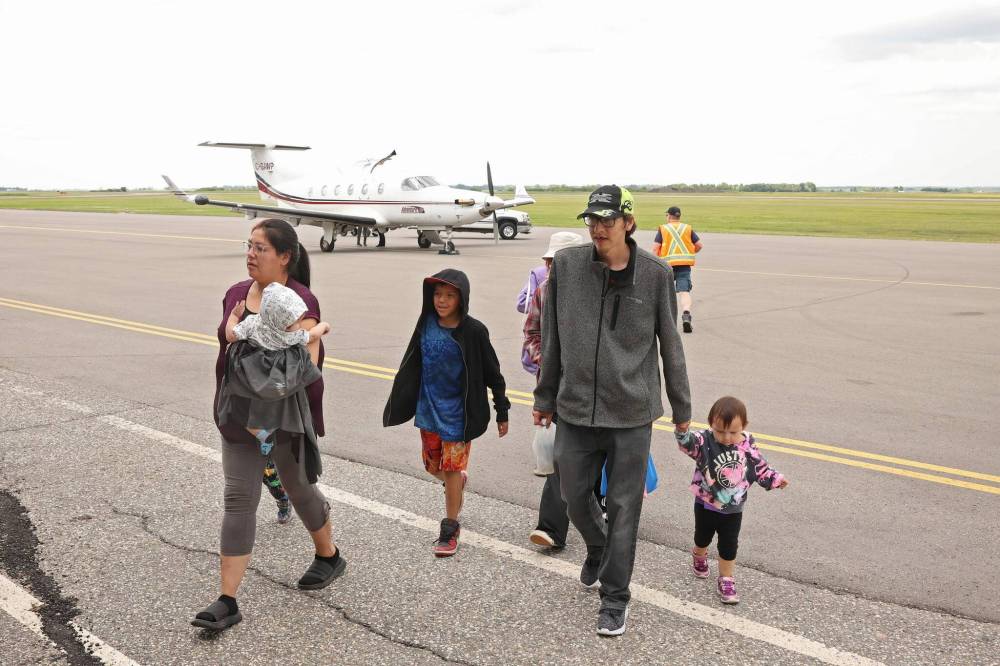
“The Canadian Red Cross and Provincial Emergency Social Services have identified Brandon, Manitoba as the most appropriate evacuation destination,” the notice said. “This allows the community to remain together in close proximity and housed in as few hotels as possible.”
The City of Brandon had received word of the incoming evacuees, Mayor Jeff Fawcett told the Sun.
“I have an understanding that that likely is the case. There are some preparations to take in residents, but I don’t have details like numbers or arrival times,” he said.
The Town of Lynn Lake said an outage could last at least one month if the remote transmission line is damaged and needs to be repaired.
Without power, the town said it cannot maintain essential services such as water treatment or food refrigeration, making it unsafe for people to remain for an extended period.
The length of any restoration, if required, would depend on the terrain, which is challenging in places, and if equipment has to be airlifted, Manitoba Hydro spokesman Scott Powell said.
Damage assessments cannot take place until the area is deemed safe.
“Our thoughts are with the folks in Lynn Lake,” Powell said.
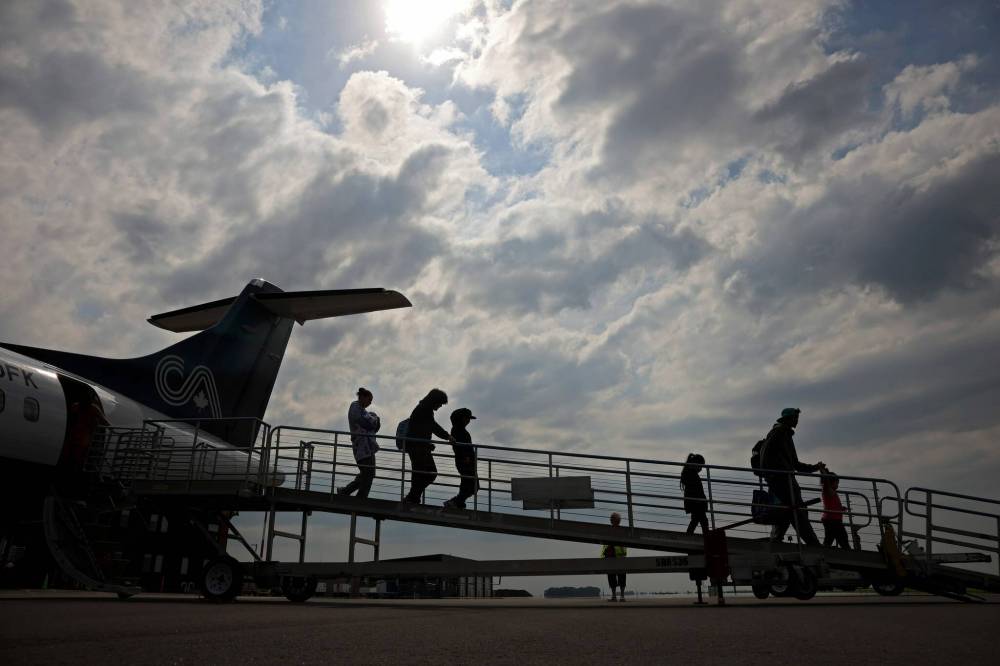
Lynn Lake Mayor Brandon Dulewich said planes with seating for about 200 evacuees flew to Brandon on Friday.
“The fire is apparently at the main hydro line into town, so we anticipate losing power any minute,” Dulewich told the Free Press shortly after 1:30 p.m.
The province expected 579 residents to leave, while firefighters and other essential staff stayed behind.
Some evacuees drove out on their own. Fires near Lynn Lake and Leaf Rapids, which was under an evacuation alert, threatened to cut off highway access to Thompson.
Lynn Lake’s hospital, which closed during the first evacuation, remained open. Staff will stay unless authorities deem the situation to be unsafe, a Northern Health Region spokesperson said.
The hospital has a diesel generator for backup power and satellite internet service.
About 900 residents of Lynn Lake and nearby Marcel Colomb First Nation were out of their homes from late May until June 20 due to an out-of-control fire that was reported May 7.
An evacuation alert remained in place for Lynn Lake afterward. The blaze, measured at 80,120 hectares and caused by human activity, did not pose an immediate threat to the town Friday.
The latest evacuation was prompted by a 419-hectare blaze that spread toward the transmission line, about 14 km south of Lynn Lake. The fire was caused by a lightning strike and detected Monday.
“It’s something nobody could have anticipated,” Dulewich said, noting that firefighting resources are stretched due to the number of fires in the region. “This one just got away on us.”
Recent lightning strikes have started dozens of new, mostly small fires in the northern region.
The Manitoba Wildfire Service reported 64 active fires Friday, for a total of 205 this year. The average for July 4 is 176 total fires.
» aodutola@brandonsun.com, with files from Chris Kitching
» X: @AbiolaOdutola