
The UK says thousands of Afghans have been brought to Britain under a secret resettlement program
Advertisement
Read this article for free:
or
Already have an account? Log in here »
We need your support!
Local journalism needs your support!
As we navigate through unprecedented times, our journalists are working harder than ever to bring you the latest local updates to keep you safe and informed.
Now, more than ever, we need your support.
Starting at $15.99 plus taxes every four weeks you can access your Brandon Sun online and full access to all content as it appears on our website.
Subscribe Nowor call circulation directly at (204) 727-0527.
Your pledge helps to ensure we provide the news that matters most to your community!
To continue reading, please subscribe:
Add Brandon Sun access to your Free Press subscription for only an additional
$1 for the first 4 weeks*
*Your next subscription payment will increase by $1.00 and you will be charged $20.00 plus GST for four weeks. After four weeks, your payment will increase to $24.00 plus GST every four weeks.
Read unlimited articles for free today:
or
Already have an account? Log in here »
Hey there, time traveller!
This article was published 15/07/2025 (256 days ago), so information in it may no longer be current.
LONDON (AP) — Thousands of Afghans, including many who worked with British forces, have been secretly resettled in the U.K. after a leak of data on their identities raised fears that they could be targeted by the Taliban, the British government revealed Tuesday.
The government now plans to close the route, which the media had been barred by a court order from disclosing.
“I have felt deeply concerned about the lack of transparency to Parliament and the public,” Defense Secretary John Healey said in the House of Commons.
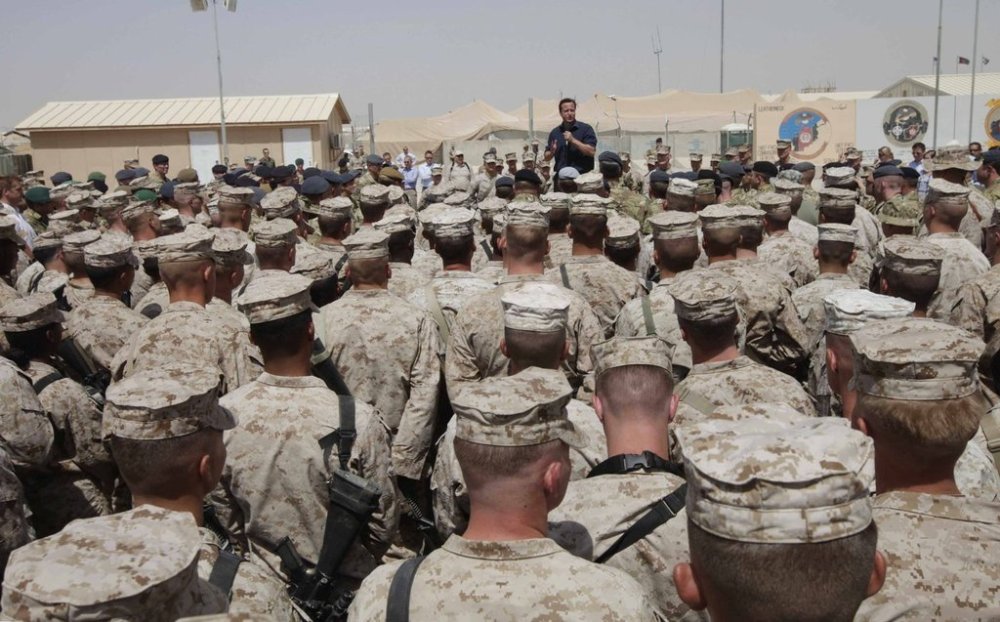
Healey told lawmakers that a spreadsheet containing the personal information of nearly 19,000 Afghans who had applied to come to Britain after the Taliban takeover of Afghanistan was accidentally released in error in 2022 because of a defense official’s email error, and extracts were later published online.
The then-Conservative government sought a court order barring disclosure of the leak, in an attempt to prevent the personal information being made public. The High Court issued a strict order known as a super injunction that barred anyone from revealing its existence. The government then set up a secret new program to resettle the Afghans.
The injunction was lifted on Tuesday in conjunction with a decision by Britain’s current Labour Party government to make the program public. It said an independent review had found little evidence that the leaked data would expose Afghans to a greater risk of retribution from the country’s Taliban rulers.
About 4,500 Afghans – 900 applicants and approximately 3,600 family members — have been brought to Britain under the secret program, and about 6,900 people are expected to be relocated by the time it closes, at a total cost of 850 million pounds ($1.1 billion).
About 36,000 more Afghans have been relocated to the U.K. under other resettlement routes.
Critics say that still leaves thousands more people who helped British troops as interpreters or in other roles at risk of torture, imprisonment or death.
British troops were sent to Afghanistan as part of a deployment against al-Qaida and Taliban forces in the wake of the Sept. 11, 2001, attacks. At the peak of the operation, there were almost 10,000 British troops in the country, mostly in Helmand province in the south.
Britain ended combat operations in 2014, and its remaining troops left Afghanistan in 2021 as the Taliban swept back to power, two decades after they were ousted.
The Taliban’s return triggered chaotic scenes at Kabul Airport in August 2021 as Western nations rushed to evacuate citizens and Afghan employees.
Super injunctions are relatively rare, and their use is controversial. Unlike regular court injunctions, super injunctions bar reporting that they were even ordered The handful of cases in which they have come to light involved celebrities trying to prevent disclosures about their private lives.
This is the first known case of a super injunction being sought by the government. Healey said he was not aware of any others in existence.
Judge Martin Chamberlain, who ruled that the injunction should be lifted, said Tuesday at the High Court that the gag order had “given rise to serious free speech concerns.”
“The super injunction had the effect of completely shutting down the ordinary mechanisms of accountability, which operate in a democracy,” he said. “This led to what I describe as a ‘scrutiny vacuum.’”