
Minnedosa seeks solutions for silt, zebra mussels
Advertisement
Read this article for free:
or
Already have an account? Log in here »
We need your support!
Local journalism needs your support!
As we navigate through unprecedented times, our journalists are working harder than ever to bring you the latest local updates to keep you safe and informed.
Now, more than ever, we need your support.
Starting at $15.99 plus taxes every four weeks you can access your Brandon Sun online and full access to all content as it appears on our website.
Subscribe Nowor call circulation directly at (204) 727-0527.
Your pledge helps to ensure we provide the news that matters most to your community!
To continue reading, please subscribe:
Add Brandon Sun access to your Free Press subscription for only an additional
$1 for the first 4 weeks*
- Enjoy unlimited reading on brandonsun.com
- Read the Brandon Sun E-Edition, our digital replica newspaper
*Your next Free Press subscription payment will increase by $1.00 and you will be charged $20.95 plus GST for four weeks. After four weeks, your payment will increase to $24.95 plus GST every four weeks.
Read unlimited articles for free today:
or
Already have an account? Log in here »
Hey there, time traveller!
This article was published 15/08/2025 (303 days ago), so information in it may no longer be current.
The future of Minnedosa Lake is on the minds of volunteers who are travelling next week to Victoria Beach and researching ways to manage silt and zebra mussels.
Coun. Grant Butler will be travelling to Lake Winnipeg on Wednesday with members of the Friends of Lake Minnedosa volunteer group. Butler tells the Sun that he’s focused on silt, which is building up at the north end of Minnedosa Lake, and causing ecological issues.
The stewardship group will size up a machine that is being used at Lake Winnipeg to remove silt, and consider that machine for Minnedosa. It comes as they shop around for solutions.
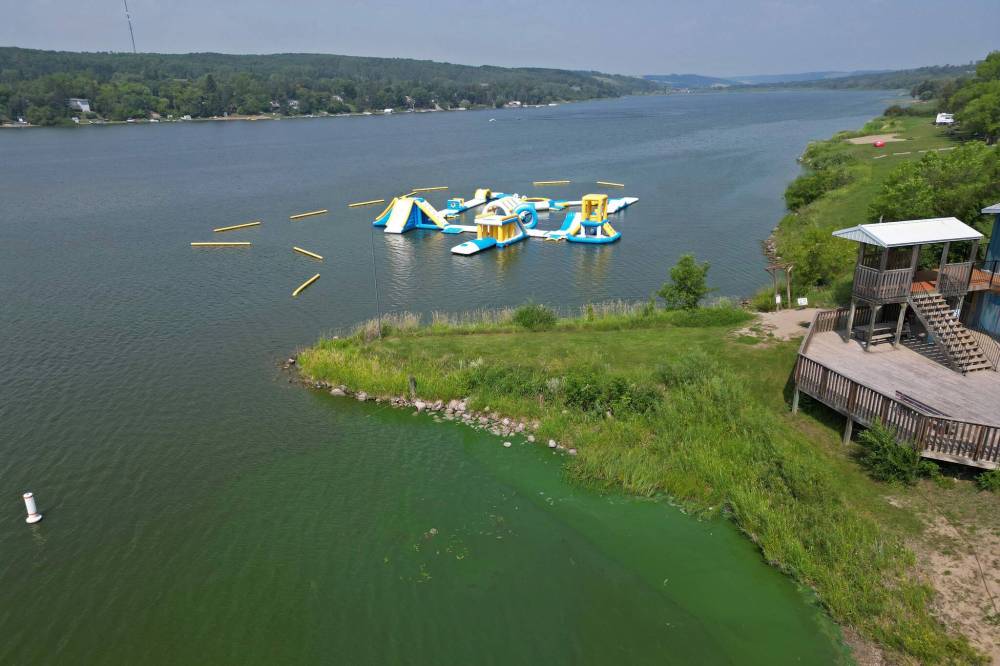
The presence of algae in Minnedosa Lake caused the temporary closure of Splish Splash Water Park. The Friends of Lake Minnedosa group is looking at ways to keep the lake in good shape for locals and tourists to enjoy. (Tim Smith/The Brandon Sun)
“We’re trying to find a different method to get rid of that silt buildup,” said Butler. “This one that we’re going to look at is a different method, where, by the looks of it, it gathers up the silt and then blows it like a snowblower.”
Silt contributes to problems for the lake, such as algae and weeds, Butler said. And since Minnedosa relies on its lake for a lot of tourism, he said it needs to invest in a healthy lake.
Spending is at the heart of their decision-making, he said. Due to high costs, the volunteers are taking time to explore many options available to them and to make sure they are choosing the best path forward.
“Everything is so expensive, so that’s part of the reason why we have to gather as much information as possible. So that we can make the best, economical decision to protect our lake.”
The lake committee, as well as local and provincial governments, have invested in a variety of projects at Lake Minnedosa in recent years. The efforts include testing, studies and the purchase of a weed harvester. While efforts continue, so does the build up of silt — and Butler said the time may be coming to take action.
Ahead of the August long weekend, an algae bloom covered the surface near the shoreline at Minnedosa Beach. The town responded with a public warning to stay away from the water, and the local inflatable water park on the lake had to close.
Splish Splash Water Park co-owner Connor Champagne told the Sun at the time that it was obvious how tourism slowed. He said he made a trip to town and noticed right away how quiet it was.
“I wouldn’t say a ghost town, but it was like, it was crazy how few people were there compared to the previous Saturday,” Champagne said.
Silt is an issue in Minnedosa, as it is deposited by the running water of the Little Saskatchewan River.
Barry McPhail, a member of the Minnedosa lake stewardship group, told the Sun that the trip will also introduce members to a machine that grooms the beaches on Lake Winnipeg. The technology is used to gather and remove items in sand such as zebra mussel shells, which wash up on the shore and pollute the sand with sharp edges.
“They actually have a machine that takes the trash out of the sand,” said McPhail. “So it cleans the sand, and they take the mussels and haul them away in trucks. That’s how they’re dealing with it.”
Being downstream of Clear Lake, where zebra mussels were discovered and will spawn from, and with many other surrounding water bodies infested with the mussels, the group expects that mussels will find their way to Minnedosa at some point, said McPhail.
They are exploring options should that time come, he said.
“The main beach is a big attraction for this community, and if we do get zebra mussels, the shells will wash up on that beach, and we’ll need to groom that beach somehow,” McPhail said. “That’s why we’re going to go see what they’re doing at Victoria Beach.”
The lake stewardship group applies for grants to pay for projects. It also received donations from businesses and private citizens in the past, he said.
Efforts to protect and preserve Minnedosa Lake go back years for the volunteers.
The Town of Minnedosa two years ago committed $50,000 to study silt mitigation, Butler said. Options included to catch silt coming into the lake and go in and remove it every so often. However, no strategies from the study are being employed yet, he added.
Also to clean up the lake, four years ago, locals pooled together to buy a weed harvester, said Butler. It was introduced in order to slice weeds out of the water and free up more space for recreational use.
The group has also explored the option of adding an aeration system, which oxygenates the water and ultimately reduces algae blooms. Volunteers similarly travelled to Pelican Lake to study that program.
» cmcdowell@brandonsun.com