
Second World War aircraft take to the skies
Advertisement
Read this article for free:
or
Already have an account? Log in here »
We need your support!
Local journalism needs your support!
As we navigate through unprecedented times, our journalists are working harder than ever to bring you the latest local updates to keep you safe and informed.
Now, more than ever, we need your support.
Starting at $15.99 plus taxes every four weeks you can access your Brandon Sun online and full access to all content as it appears on our website.
Subscribe Nowor call circulation directly at (204) 727-0527.
Your pledge helps to ensure we provide the news that matters most to your community!
To continue reading, please subscribe:
Add Brandon Sun access to your Free Press subscription for only an additional
$1 for the first 4 weeks*
- Enjoy unlimited reading on brandonsun.com
- Read the Brandon Sun E-Edition, our digital replica newspaper
*Your next Free Press subscription payment will increase by $1.00 and you will be charged $20.95 plus GST for four weeks. After four weeks, your payment will increase to $24.95 plus GST every four weeks.
Read unlimited articles for free today:
or
Already have an account? Log in here »
Hey there, time traveller!
This article was published 24/08/2025 (397 days ago), so information in it may no longer be current.
The roar of history filled the skies above Brandon on Sunday as four Second World War training aircraft — the Tiger Moth, Cornell, Harvard and Fleet Finch — lifted off once again, thrilling more than 100 passengers and spectators at the Commonwealth Air Training Plan Museum.
The event, one of several “flying weekends” hosted by the museum each year, gave visitors the rare chance to not only see but also ride in vintage aircraft that once trained thousands of young pilots during the British Commonwealth Air Training Plan (BCATP), museum director general Zoe McQuinn told the Sun over the weekend.
“This is part of our mandate — to keep the legacy alive of the people who trained here to defend Canada and the world from fascism,” she said. “These were people who came from farms after the Depression, people from across the Commonwealth, even from the United States before it entered the war. Canada stepped up in a unique way to train a generation of pilots to fight this war.”
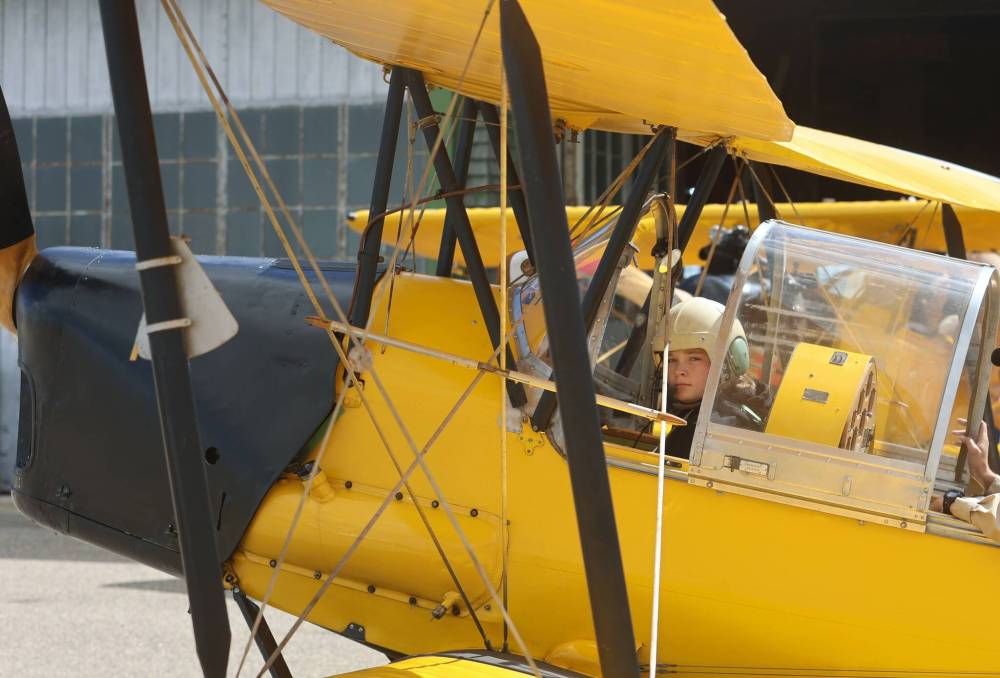
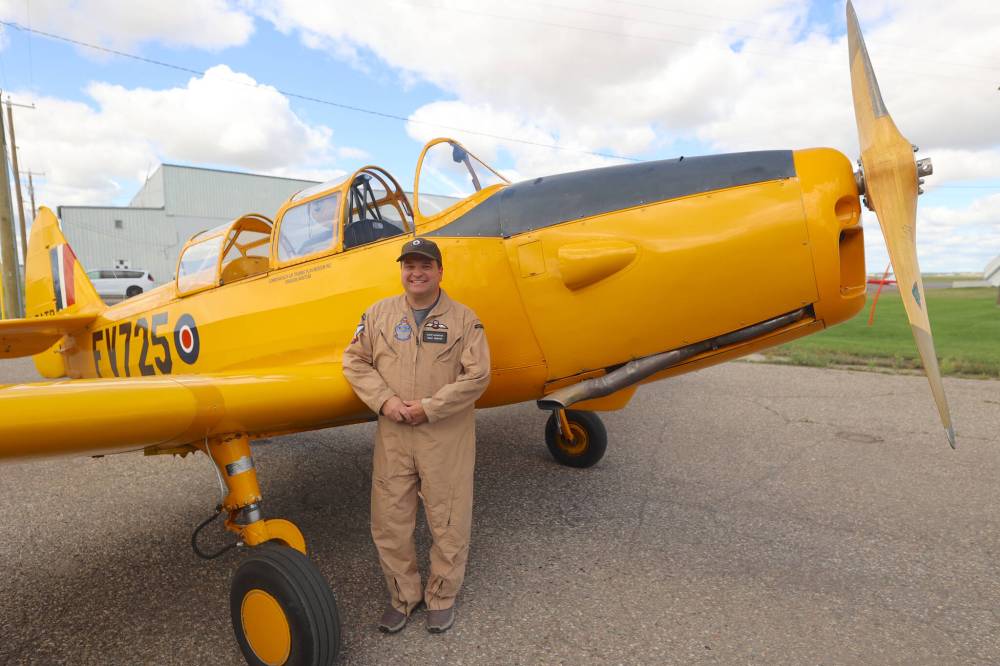
The four yellow-painted trainers — a distinctive colour used during the war to keep them visible in the sky — were restored and maintained by the museum’s dedicated volunteers and specially trained pilots. The day’s lineup included the Harvard, the largest of the group, the biplane Tiger Moth, the Fleet Finch and the PT-26 Cornell.
For pilot Nick Reeder, who flew the 1944 Cornell on Sunday, the experience never loses its thrill.
“It’s an awesome machine to fly,” he said. “It’s a beautiful flyer — honest, responsive, just a really nice airplane. Cornell is one of my favourites here.”
McQuinn explained that the event was also deeply personal for many visitors. One man, she said, flew in the very Harvard aircraft his father once used to train pilots in Brandon during the war.
“Why people choose to fly is very personal,” she explained. “Some come for family connections, others just to hear the sound of the engines, to see and touch history in motion.”
The museum, located in a heritage hangar built in 1941, is itself a testament to that history. Brandon was one of 147 training sites across Canada during the war, and the base here became part of the massive effort that cost $1.4 billion and trained more than 200,000 personnel.
Today, McQuinn said, the museum is drawing record attendance, with over 10,500 visitors already this year — a 24 per cent increase over last year. Many are school groups and families, discovering not just the aircraft but also the stories of communities, women and minority air force members who overcame barriers to serve.
“It’s not a perfect history,” McQuinn said. “There were barriers — women and people of colour were often excluded. But their strength and determination to step up is part of the story, too. What we owe them all is to remember.”
The museum has plans for future flying weekends in Dauphin and Winnipeg, including a Battle of Britain commemoration in September. After that, the aircraft will be “put to sleep” for the winter while crews carry out extensive maintenance, “readying them for spring.”
Visitors to Sunday’s event stood on the same concrete where wartime trainees once marched.
“When you hear the planes,” McQuinn said, “it’s the same sound those young pilots heard when they came here to train. It’s history coming alive.”
» aodutola@brandonsun.com
» X: @AbiolaOdutola