
Primary-care paramedic plan supported by AMM delegates
Advertisement
Read this article for free:
or
Already have an account? Log in here »
We need your support!
Local journalism needs your support!
As we navigate through unprecedented times, our journalists are working harder than ever to bring you the latest local updates to keep you safe and informed.
Now, more than ever, we need your support.
Starting at $15.99 plus taxes every four weeks you can access your Brandon Sun online and full access to all content as it appears on our website.
Subscribe Nowor call circulation directly at (204) 727-0527.
Your pledge helps to ensure we provide the news that matters most to your community!
To continue reading, please subscribe:
Add Brandon Sun access to your Free Press subscription for only an additional
$1 for the first 4 weeks*
- Enjoy unlimited reading on brandonsun.com
- Read the Brandon Sun E-Edition, our digital replica newspaper
*Your next Free Press subscription payment will increase by $1.00 and you will be charged $20.95 plus GST for four weeks. After four weeks, your payment will increase to $24.95 plus GST every four weeks.
Read unlimited articles for free today:
or
Already have an account? Log in here »
Hey there, time traveller!
This article was published 28/11/2025 (329 days ago), so information in it may no longer be current.
A Westman reeve put forth a resolution during the Association of Manitoba Municipalities fall convention this week urging the province to provide paid training to immediately fill vacant primary-care paramedic (PCP) positions in rural areas.
Municipality of Deloraine-Winchester Reeve Kelly McMechan said communities like Deloraine and Melita continue to face a critical shortage of paramedics, which has led to delayed emergency response times, reduced access to urgent care and an increased pressure on existing health-care providers.
As of November, there are eight vacant primary-care paramedic positions in Melita and four vacant positions in Deloraine, said McMechan, who also works casually as a licensed paramedic.
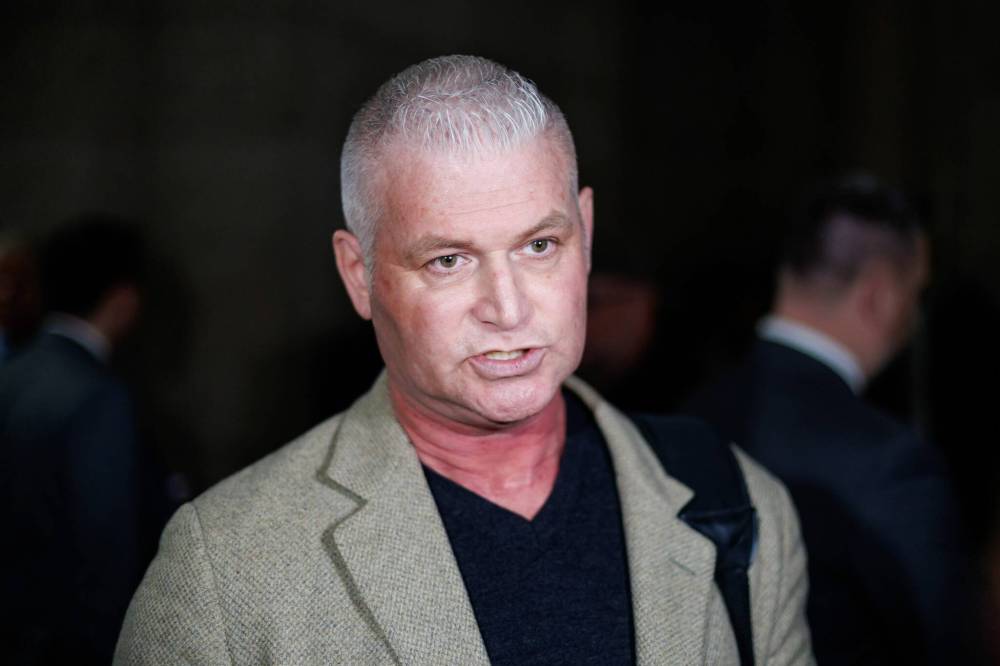
“In our little area, if all the positions were filled, we could be sure we’d have an ambulance there in less than 20 minutes, but the way it is now, there’s a good chance you’re going to wait upwards to an hour for an ambulance,” he said.
This doesn’t include the time it takes for an ambulance to travel back to the closest emergency department.
“With Deloraine having four (vacant) positions, that’s still a day shift and an on-call night, and we really have trouble attracting people to come to Deloraine because of the on-call night,” he said.
To fix that, the province would have to hire an additional four primary-care paramedics to avoid people picking up overtime hours and feeling burned out to prevent leaving ambulances empty and having extended call response times, McMechan said.
In the meantime, rural communities like Deloraine have been backfilling with emergency medical responders (EMRs), but their limited scope of practice doesn’t allow them to perform the medical services paramedics are licensed to do, he said.
Emergency medical responders can’t diagnose a patient’s illness or injury, give fluid or medications through an IV, inject a needle into muscle or provide medication for pain, heart attacks, psychosis, or seizures, he said.
They can, however, take patient vitals and transport people to a health centre to get medical treatment, whereas primary-care paramedics can begin assessing people right away, he said.
The resolution his community sponsored recommends that for every vacant primary-care paramedic position in Manitoba, a person should be hired to begin training with mentorship support paired with part-time work during training and a return-to-work agreement upon graduation to ensure long-term staffing stability in rural areas.
The Association of Manitoba Municipalities passed the resolution with a 95 per cent vote, according to an AMM spokesperson.
On Wednesday, the provincial government announced a new $5,000 bursary program for emergency medical responder students. Those who receive the bursary will enter a one-year return-of-service-agreement once they are hired, which will require them to work in rural Manitoba.
Approximately 50 to 60 emergency medical responder students are expected to graduate by the fall of 2026, the news release said.
“By delivering training directly in communities, offering bursaries tied to return of service agreements, and recruiting local residents who are most likely to stay in their home communities, we are strengthening rural EMS today while building the pathway to higher levels of training,” Health Minister Uzoma Asagwara said in a statement on Friday.
“This includes supporting EMRs to advance into primary-care paramedic programs, creating a clear, supported pathway from EMR to PCP that will strengthen the workforce over time.”
McMechan said the bursary program for emergency medical responders is a “good first step,” but more needs to be done to improve the shortage of paramedics in rural areas.
“If that’s what we need to get them in the door, if we can train them as an EMR and then mentor them up through their PCP, you know, that’s how I started, so that’s not a bad road to go,” he said.
He would also like Manitoba to fully cover their tuition, which would support people who may not have the funds to take a minimum two-year training program to become a primary-care paramedic.
The NDP has added 18 of the 200 paramedics it promised to add since being elected in 2023, said Jason Linklater, who’s the president of the Manitoba Association of Health Care Professionals.
He criticized how the provincial government plans to train, retain and recruit paramedic positions in rural communities.
“Without the framework in place to bring EMR hires to PCP, then it won’t happen. If this is their plan, then they should be implementing a clear pathway and dedicated funding attached to this EMR program and they didn’t do that,” he said.
Existing emergency medical responders would have to quit their job, attend a paramedic training program in Brandon, Winnipeg or northern Manitoba and pay between $12,000 and $17,000 for training, he said.
The Manitoba Association of Health Care Professionals estimates there’s at least 75 vacant primary-care paramedic positions in the Prairie Mountain Health region with an approximate vacancy rate of 40 per cent.
Linklater said places in rural Manitoba are being offered a lesser level of health-care services compared to patients in Winnipeg that have no emergency medical responders on ambulances.
“When you’re in rural Manitoba, hours from the closest open emergency room, you want fully trained paramedics at your door when you call 911, and who is responding to those calls is extremely important to determine whether they can actually help you or not,” he said.
Emergency medical responders should be required to complete a primary-care paramedic training within a defined period and receive paid time off, including financial support for training, Linklater said, similar to the reeve’s recommendations.
The province should also cover travel accommodations and other incentives to bridge gaps in harder-to-fill communities, he said.
» tadamski@brandonsun.com, with files from Alex Lambert