
Lab, X-ray seats will help fill ‘desperate’ need
Advertisement
Read this article for free:
or
Already have an account? Log in here »
We need your support!
Local journalism needs your support!
As we navigate through unprecedented times, our journalists are working harder than ever to bring you the latest local updates to keep you safe and informed.
Now, more than ever, we need your support.
Starting at $15.99 plus taxes every four weeks you can access your Brandon Sun online and full access to all content as it appears on our website.
Subscribe Nowor call circulation directly at (204) 727-0527.
Your pledge helps to ensure we provide the news that matters most to your community!
To continue reading, please subscribe:
Add Brandon Sun access to your Free Press subscription for only an additional
$1 for the first 4 weeks*
*Your next subscription payment will increase by $1.00 and you will be charged $20.00 plus GST for four weeks. After four weeks, your payment will increase to $24.00 plus GST every four weeks.
Read unlimited articles for free today:
or
Already have an account? Log in here »
Carberry Mayor Ray Muirhead says it’s “common sense” for Manitoba to add five additional out-of-province training seats for laboratory and X-ray technologists, but the bigger issue is retaining diagnostic staff in rural communities.
Earlier this week, the provincial government announced it’s doubling the number of Manitoba students who can take Saskatchewan Polytechnic’s Combined Laboratory and X-Ray Technology program in Moose Jaw beginning in January.
The amended interprovincial agreement now allows 10 first-year students to take the two-and-a-half-year program.
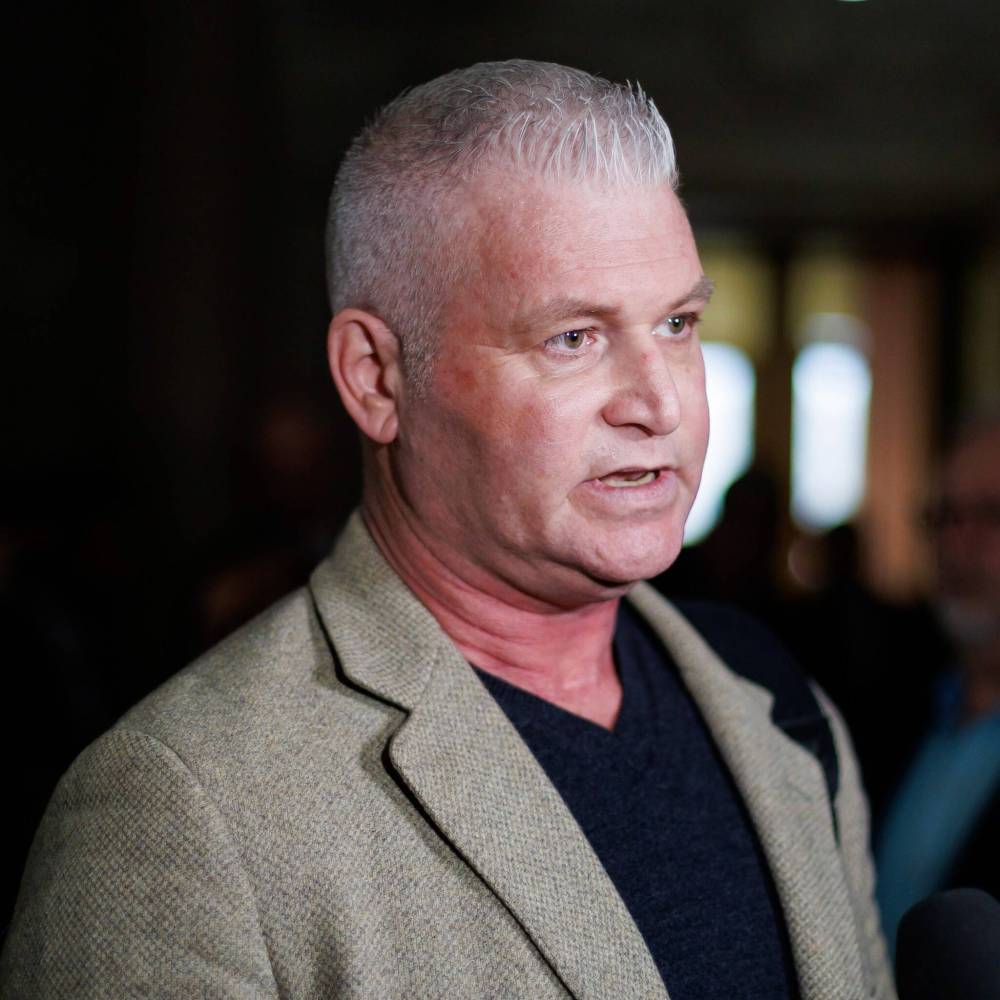
Jason Linklater, president of the Manitoba Association of Health Care Professionals, says the province's lab and diagnostics crisis has been apparent for years, but "it's only now that these tiniest of steps are being taken to resolve the problem." (Mike Deal/Winnipeg Free Press files)
“You could put more seats on, but rural Manitoba — small communities — really have to step up to try to attract these people once they’re done their training to get them to their communities,” Muirhead told the Sun on Thursday.
“You would hate to have these positions open and, you know, some of these graduates end up going to major centres or outside the province,” he said.
Combined laboratory and X-ray technologists perform lab tests, routine X-ray procedures and electrocardiogram services.
Shared Health will offer return-of-service agreements to Manitoba students accepted in the program, which includes covering tuition costs and other academic expenses, in exchange for working 5,000 hours — approximately three years of service — in rural areas after graduation.
The new seats will bridge an educational gap while Assiniboine College in Brandon undergoes capital upgrades before it launches Manitoba’s own 20-seat Combined Laboratory and X-Ray Technology program in September 2027, the province said in a news release.
Manitoba’s incoming program will reduce the reliance on out-of-province training, Health Minister Uzoma Asagwara said Thursday.
“When this program comes online, if what we find is that actually we need to continue maintaining those seats with our partners in Saskatchewan, we’re ready to do that. But what we want to make sure we do is build as much capacity as we possibly can within our own borders to support Manitobans,” Asagwara said.
The province is spending more than $178,000 to reserve the five extra seats for the 2025-26 year to improve patient flow, reduce delays for lab tests and imaging, and help stabilize rural health care, the minister said.
“We take the advice that we get directly from rural communities very seriously, and we saw an opportunity to double our seats in partnership with Saskatchewan,” they said.
The Carberry Plains Health Centre has two full-time lab and X-ray technologists who Muirhead hopes will stay in the community for a long time.
Though he feels having two lab and X-ray technologists is enough to support the needs of people in Carberry, he remembers early last year when a locum doctor couldn’t perform their health-care duties because the health centre didn’t have enough resources or the support staff available.
This experience prompted Muirhead to co-sponsor a resolution alongside seven other Westman municipalities calling on the province to expand the number of training seats for lab and X-ray technologists and develop partnerships with other provincial institutions. The resolution was brought forward during the Association of Manitoba Municipalities convention last week.
He encourages rural communities that may be scrambling to secure lab and X-ray technologists to think of innovative ways to attract graduates. Carberry provides financial accommodations through its health action committee, which liaises with local health-care professionals on matters related to recruitment and the operation of the medical facility.
Many community members in the Municipality of Two Borders rely for diagnostic services on the Melita Health Centre, which provides X-ray services two days per week and laboratory services five days per week, said Reeve Sandra Clark.
Right now, there is one staff member working in the laboratory, which shuts down whenever they need a day off, she said.
“We are desperate to have more lab and X-ray (technologists) and we’ll take advantage of any more seats anywhere,” Clark said.
The reeve said Two Borders is urging the province to launch the Combined Laboratory and X-Ray Technology program at Assiniboine College next year instead of 2027.
Working as a combined lab and X-ray technologist is a rural-specific role compared to positions in Winnipeg, for example, where people can take either a laboratory or X-ray program, said Jason Linklater, the president of the Manitoba Association of Health Care Professionals.
He said rural communities in Manitoba may compete with each other and rural areas outside the province to keep lab and X-ray technologists instead of losing health-care workers to cities like Winnipeg.
Linklater estimates there are a total of 107 combined lab and X-ray technologist positions available in Manitoba, with 88 having been filled as of December last year. This results in an approximate 18 per cent vacancy rate, which excludes the number of technologists who may be away on leave.
“The lab and diagnostics crisis has been apparent for years, and it’s only now that these tiniest of steps are being taken to resolve the problem,” Linklater said.
He would also like to see the province commit to expanding training seats for the MRI and Spectroscopy and Medical Radiologic Technology programs offered at Red River College Polytechnic in Winnipeg.
» tadamski@brandonsun.com