
City seen as ripe for 72-hour sobering centre
Advertisement
Read this article for free:
or
Already have an account? Log in here »
We need your support!
Local journalism needs your support!
As we navigate through unprecedented times, our journalists are working harder than ever to bring you the latest local updates to keep you safe and informed.
Now, more than ever, we need your support.
Starting at $15.99 plus taxes every four weeks you can access your Brandon Sun online and full access to all content as it appears on our website.
Subscribe Nowor call circulation directly at (204) 727-0527.
Your pledge helps to ensure we provide the news that matters most to your community!
To continue reading, please subscribe:
Add Brandon Sun access to your Free Press subscription for only an additional
$1 for the first 4 weeks*
- Enjoy unlimited reading on brandonsun.com
- Read the Brandon Sun E-Edition, our digital replica newspaper
*Your next Free Press subscription payment will increase by $1.00 and you will be charged $20.95 plus GST for four weeks. After four weeks, your payment will increase to $24.95 plus GST every four weeks.
Read unlimited articles for free today:
or
Already have an account? Log in here »
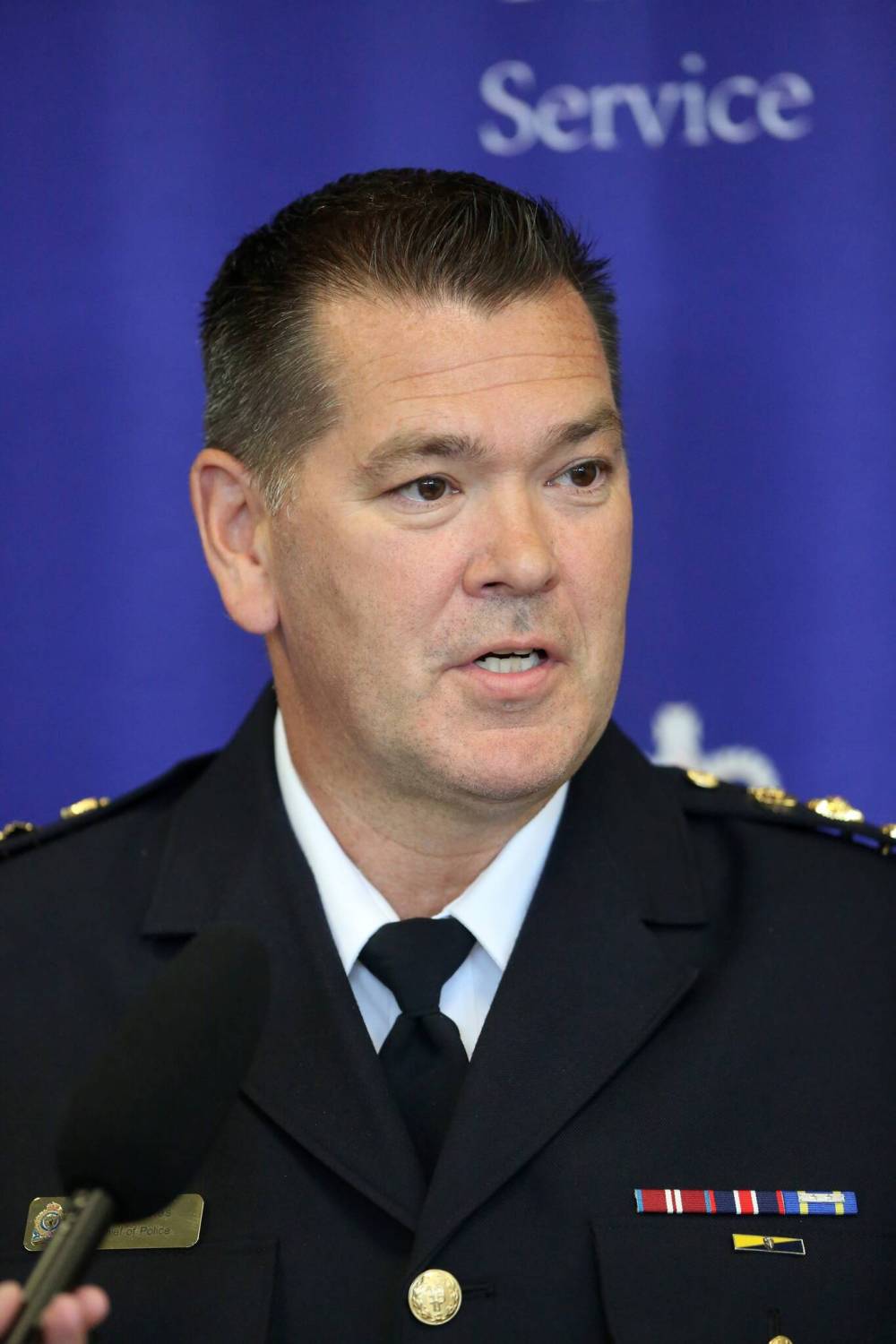
Brandon Police Service Chief Tyler Bates said he welcomes the idea of the city having a future 72-hour sobering centre after a facility opened in Winnipeg last week under a new provincial law.
The province passed Bill 48, the Protective Detention and Care of Intoxicated Persons Act in November. It extends the amount of time a highly intoxicated person can be detained at a protective care or sobering centre from 24 to 72 hours.
The Canadian Press reported on Nov. 17 that Housing, Addictions and Homelessness Minister Bernadette Smith said future centres could be opened in other cities such as Brandon and Thompson.
However, when contacted by the Sun on Tuesday, Smith did not confirm whether a 72-hour sobering centre is planned for Brandon. She said the province is focused on building the care model in Winnipeg.
“Our goal with the new protective care centre is to keep people safe during the most dangerous moments of intoxication and psychosis, to make sure they have real supports for them during their time here and to connect them to further services after they leave,” Smith said.
“It’s about preventing harm, protecting the public and giving people a pathway to care when they are at their most vulnerable.”
A sobering centre opened in Winnipeg on Dec. 2 at 190 Disraeli Fwy. in the South Point Douglas area.
The centre has 20 rooms — 16 of those are open for inebriated people, while the remaining four rooms are reserved for those high on methamphetamine and are expected to open soon, Smith said.
The centre will be staffed by on-site paramedics and workers from Main Street Project, an organization serving marginalized groups.
Though legislation to hold intoxicated people for up to 24 hours remains unchanged at Manitoba detention centres, Bates said it’s a “disconcerting feeling” when people are still under the influence of dangerous drugs by the time they are released.
“The vulnerability of those people, I think, when they walk out the door before 24 hours and they’re still in an altered state, you know, they’re not in a great situation to be able to care for themselves,” Bates told the Sun.
“The ideal when somebody is released from care is that they’re in that state of sobriety, they’re conscious, they’re aware, they’re able to understand the ability to access additional supports and, you know, receive the information with respect to referrals that might be available to them,” Bates said.
People who are released before they’ve sobered up are unable to think clearly, make decisions for their safety and well-being, and have a higher risk of freezing to death during winter, getting injured, being exploited or assaulted and potentially harming others, he said.
Bates said it’s concerning because there are not enough community supports available to help people who need more than 24 hours to get sober, especially if they are under the influence of meth, other long-lasting drugs or experiencing psychosis.
At this time, Bates said there’s been no discussion between the province and the Brandon Police Service about the possibility of opening a 72-hour sobering centre.
BPS has seen an “astronomical increase” in the number of people arrested under the former Intoxicated Persons Detention Act since this summer when paramedics at the police station started medically assessing detainees who didn’t require hospitalization, he said.
Before July 3, police officers took arrested individuals to the emergency room to be medically cleared before they could be detained in a cell, Bates said, adding he’s glad to have paramedics monitoring people at the detention centre.
“I think it makes a great contribution to the wellness of vulnerable citizens that we take into our care and … it enables the hospital to see a decreased volume in terms of people (who) come into emergency for assessment.”
Between July 3 and Nov. 18, police detained 529 people in Brandon under the former detention act or for breach of peace. During that same period last year, police detained 255 people, up from 167 in 2023, he said.
Police detained four people, ranging from 22 to 37 years old, for being intoxicated on Thursday alone, according to a recent news release.
“It’s certainly well over 100 people a month that we’re putting into our detention facilities due to people that are in an altered state,” he said.
Paramedics at the detention centre are also making referrals to other agencies if people are interested in addictions or mental health support.
Bates said there could be an increased workload or strain on paramedics if a 72-hour sobering centre was built in Brandon.
Brandon Fire and Emergency Services Chief Terry Parlow did not respond to the Sun’s repeated requests for comment.
In 2021, the City of Brandon was provided with $2 million by Manitoba’s department of justice to build a sobering centre in partnership with the John Howard Society of Brandon Inc., but the project is still in the design phase due to limited funds, said Shannon Saltarelli, the city’s community housing and wellness co-ordinator.
“We were challenged in how we can phase this project and build it in a really intentional way with the cost of construction right now, so we keep having to go back to the drawing board,” she said.
The initial design came to an estimated cost of $6 million, so now the planning committee is seeing where it can scale back to work within the budget, she said.
Once the city decides how to phase the project, it will put out a tender for an operator and start construction.
The John Howard Society of Brandon Inc. will not be operating the centre, said executive director Ross Robinson.
Saltarelli said she’s unsure whether the planned sobering centre will be designated as a 72-hour holding facility under Bill 48. It’s up to the provincial government, Brandon police and those who will staff the future centre to figure out how it will operate, she said.
Unlike a holding cell at a police station, she said, a sobering centre is a safe and appropriate place for an intoxicated person to slowly come down from their high, rest, or be in a separate room if they have the potential to harm themselves or another person.
“I think a 72-hour window would allow somebody to safely get through that intoxicated state, and it could also be a gateway for someone to take a next step with their struggle with addiction,” Saltarelli said, adding that it could connect people with an elder or peer support worker.
The Joshua Jacks Centre located on 13th Street in Brandon offers a non-medical, six-bed detox space for up to 30 days on the ground floor and nine long-term transitional housing suites on the second floor.
People struggling with addiction must apply to access either of the programs at the withdrawal facility, which opened in September 2021 in honour of Joshua Jacks Mennie, who died from a drug overdose in 2016. The centre is staffed 24-7.
Bates said that Brandon police do not take intoxicated people detained in custody to the Joshua Jacks Centre.
» tadamski@brandonsun.com