
Carbon-capture project ‘very exciting,’ but community buy-in needed: Kinew
» Year-end interview with the premier
Advertisement
Read this article for free:
or
Already have an account? Log in here »
We need your support!
Local journalism needs your support!
As we navigate through unprecedented times, our journalists are working harder than ever to bring you the latest local updates to keep you safe and informed.
Now, more than ever, we need your support.
Starting at $15.99 plus taxes every four weeks you can access your Brandon Sun online and full access to all content as it appears on our website.
Subscribe Nowor call circulation directly at (204) 727-0527.
Your pledge helps to ensure we provide the news that matters most to your community!
To continue reading, please subscribe:
Add Brandon Sun access to your Free Press subscription for only an additional
$1 for the first 4 weeks*
- Enjoy unlimited reading on brandonsun.com
- Read the Brandon Sun E-Edition, our digital replica newspaper
*Your next Free Press subscription payment will increase by $1.00 and you will be charged $20.95 plus GST for four weeks. After four weeks, your payment will increase to $24.95 plus GST every four weeks.
Read unlimited articles for free today:
or
Already have an account? Log in here »
Hey there, time traveller!
This article was published 22/12/2025 (185 days ago), so information in it may no longer be current.
The financial impact of a proposed carbon-capture facility in southwestern Manitoba could be “very exciting,” Premier Wab Kinew told the Sun.
In a wide-ranging year-end interview, the premier said the province wants to see economic development in the province, but added that companies like Deep Sky need to make sure communities are on side with their projects.
“For me, the idea that Manitoba could be a leader in a new industry, and it could be a very sizable investment in southwestern Manitoba, that’s all very exciting,” Kinew said.
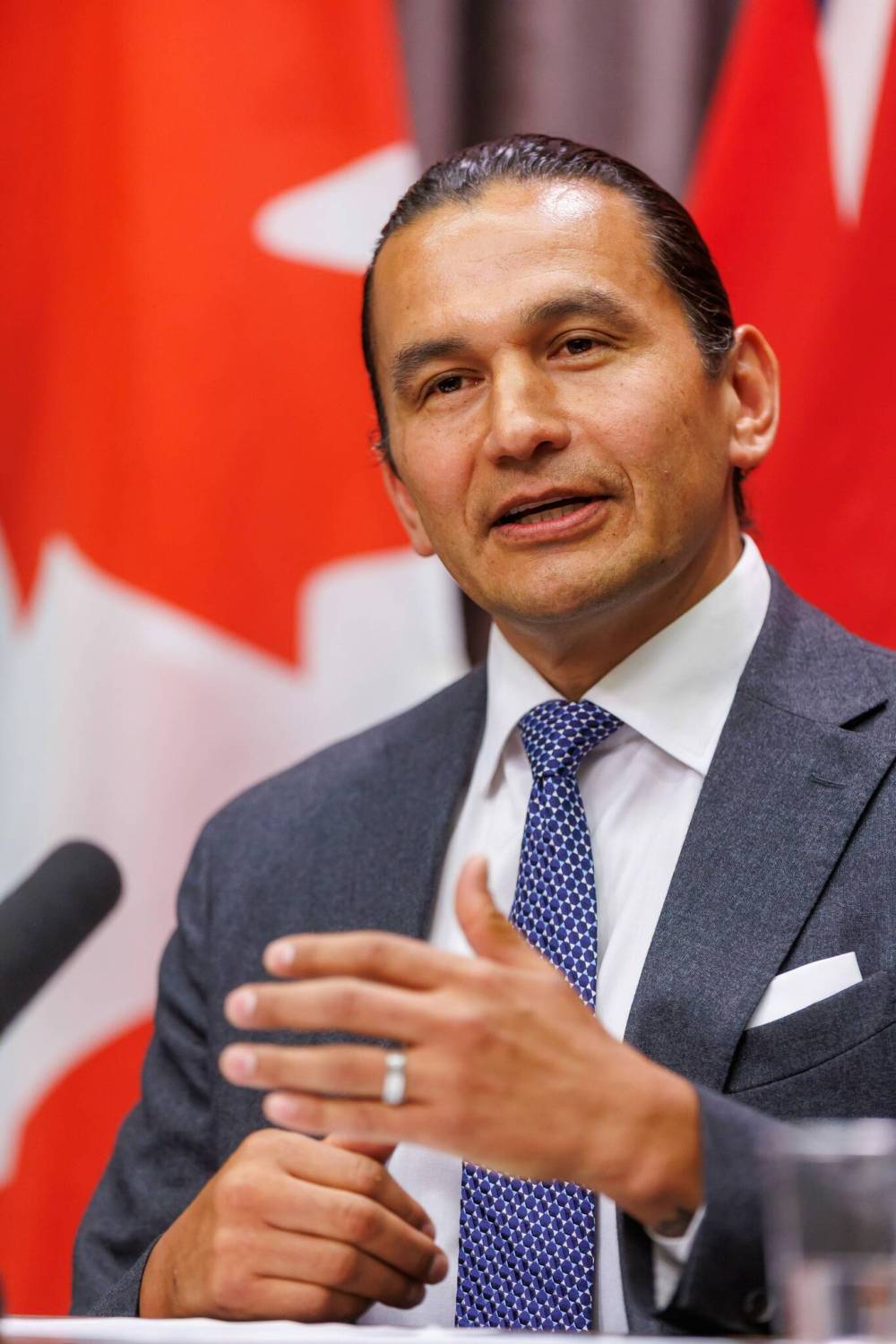
Premier Wab Kinew says the province is talking to Prime Minister Mark Carney about focusing on "real sectors of our economy," such as agriculture, and not paying so much attention to the "largely imaginary" Canadian electric-vehicle sector. (Mike Deal/Winnipeg Free Press files)
But companies moving into the province also need to protect the environment and have a solid business plan, he said.
“People in the area, Indigenous communities (and) environmentalists all have questions,” he said about the Deep Sky proposal.
“So, we need to make sure that those questions are answered and that the potential of a project like this is delivered in a way that works for us as Manitobans.”
Montreal-based Deep Sky plans to build a $200-million facility capable of storing up to 500,000 tonnes of CO2 per year in either the Rural Municipality of Pipestone or the Municipality of Two Borders.
Kinew said the province has been open to working with Deep Sky as the company does outreach and consultation work.
Open houses in the community of Pipestone in the last two months brought out hundreds of people keen on hearing about how the project works. The last two meetings finished with unanswered questions for residents and with many people opposed to the company locating in the area.
On the topic of education, Kinew said the province will “certainly be investing in kids” next year.
Trustees for the Brandon School Division (BSD) warned in November that if it doesn’t see any funding come in soon, it will have to raise property taxes by 10 per cent.
That increase is partially tied to the harmonization of teacher salaries, which would see teachers across the province have a standard salary based on years of work.
Kinew said details of a funding announcement are still being finalized and that it will be shared next month.
“I hope people don’t raise taxes as school trustees,” he said when asked about BSD’s warning.
“It’s a balancing act between affordability and making sure we got the right resources for the kids to succeed,” the premier said, adding that the province has a “great relationship” with school leaders in the Brandon area.
“It’s definitely going to be a big priority for us, but cost of living is big, too,” Kinew said. “The folks involved with those local school division funding decisions, they’ll have to strike a balance there too, and so we’ll be working to support them.”
He said with a projected deficit of $1.6 billion this fiscal year, the province has to take a balanced approach for funding of all sorts, not just education.
“Just like everyone in the province who is looking at the economy right now and making decisions about what they’re going to prioritize investing in, and where they’re going to tighten their belts, we got to make the same decisions.”
That means keeping the economy moving forward while being fiscally responsible, he said.
Kinew said the province is on budget if you exclude the impacts of global warming, like wildfires, and of U.S. President Donald Trump, who imposed tariffs on several sectors since taking office nearly a year ago, and threatened that Canada would become the 51st state.
But as the province is hitting the red, it “would be the wrong thing to turn around and fire a bunch of people in Manitoba,” Kinew said.
“I don’t think we want to make things worse by putting people out of work.”
Kinew said the province will be raising Manitoba’s priorities with Prime Minister Mark Carney, including on U.S. tariffs, international trade agreements and how the province can build its economy.
The province recently announced it would spend $3 billion on a combustion turbine facility in Brandon to help Manitoba Hydro with power shortages. Kinew said it would “be awesome to see the federal government come and try to stimulate the economy with some of their infrastructure spending, too.”
He said the province is talking to the prime minister about focusing on “real sectors of our economy,” such as agriculture, and not paying so much attention to the “largely imaginary” Canadian electric-vehicle sector.
Manitobans have been very patient thus far about Chinese canola tariffs, he said, and it “would be great to see some progress now.”
Additionally, Kinew said construction on the new Centre for Justice in Dauphin — originally announced as a campaign promise in 2023 — is expected to break ground next fall.
He said he believes the project will take about two years to complete.
Since the party came to power in October 2023, it has been doing community consultations on program design and how a safe implementation can happen, he said.
Also, the province’s deficit won’t affect the planned overpass near Carberry at the intersection of the Trans-Canada and Highway 5, and the project will “move along with the same timeline” as announced last month, Kinew said.
» alambert@brandonsun.com