
BU adopts new grade-appeal policy
Move follows 2022 decision by a former dean to change student’s F to an A+
Advertisement
Read this article for free:
or
Already have an account? Log in here »
We need your support!
Local journalism needs your support!
As we navigate through unprecedented times, our journalists are working harder than ever to bring you the latest local updates to keep you safe and informed.
Now, more than ever, we need your support.
Starting at $15.99 plus taxes every four weeks you can access your Brandon Sun online and full access to all content as it appears on our website.
Subscribe Nowor call circulation directly at (204) 727-0527.
Your pledge helps to ensure we provide the news that matters most to your community!
To continue reading, please subscribe:
Add Brandon Sun access to your Free Press subscription for only an additional
$1 for the first 4 weeks*
*Your next subscription payment will increase by $1.00 and you will be charged $20.00 plus GST for four weeks. After four weeks, your payment will increase to $24.00 plus GST every four weeks.
Read unlimited articles for free today:
or
Already have an account? Log in here »
WINNIPEG — From now on, a student’s appeal for a higher course mark at Brandon University should — regardless of the end result — involve more parties and yield an extensive paper trail.
University senators recently adopted a new policy that outlines when students can challenge a grade and who must be in-the-know about complaints that escalate beyond a classroom.
It was drafted in response to backlash about a former dean ignoring an instructor’s concerns and overriding a failing grade with an A+ during the 2021-22 school year.
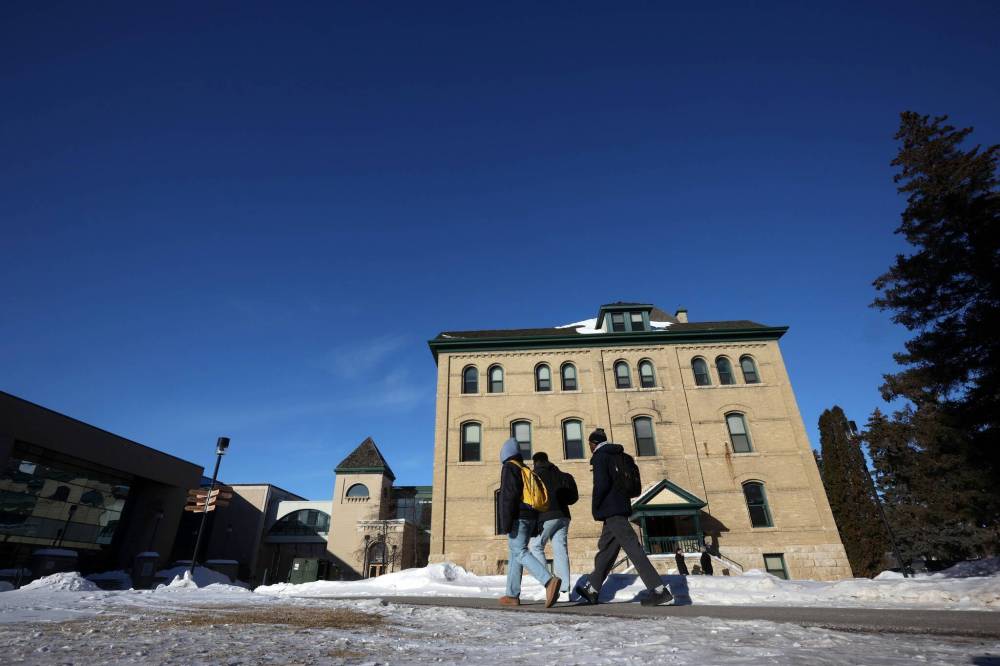
Students walk through the courtyard at Brandon University. A new policy outlines when students can challenge a grade and who must be in-the-know about complaints that escalate beyond a classroom. (Tim Smith/The Brandon Sun files)
University leaders and its faculty association are touting the new rules, but they’re receiving mixed reviews elsewhere on campus.
One faculty member expressed frustration that the policy does not give instructors or department chairs the opportunity to justify a grade or refute a dean’s decision.
“If you’ve got bad actors in place, the same thing could, technically, happen,” another employee said, referring to a three-year-old incident that resulted in BU formalizing student appeal protocols in the first place.
A third staffer noted a dean is the only person who needs to sign off on a grade change, but more people will “be in the loop” in the future.
A Winnipeg Free Press investigation uncovered that in April 2022, the dean of science updated a transcript belonging to a relative of a friend of hers.
Bernadette Ardelli, who has since been promoted to a vice-president position, did not follow standard protocol when she changed an F to an A+, internal documents show.
The contract instructor who reported to Ardelli at the time refused to change the course grade upon the dean’s request.
The instructor cited the pupil’s performance on tests, as well as chronic absenteeism and failures to meet extended deadlines in the lab-intensive course.
The faculty association filed a grievance alleging the former dean attempted to intimidate a faculty member and interfered with their academic freedom rights.
“(Ardelli) arbitrarily and unreasonably assigned the student the highest grade possible,” the union alleged in one document.
Following a lengthy grievance process, Ardelli penned an apology and BU created a senate subcommittee to formalize what was previously laid out in more generic terms in an undergraduate calendar and employee handbook.
The group tasked with creating the policy was never briefed on the incident. Its Final Grade Appeal Policy was approved Dec. 16.
University senators spent the better part of 2025 debating what checks and balances should be required to make an adjustment against an instructor’s wishes.
The policy states students are entitled to challenge a mark on the grounds it represents a miscalculation or was “graded inappropriately.”
If a student cannot reach an agreement with their instructor, they must meet with the chair of their department. As a last resort, a student who remains unsatisfied can contact the dean’s office.
The applicant must, at this point, prepare an “appeal package,” including a written argument and documentation to back up their case, and share it with the instructor, chair, dean and registrar’s office.
Both a student and instructor are entitled to a “support person” throughout the process.
Faculty association president Gautam Srivastava said he is pleased there’s newfound “consistency” for students who have every right to a fair appeal process.
At the same time, Srivastava said his members can be assured the registrar’s office is responsible for vetting changes.
Ultimately, the decision-making power rests with the dean, but they are obligated to provide rationale, including all the steps they’ve taken to assess any coursework, in writing, to all parties.
Deans have 20 business days to make a decision when a request lands on their desk.
“Upon receipt, the registrar shall review and confirm all appropriate processes were followed before officially processing the grade change,” the new policy states.
It notes that a dean can contact one or more experts in the course subject for assistance, but there is no requirement they do so.
Brandon University president Christine Bovis-Cnossen declined an interview request.
Bovis-Cnossen said in an email that the policy is the product of extensive, university-wide consultation. She touted its “clear processes for grade appeals.”
» Winnipeg Free Press