
Parks Canada eyed boat-ban pros and cons
Advertisement
Read this article for free:
or
Already have an account? Log in here »
We need your support!
Local journalism needs your support!
As we navigate through unprecedented times, our journalists are working harder than ever to bring you the latest local updates to keep you safe and informed.
Now, more than ever, we need your support.
Starting at $15.99 plus taxes every four weeks you can access your Brandon Sun online and full access to all content as it appears on our website.
Subscribe Nowor call circulation directly at (204) 727-0527.
Your pledge helps to ensure we provide the news that matters most to your community!
To continue reading, please subscribe:
Add Brandon Sun access to your Free Press subscription for only an additional
$1 for the first 4 weeks*
- Enjoy unlimited reading on brandonsun.com
- Read the Brandon Sun E-Edition, our digital replica newspaper
*Your next Free Press subscription payment will increase by $1.00 and you will be charged $20.95 plus GST for four weeks. After four weeks, your payment will increase to $24.95 plus GST every four weeks.
Read unlimited articles for free today:
or
Already have an account? Log in here »
Hey there, time traveller!
This article was published 08/01/2026 (253 days ago), so information in it may no longer be current.
A Parks Canada document shows that staff weighed pros and cons — including a legal threat from Keeseekoowenin Ojibway First Nation — before deciding to ban motorboats from Clear Lake last May.
A briefing document was prepared for Thomas Sheldon, the acting superintendent of Riding Mountain National Park at the time, requesting his decision before May 14. The note identified the legal threat from the First Nation, as well as the risk of an outcry from boat owners and businesses, among factors to consider when deciding on the boat policy for 2025.
Sheldon signed off on May 14 in favour of the boat ban, the document shows.
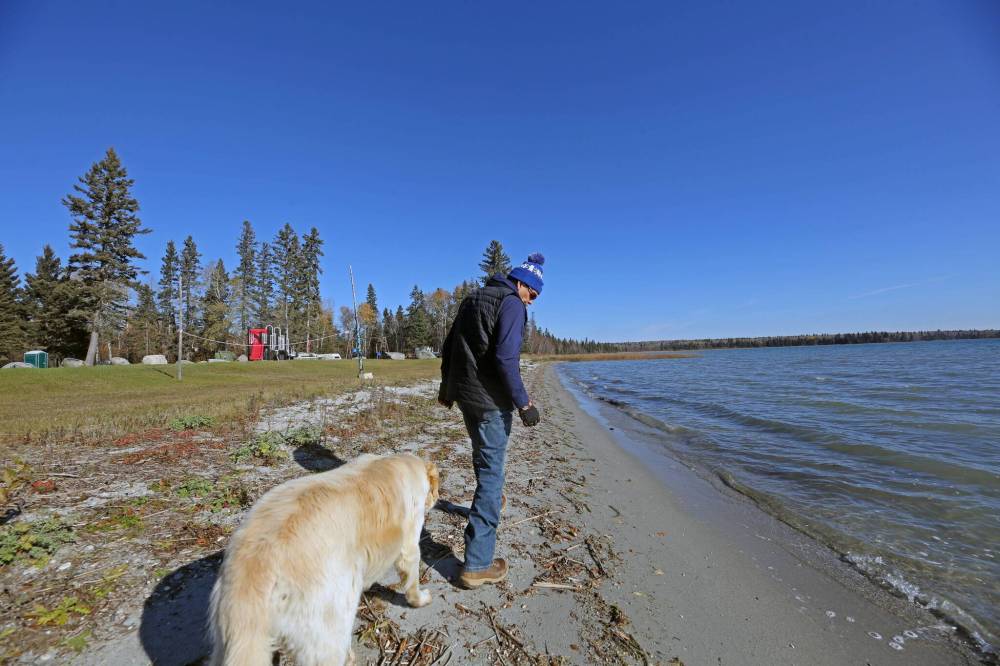
Dwayne Sonny Blackbird, chief of Keeseekoowenin Ojibway First Nation, walks along the shoreline at Clear Lake with his dog Hunter. The chief came forward in October as the source of a legal threat against allowing motorized boats on the lake, a claim that is supported by internal Parks Canada documents obtained by the Sun. (Connor McDowell/The Brandon Sun files)
The file was obtained by the Sun through an access-to-information request, along with internal emails between Parks Canada staff and other correspondence leading up to the ban.
The files show that Parks Canada factored social, environmental and legal risks ahead of the ban that blindsided business owners and cottagers when it was announced on May 16, at the start of the Victoria Day long weekend.
The options presented to Sheldon were to allow all watercraft, only non-motorized watercraft or no watercraft. The recommendation in the note was that Sheldon ban motorized boats for the season.
The rationale to ban boats contained 13 bullet points, including that it would allow “for benchmark studies on the ecological, socioeconomic and cultural dimensions of Clear Lake,” that “visitation and revenue generation were not significantly impacted by the closure in 2024,” and that “the Field Unit Superintendent has the authority under the Canada National Parks Act to decide on this option and implement it.”
Other rationales were that motorized watercraft have the ability to quickly move water through their bilge, live wells or ballast tanks, posing a risk to spread zebra mussels around the lake. A boat ban was also said to reduce the risk of spreading zebra mussels out of Clear Lake and to reduce the likelihood of introducing new invasive species to Clear Lake.
Parks Canada told the Sun that Sheldon was serving in the acting superintendent role “to cover pre-arranged leave” for then-superintendent Leanne Cooper.
Cooper told a crowd in Onanole days after the boat ban that she was responsible for it, saying, “Ultimately, (it was) my decision.”
Parks Canada created a decision matrix to inform the boat policy decision, the briefing note shows. Strengths and weaknesses were listed of the three possible options and given to Sheldon.
The path to allow boats on Clear Lake carried seven concerns, including that allowing boats was “likely subject to judicial review and injunction” by Keeseekoowenin Ojibway First Nation, would make “monitoring for ecological/cultural/social impacts of motorboating not feasible,” and “may infringe on section 35 rights.”
Internal documents show Keeseekoowenin had argued that if boats quickened the spread of zebra mussels, it could make Parks Canada responsible for damaging the First Nation’s fishery and ability to harvest. This was presented as a possible infringement on their Section 35 rights under Canada’s constitution.
Five strengths were listed for allowing boats on the water, including that it would be “supported by the majority of the public,” that “zebra mussels will eventually spread throughout Clear Lake and the degree to which human assisted transfer will accelerate this spread is challenging to quantify,” and that allowing boats “limits the risk of introducing new aquatic invasive species to Riding Mountain National Park.”
Under the option to ban boats, Parks Canada listed five concerns, including that it would lead to an expected “significant negative reaction from boat owners and some businesses,” and a “likely negative reaction from provincial government.” It would also prompt “marine operation to be significantly impacted,” with the cruise ship “Martese unable to sail.”
Parks Canada outlined three strengths for banning motorized boats: the decision was “supported by” Keeseekoowenin, “allows for opportunity to monitor for ecological/cultural/social impacts of motorboats,” and “limits the risk of human aided transference of zebra mussels within Clear Lake.”
Staff at the agency had drafted an information bulletin to tell the public as late as May 6 that motorboats would be allowed on the lake. By the end of that week, the agency had pivoted to planning for a ban on boats, the correspondence shows. The files also show that Keeseekoowenin officials became aware on May 2 that boats were going to be allowed on the water and stated immediately they intended to file for a judicial review.
Cooper was replaced as superintendent of Riding Mountain National Park in September. Sheldon took up the role following her relocation.
Visitation to the park was listed as roughly 347,000 people in 2024, compared to 339,000 the year before, 334,000 in 2022 and 359,000 in 2021.
“Parks Canada staff are cautious that this data is limited and may not persist over the long-term,” the briefing note stated.
The agency said in May that it expected visitation to increase in 2025.
Parks Canada released an information bulletin in December saying it aims to make a decision on watercraft management for Clear Lake by February 2026.
The decision about motorized watercraft use in Clear Lake will be guided by a list of items, the bulletin said. These include consideration of monitoring results from 2025 and previous years, a third-party literature review on impacts of motorized watercraft on inland lakes, feedback from consultations and engagement with others, including with section 35 rights holders.
» cmcdowell@brandonsun.com