
March opening set for transitional housing units
Advertisement
Read this article for free:
or
Already have an account? Log in here »
We need your support!
Local journalism needs your support!
As we navigate through unprecedented times, our journalists are working harder than ever to bring you the latest local updates to keep you safe and informed.
Now, more than ever, we need your support.
Starting at $15.99 plus taxes every four weeks you can access your Brandon Sun online and full access to all content as it appears on our website.
Subscribe Nowor call circulation directly at (204) 727-0527.
Your pledge helps to ensure we provide the news that matters most to your community!
To continue reading, please subscribe:
Add Brandon Sun access to your Free Press subscription for only an additional
$1 for the first 4 weeks*
*Your next subscription payment will increase by $1.00 and you will be charged $20.00 plus GST for four weeks. After four weeks, your payment will increase to $24.00 plus GST every four weeks.
Read unlimited articles for free today:
or
Already have an account? Log in here »
More than six months after the original targeted opening date, a 24-unit transitional housing facility is now set to open in Brandon at the beginning of March.
The facility at 353 16th St. North will help men leaving incarceration or experiencing homelessness find secure employment and housing. It will be operated by the non-profit John Howard Society of Brandon and staffed 24-7.
The organization’s executive director, Ross Robinson, said “there’s been an ongoing need” for transitional housing that uses a restorative justice approach to support past offenders in a healing way and sets them up for success rather than re-offending.
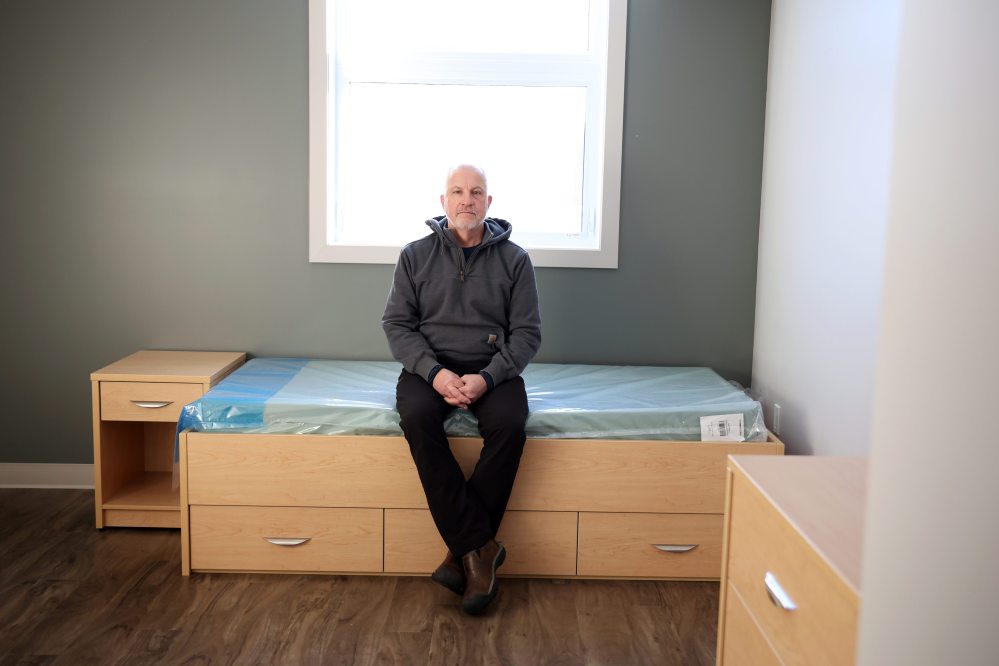
“I’m excited that we’re actually going to give people a chance from the moment they join us to the moment they leave,” Robinson said.
“It’s all about chances to make better decisions.”
The housing facility is for day parolees from the Correctional Service of Canada, people released from the Brandon Correctional Centre and people who are selected by Brandon’s co-ordinated access process, which identifies those in the community suitable for the program, he said.
Robinson said the project will help men struggling with homelessness or who have recently been released from jail to get re-acquainted and connected with agencies in Brandon that will provide resources and supports they need.
Sometimes people leaving incarceration are released into homelessness, “which is not good,” he said.
A database that tracks homelessness in Brandon through the Brandon Neighbourhood Renewal Corporation shows that about 29 per cent of individuals assessed in 2025 reported being held in police custody or incarceration in the last six months.
This is an increase from 2024, when roughly 25 per cent indicated they had experienced being held in police custody or incarceration.
Rebecca Anhalt, senior data analyst with the Homeless Individuals and Families Information System at the BNRC, said while the total number of people who experienced homelessness decreased from 909 in 2024 to 821 in 2025, chronic homelessness rose by 20 per cent.
“Brandon’s rising rate of chronic homelessness has resulted from a number of overlapping factors, including the rising cost of living, the rising cost of housing, and a limited number of supported housing resources available in the city,” Anhalt said in a statement.
While there are transitional housing facilities dedicated to helping women at risk, the city has limited space to specifically house and support Indigenous men, she said. The database showed that 455 men experienced homelessness in Brandon last year, and about 62 per cent of those men self-identified as Indigenous.
“My hope is that the new John Howard Society housing program will start to address that gap,” Anhalt said.
The John Howard Society of Brandon announced its plan to build the facility in December 2022 following the closure of YWCA Brandon’s Meredith Place. Construction started in July 2024.
The organization received about $11 million in federal and provincial funding, including contributions from the City of Brandon.
Construction delays pushed back the original June 2025 opening date, but transitional housing director Carla McDonald said she expects to hire and train about 20 staff ahead of the planned March opening.
At least two staff members will be working at all times, she said. Staff roles include case management workers, program co-ordinators and re-integration navigators who prepare people to transition to permanent employment and housing.
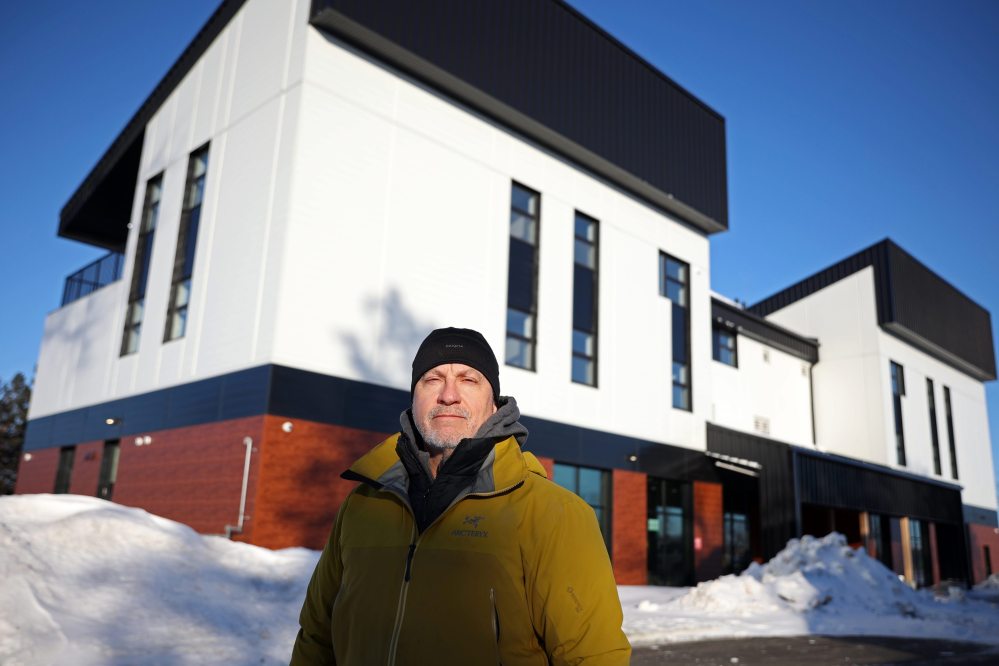
McDonald said the second floor of the three-storey building has 16 units with a bedroom and half-bathroom. On the third floor, there are eight larger units that have a bedroom, full bathroom and a kitchen.
The main floor has a commercial kitchen, dining room, laundry area, intake office and a lounge for visiting, she said.
McDonald said the transitional housing facility will have a phased-in approach to welcome people into their units.
“I would hope we could at least fill probably half of them in March, maybe more, depending on how things go once we actually get up and running,” she said.
Cultural programming will be offered at the facility to support Indigenous people who are overrepresented in the criminal justice system, McDonald said.
In 2021-22, people who identified as Indigenous made up about 76 per cent of adult custody admissions to correctional services in Manitoba, according to Statistics Canada, while the latest census data show Indigenous people account for 18 per cent of the province’s population.
“Our hope is that we’re going to offer a really good cultural program. It’s going to connect them back to their culture, to their identity, to their roots,” McDonald said.
She said there isn’t a time limit for how long people can stay at the transitional housing facility, excluding day parolees in federal prison.
“The hope is that they’re actively working toward transitioning out onto their own, and I think what that looks like for each person is going to be very different,” she said.
Robinson said he wants people at the facility to get involved with the community and know that they belong.
“This is part of community, and it’s only through community that we’re going to heal,” he said.
» tadamski@brandonsun.com