
Ideal conditions for Operation Nanook
Advertisement
Read this article for free:
or
Already have an account? Log in here »
We need your support!
Local journalism needs your support!
As we navigate through unprecedented times, our journalists are working harder than ever to bring you the latest local updates to keep you safe and informed.
Now, more than ever, we need your support.
Starting at $15.99 plus taxes every four weeks you can access your Brandon Sun online and full access to all content as it appears on our website.
Subscribe Nowor call circulation directly at (204) 727-0527.
Your pledge helps to ensure we provide the news that matters most to your community!
To continue reading, please subscribe:
Add Brandon Sun access to your Free Press subscription for only an additional
$1 for the first 4 weeks*
- Enjoy unlimited reading on brandonsun.com
- Read the Brandon Sun E-Edition, our digital replica newspaper
*Your next Free Press subscription payment will increase by $1.00 and you will be charged $20.95 plus GST for four weeks. After four weeks, your payment will increase to $24.95 plus GST every four weeks.
Read unlimited articles for free today:
or
Already have an account? Log in here »
What do you get when you ask more than 40 troops with the 1st Regiment Royal Canadian Horse Artillery to load a pair of M777 Howitzers into the back of a C-130 Hercules amid extremely cold Manitoba temperatures?
The ideal conditions for Operation Nanook — an Arctic defence operation that has been in the planning stages for several months.
“It’s a conjoined effort with a multitude of different trades and elements throughout the Canadian military,” 1RCHA Sgt. Ethan Clunas told the Sun on Friday morning. “And it just displays how well everything operates when everyone comes together and has one solid goal.”
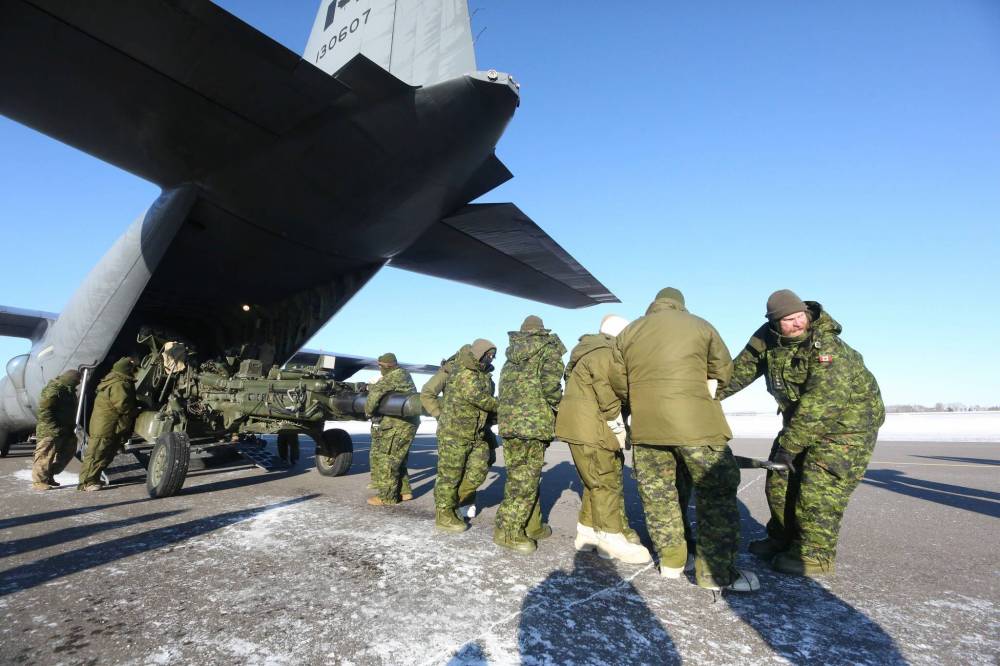
Soldiers with the 1st Regiment Royal Canadian Horse Artillery pull one of two M777 Howitzers from a C-130 aircraft at the Brandon Municipal Airport on Friday morning as part of Operation Nanook, an Arctic defence operation that has been months in the planning. The operation aims to bring the howitzers to the Far North to better defend the Arctic. See story on Page A4. (Photos by Matt Goerzen/The Brandon Sun)
Troops with 1RCHA from CFB Shilo, along with members of the Royal Canadian Air Force, and personnel from various military trades such as gunners and vehicle and weapons techs, showed up to the Brandon Municipal Airport on a frigid Friday morning — the temperature was a balmy -33 C with a wind chill pushing -40 C — shortly before 8 a.m.
The training exercise was all about working out the kinks on how to load and unload two large howitzer artillery guns into the back of the C-130 and ensure that they do not get damaged — or damage the aircraft — in flight.
The guns will be flown to a location in Canada’s Arctic next week.
“The operation is being conducted up north in Yellowknife and the Cambridge Bay area,” Clunas said. “While I’m not going to tell you 100 per cent where the guns are going to be dropping, they are going to be lifted by C-130s and Chinook (helicopters) as well.”
Clunas said it has been several years since 1RCHA had worked to fit two howitzers into the back of a Hercules. In spite of the cold, the operation went relatively smoothly as the troops manoeuvred the two large guns into the aircraft.
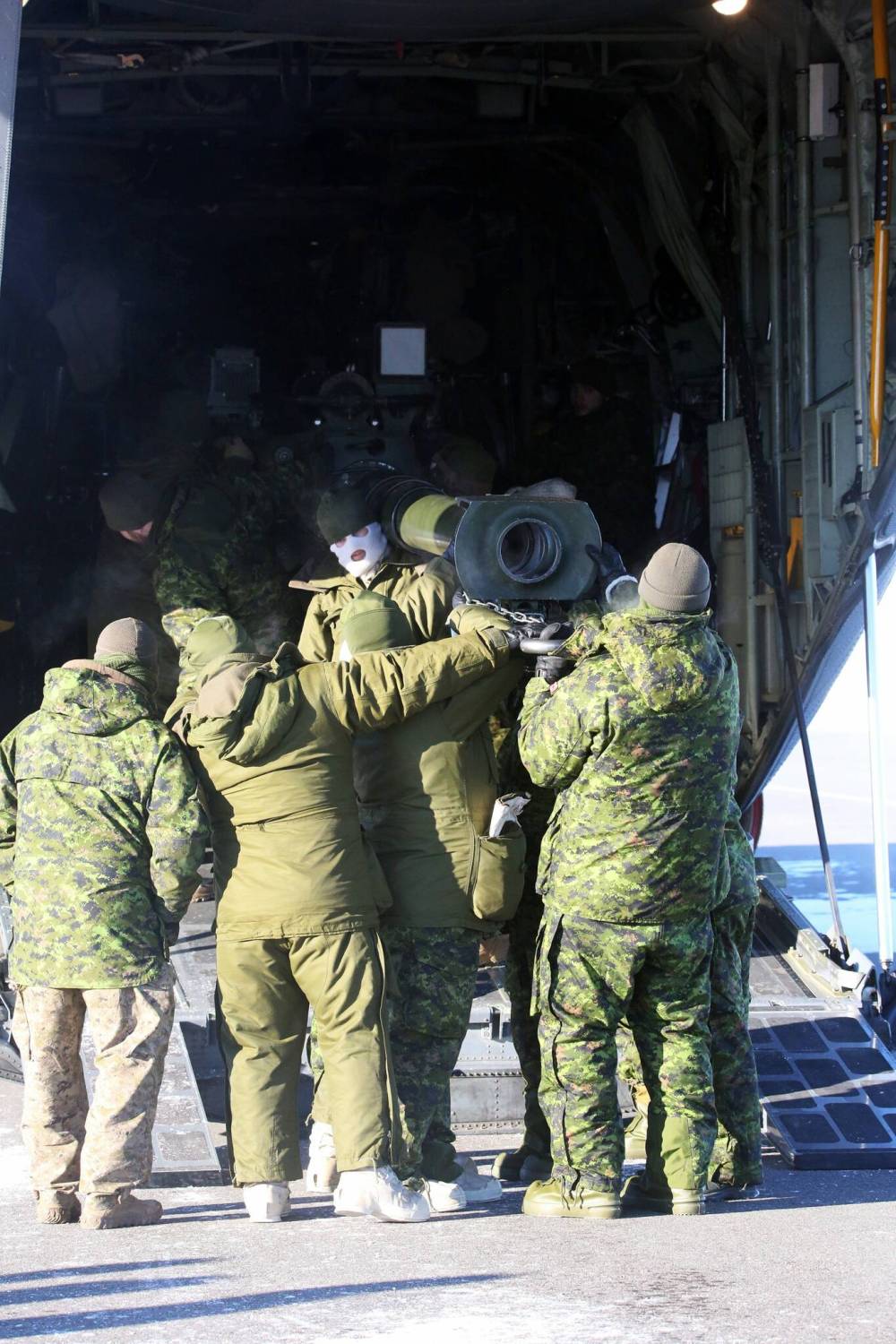
Soldiers with the 1st Regiment Royal Canadian Horse Artillery pull one of two M777 Howitzers from a C-130 aircraft at the Brandon Municipal Airport on Friday morning.
“You can fit, as we’ve seen today, two, just because the overall length of the howitzers themselves and the tenth of the cargo bay of the aircraft,” Clunas said. “We’re comfortably able to fit one. However, we’ve managed today to get two in, showing the capability that we can move multiple firing systems for indirect fire and make close precisions striking with one single aircraft.”
Working out the logistics of fitting the two guns depends on a multitude of things, Clunas said, including weather, manpower, equipment and tools. Part of the effort included practising procedures used by the gunners on how to load the howitzers, and using “shoring” materials that help stabilize the weapon system inside the aircraft.
Operation Nanook is the Canadian Armed Forces’ signature northern operation, according to the Department of National Defence website, and is comprised of a series of comprehensive activities designed to ensure the defence of Canada and secure the country’s northern regions.
Operation Nanook takes place each year across Yukon, the Northwest Territories, Nunavut and Labrador, and features up to five deployments throughout the year.
The operation began in 2007 and took place annually with one major activity in the North. But as of 2018, it was separated into four distinct activities held in different northern communities.
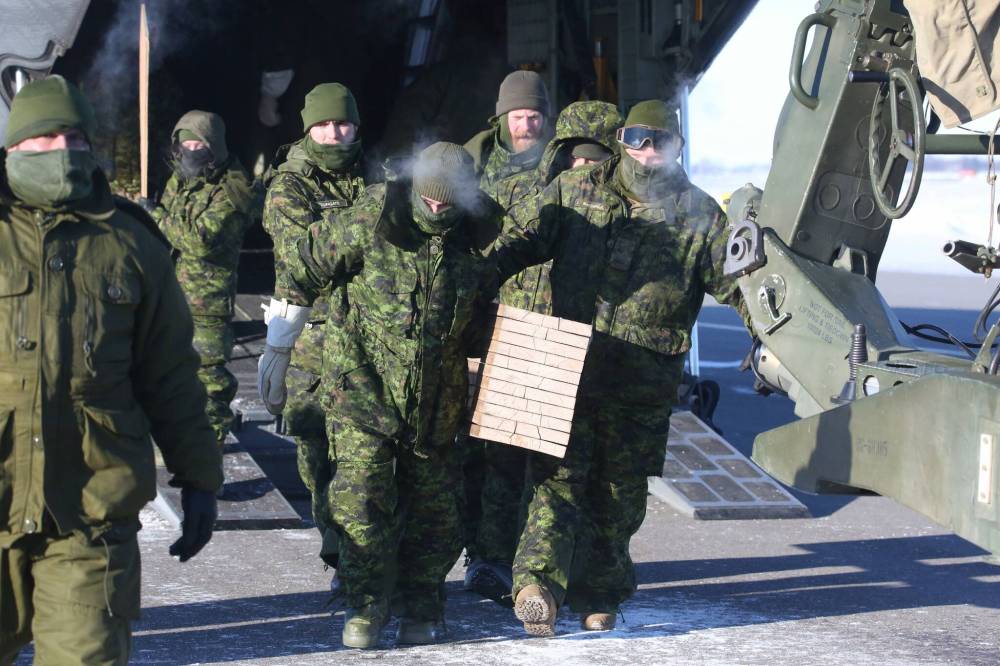
Soldiers with the 1st Regiment Royal Canadian Horse Artillery remove a wooden structure called a shoring from the back of a C-130 aircraft at the Brandon Municipal Airport on Friday morning, as temperatures fell to -33 C.
The global significance of these activities has become increasingly important as state and commercial interests from around the world see the benefits of operating in the Arctic as the region becomes more accessible.
“There are also large reserves of fossil fuels and minerals,” the DND website states. “These factors are expected to lead to increased commercial activity, research, and tourism in and around Canada’s northern region.
“The increase in traffic brings new safety and security risks. Canada must be ready to respond to search and rescue missions, as well as natural disasters.”
While the temperatures were hardly ideal on Friday, Clunas said it’s good practice for working up in the Arctic.
“It’s definitely not enjoyable,” he said, “but enjoyable is not the name of the game. Getting the work done and mission first is what matters most. And it’s an Arctic mission … It’s cold here and it’s going to be cold up there. A perfect place to do it.”
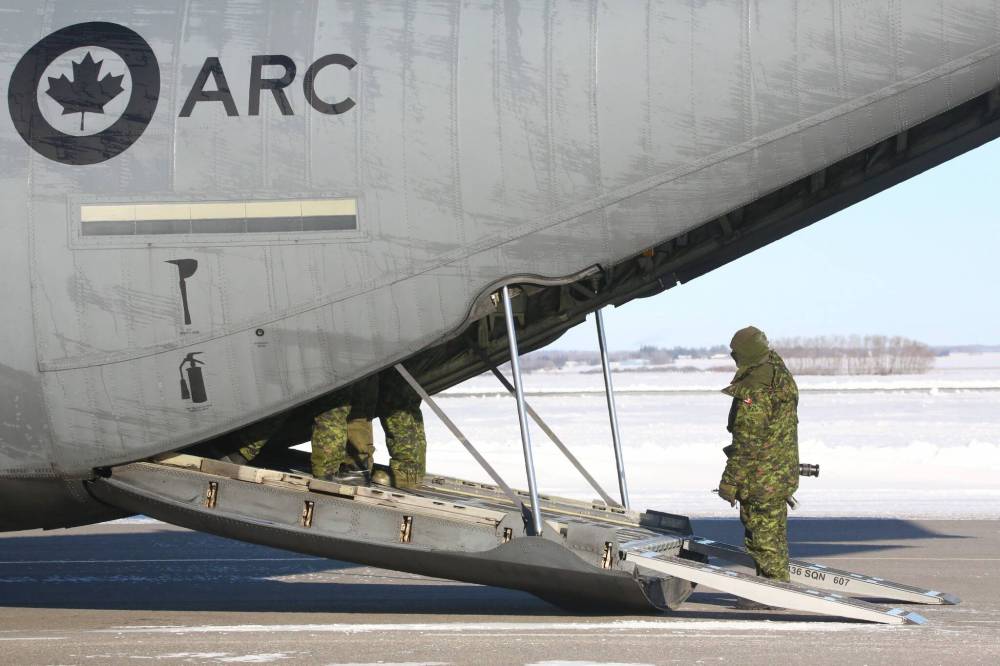
A military photographer watches troops with 1st Regiment Royal Canadian Horse Artillery unload an M777 Howitzer from the back of a C-130 aircraft at the Brandon Municipal Airport on Friday morning.
» mgoerzen@brandonsun.com
» Bluesky: @matt.goerzen.bsky.social
History
Updated on Saturday, January 24, 2026 11:36 AM CST: The correct title for the 1RCHA is the 1st Regiment Royal Canadian Horse Artillery. Photo captions and the story were worded incorrectly and have been updated.