
Carney suspends trip to Europe following B.C. school shooting
Advertisement
Read this article for free:
or
Already have an account? Log in here »
We need your support!
Local journalism needs your support!
As we navigate through unprecedented times, our journalists are working harder than ever to bring you the latest local updates to keep you safe and informed.
Now, more than ever, we need your support.
Starting at $15.99 plus taxes every four weeks you can access your Brandon Sun online and full access to all content as it appears on our website.
Subscribe Nowor call circulation directly at (204) 727-0527.
Your pledge helps to ensure we provide the news that matters most to your community!
To continue reading, please subscribe:
Add Brandon Sun access to your Free Press subscription for only an additional
$1 for the first 4 weeks*
*Your next subscription payment will increase by $1.00 and you will be charged $20.00 plus GST for four weeks. After four weeks, your payment will increase to $24.00 plus GST every four weeks.
Read unlimited articles for free today:
or
Already have an account? Log in here »
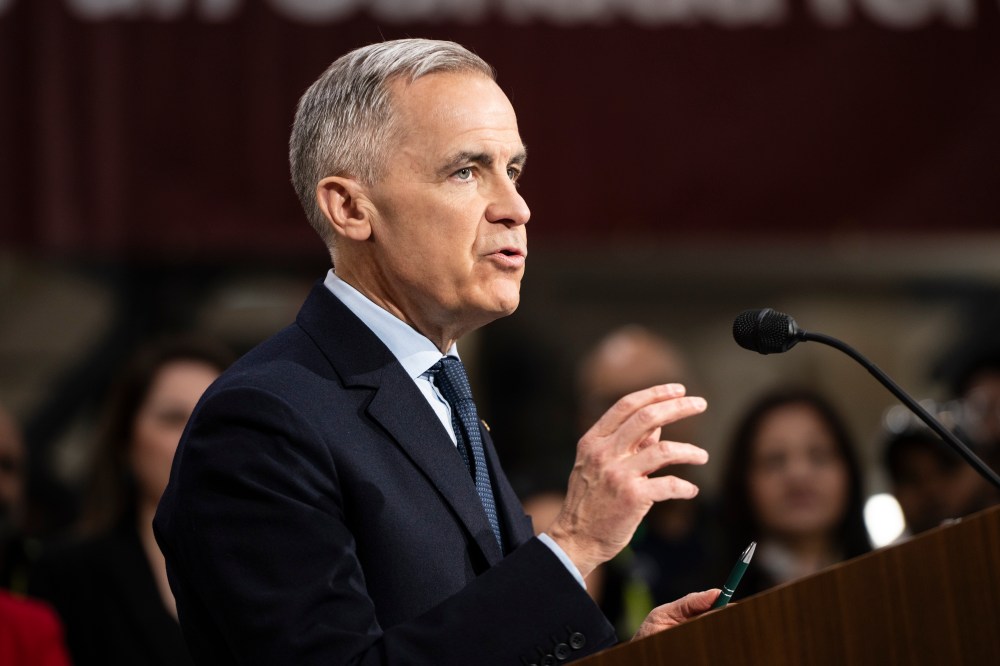
OTTAWA – Prime Minister Mark Carney suspended his plans to travel to Halifax and Munich, Germany, following a deadly school shooting in British Columbia.
Carney said in a statement he is devastated by the horrific shooting in Tumbler Ridge, B.C. and that he joins Canadians in “grieving with those whose lives have been changed irreversibly today.”
RCMP say eight people, including the female suspect, are dead after a shooting at a school in the northeastern B.C. town.
Two more bodies were found at a home that is a location believed to be connected to the incident.
Carney was scheduled to fly to Halifax midday Wednesday to announce the long-awaited defence industrial strategy, before flying to Munich, where he was to spend the rest of the week at the Munich Security Conference.
His office says he is postponing the announcement and suspending his overseas trip “for the time being.”
Carney said he has connected with B.C. Premier David Eby spoke with Public Safety Minister Gary Anandasangaree, who is co-ordinating the federal response.
“Our ability to come together in crisis is the best of our country — our empathy, our unity, and our compassion for each other,” Carney said.
“Our officials are in close contact with their counterparts to ensure the community is fully supported as best we can. The Government of Canada stands with all British Columbians as they confront this horrible tragedy.”
The Munich Security Conference is an annual event bringing together global political and business leaders to discuss major issues in security policy and defence. It is taking place this year against a backdrop of geopolitical uncertainty, as U.S. President Donald Trump continues to disrupt the global order.
The group that runs the conference issued a report on Tuesday that pulled heavily from Carney’s recent speech at the World Economic Forum in Davos, Switzerland, in which he urged middle powers to work together against great-power economic coercion.
Carney had been scheduled to deliver a speech at the opening of the conference on Friday, officials briefing reporters ahead of the trip said on Tuesday.
They also said Carney was supposed to hold meetings with multiple leaders and heads of state, including those of Greenland, Denmark, Ukraine, Germany, Spain, Finland, Norway, and the European Union, as well as a delegation of U.S. senators.
His schedule also included meetings with business leaders, part of his effort to attract investment to Canada’s critical mineral, energy, and technology sectors.
This report by The Canadian Press was first published Feb. 10, 2026.
— with files from Dylan Robertson.