
Bright future for conservancy after 40 years
Advertisement
Read this article for free:
or
Already have an account? Log in here »
We need your support!
Local journalism needs your support!
As we navigate through unprecedented times, our journalists are working harder than ever to bring you the latest local updates to keep you safe and informed.
Now, more than ever, we need your support.
Starting at $15.99 plus taxes every four weeks you can access your Brandon Sun online and full access to all content as it appears on our website.
Subscribe Nowor call circulation directly at (204) 727-0527.
Your pledge helps to ensure we provide the news that matters most to your community!
To continue reading, please subscribe:
Add Brandon Sun access to your Free Press subscription for only an additional
$1 for the first 4 weeks*
*Your next subscription payment will increase by $1.00 and you will be charged $20.00 plus GST for four weeks. After four weeks, your payment will increase to $24.00 plus GST every four weeks.
Read unlimited articles for free today:
or
Already have an account? Log in here »
The Manitoba Habitat Conservancy is equipped for a strong future as it celebrates its 40th anniversary, a past CEO told the Sun.
The charitable organization is working with a solid base of funding, and with broad support that is more common today, past CEO Tim Sopuck, told the Sun. As a result, conservation efforts are likely to continue steadily into the future in co-operation with farmers, he said.
“I look to the future, and we know there’s lots of challenges. In some ways, it’s scary times, but I’ve been so pleased to see that the conservancy is very well positioned with a good funding base and a base of passionate, committed people who want to carry on and keep getting the job done,” Sopuck said in a recent interview. “That’s been very gratifying for me to see that.”
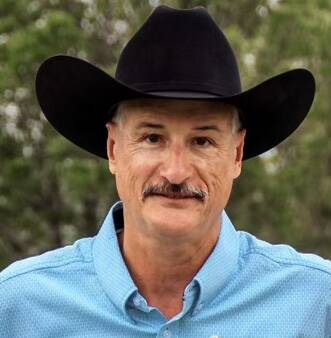
Stephen Cornelsen. The retiree near Virden entered into a conservation agreement for 65 acres of his 80-acre plot. (Supplied)
The Manitoba Habitat Conservancy is a charitable organization dedicated to conservation, restoration and enhancement of fish and wildlife habitat.
The organization focuses on working with farmers, Sopuck said. It aims to convert land from farmers for conservation and offers incentives that make up for costs that may be incurred from not being able to farm the land anymore.
Sopuck said the reason the organization has been successful is that it approaches farmers with the right mentality — to recognize that their land is their business, and changes will have consequences in their lives.
“In essence, when you come and you want to talk to a farmer about conservation, you have to respect and understand that view, that this is their livelihood, this is how they make money, this is how they send their kids to university,” Sopuck said in February.
“One of the reasons why it has stuck around is that it’s never lost that fundamental importance of understanding the needs and aspirations of people who own and make a living from the land,” he said. “I think that’s one of the things that the Conservancy has done really well.”

Stephen Cornelsen and his wife Janice are seen on their property near Virden. The couple are co-grantors on a conservation agreement for roughly 65 acres on their property near the Assiniboine River. (Supplied)
The conservancy also has received donated land and purchased land since forming in 1986.
Sopuck is currently writing a manuscript to detail the history of the organization, which is planned to become a book to document the evolution of the organization and become an educational resource. Sopuck joined in 1991, was promoted to CEO in 2008 and worked in that role until retiring in 2022.
Westman resident Stephen Cornelsen, who lives on roughly 80 acres of land east of Virden, is one of many who struck a deal with the Manitoba Habitat Conservancy. Cornelsen told the Sun that he dedicated roughly 65 acres for conservation on his property north of the Assiniboine River.
“Knowing that this land can be protected for a long time, it’s a satisfying feeling, and it’s an accomplishment, right?” Cornelsen said. “This one is very satisfying, because it’s something my wife and I have have done ourselves.”
Cornelsen spent his career working in conservation. Now, on his retirement property, he chose to get involved personally and do the same with a chunk of his own property. The resident near Virden said he encourages others to look into possibilities for their own land if they have pieces that are not used for farming, or would be suitable for light uses like grazing.
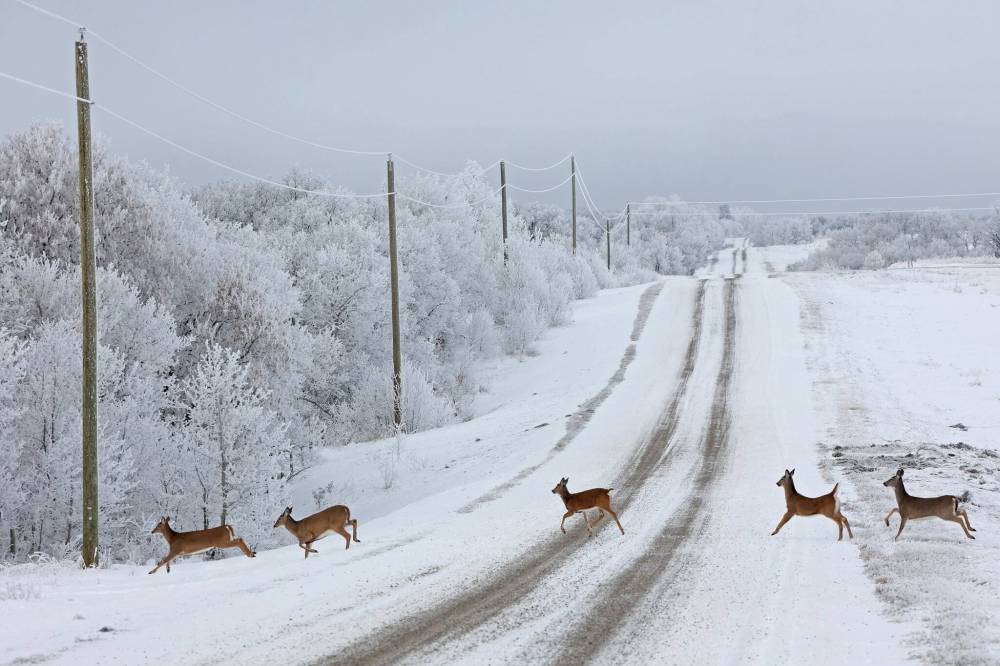
White-tailed deer run across Kirkham Road west of Brandon on a frosty Wednesday morning. Wildlife like waterfowl are a major consideration for conservationists in Manitoba, who look to preserve habitat by striking deals with farmers. (Tim Smith/The Brandon Sun files)
The conservation agreement stipulates that Cornelsen can let his horses graze on the land, but can’t pursue other uses, such as mineral extraction or drainage of wetlands, he said. A one-time payment was made to agree to use the land this way, and established that researchers can use the area to conduct studies, however this piece of land is not open to the public. The agreement also holds if he sells the property, so that the buyers would be aware when purchasing the land that it would be dedicated for the same use, he said. There are some clauses that would let him or the conservation organization break the agreement, but “it’s hard” to do.
Rhiane Christie, board chair for the Manitoba Habitat Conservancy, said that the future of the organization is focused on a few goals such as raising awareness for the brand, developing and strengthening relationships with partners in Manitoba, and optimizing data systems so it can measure the impact it is having on the landscape.
Following its separation from the government in 2021, the conservancy changed from a Crown corporation to a not-profit charitable organization supported by a trust fund. This change is a big reason why the organization has stabilized funding — as before, it relied upon funding granted by various elected political parties, she said. The system is more predictable and certain than before, she said.
“What was always precarious … was the government funding cycle and making sure that we always had that funding in place,” Christie said. “I actually think that we have an amazing future right now because we have that stable funding.”
The conservancy has had some funding destablize, however. It is unclear how partnerships with the United States may be affected going forward, and funding received from across the border is now more precarious. The organization is looking to diversify its support going forwad, such as looking to build on donations from the public.
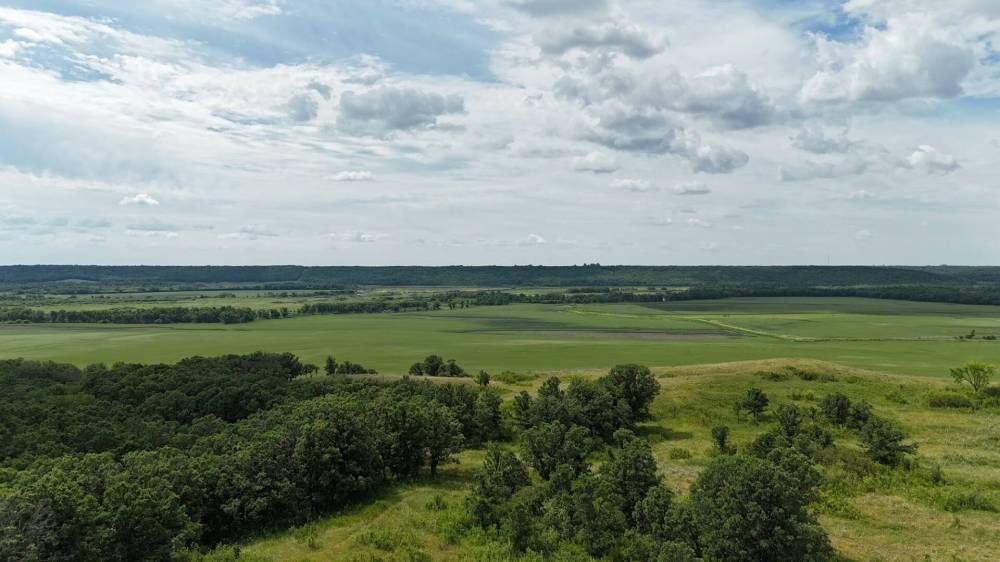
Stephen Cornelsen’s property east of Virden has been put into a conservation agreement east of Virden. (Supplied)
The Manitoba Habitat Conservancy celebrated its 40th anniversary on Feb. 7. In a release, the organization celebrated its evolution and growth from a modest project to a partner in Manitoba.
“What began as a small organization with a modest budget has grown into a province-wide conservation partner,” the organization wrote this month in its press release. “Over four decades, MHC has helped permanently conserve more than 200,000 acres of wetlands, grasslands, and natural areas, while supporting conservation efforts well beyond our own projects through partnerships and granting programs.”
» cmcdowell@brandonsun.com
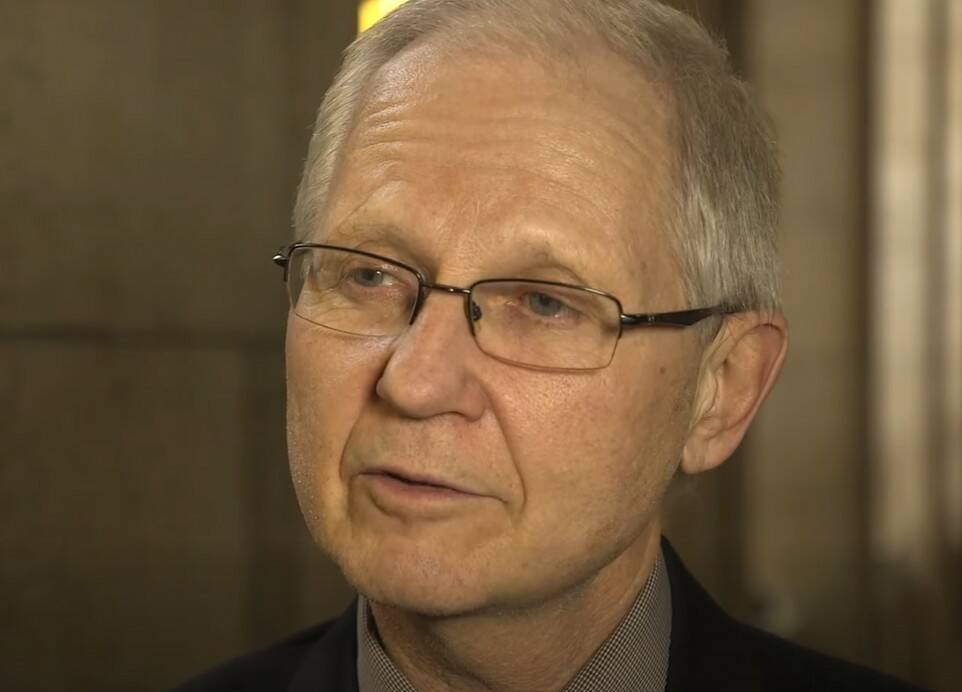
Tim Sopuck. The former CEO of Manitoba Habitat Conservancy believes there’s a bright future for the organization ahead because of stable funding and supporters who believe in conservation. (Facebook/Rochelle Squires)