
OECD criticizes Ottawa over ‘persistent delays’ in appointing new budget officer
Advertisement
Read this article for free:
or
Already have an account? Log in here »
We need your support!
Local journalism needs your support!
As we navigate through unprecedented times, our journalists are working harder than ever to bring you the latest local updates to keep you safe and informed.
Now, more than ever, we need your support.
Starting at $15.99 plus taxes every four weeks you can access your Brandon Sun online and full access to all content as it appears on our website.
Subscribe Nowor call circulation directly at (204) 727-0527.
Your pledge helps to ensure we provide the news that matters most to your community!
To continue reading, please subscribe:
Add Brandon Sun access to your Free Press subscription for only an additional
$1 for the first 4 weeks*
*Your next subscription payment will increase by $1.00 and you will be charged $20.00 plus GST for four weeks. After four weeks, your payment will increase to $24.00 plus GST every four weeks.
Read unlimited articles for free today:
or
Already have an account? Log in here »
OTTAWA – An international economic group is criticizing the federal government over “persistent delays” in appointing new parliamentary budget officers, just as the current officer’s interim term is set to expire on Monday with no successor named.
The Organization for Economic Co-operation and Development, better known as the OECD, released its analysis of Canada’s parliamentary budget office earlier this week as part of a series on fiscal monitors among member countries.
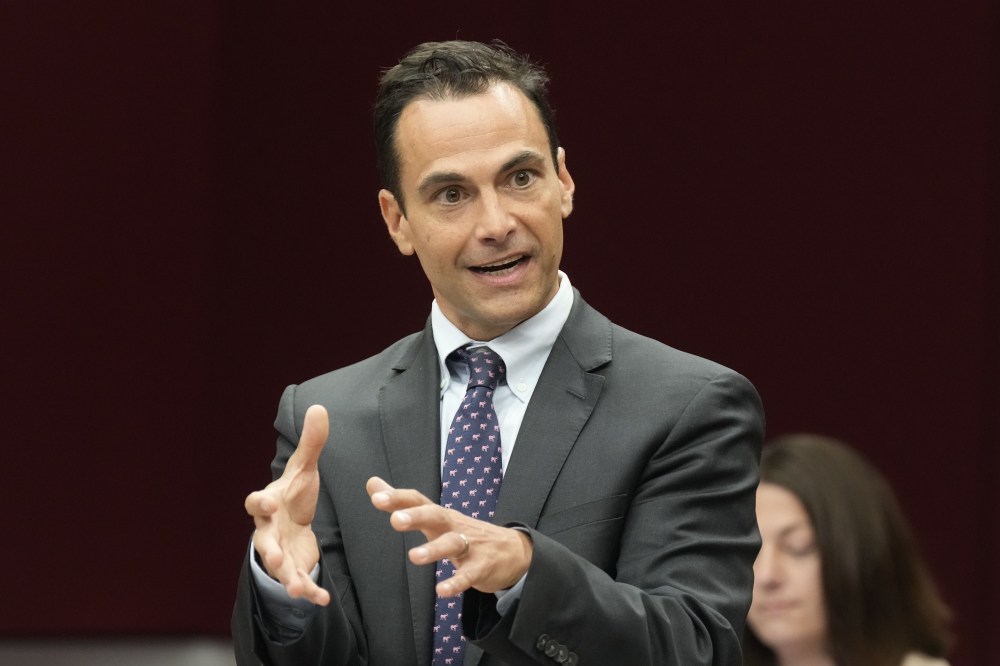
Interim PBO Jason Jacques told a parliamentary committee Thursday that he commissioned the OECD report on the first day of his mandate in September. He said an external evaluation of the office was “long overdue.”
The OECD report gave a largely glowing review to Canada’s PBO, which it called a “non-partisan, credible and effective” office that boosts fiscal transparency in the federal government.
Canada ranks first among all OECD countries on the organization’s Fiscal Advocacy Index for the PBO’s contributions to fiscal accountability.
Scherie Nicol, the OECD’s lead for independent fiscal institutions, said the PBO was “one of the strongest institutions of its kind” during a virtual appearance at the standing committee on government operations and estimates Thursday, where Jacques was also testifying.
“Despite its small size, it has an outsized impact there in Canada and internationally,” she said.
But the report also offers a series of recommendations for strengthening the PBO — especially the appointment process.
“Persistent delays in permanent leadership appointments and reliance on interim arrangements present risks for the PBO’s independence and stability,” the report says.
Jacques, who was appointed to the role on an interim basis in September, reaches the end of his six-month term on Monday. The government has not yet named a permanent replacement.
Bloc Québécois MP Marie-Hélène Gaudreau told the committee in French that the federal government’s failure to date to name a replacement PBO is “unacceptable” with Jacques’ term coming to a close.
If no budget officer is in place — interim or otherwise — when Jacques’ term expires, the PBO would be left unable to publish any fiscal analysis until someone new is appointed.
Jacques said the office will continue to work on existing requests but cannot take on new assignments from committees or parliamentarians without an officer in place.
He argued it would be better for Ottawa to take the responsibility for answering parliamentarians’ questions off the budget officer’s plate and give it to the Parliamentary Budget Office itself.
“There’s a benefit in having a shift away from the PBO as an individual, as the parliamentary budget officer, to the Parliamentary Budget Office,” Jacques said.
The parliamentary budget officer is selected through the governor-in-council appointment process for a seven-year term which requires parliamentary approval. A posting for the permanent role went live in November.
Jacques said he would apply for the permanent posting. He said that as of Thursday, he had not heard anything from the Privy Council Office about succession plans.
“A selection process is underway to identify the next PBO. Information regarding the appointment of a PBO will be made available in due course,” a Privy Council Office spokesman said in an email to The Canadian Press on Wednesday.
Jacques was a mainstay of the PBO before stepping into the top role six months ago. He was tapped over the Labour Day long weekend last year to take on the interim position when outgoing budget officer Yves Giroux’s term was set to expire without a successor.
The OECD report warns that “delays in appointing a new leader and use of interim arrangements can weaken the institution’s leadership and stability.”
On Thursday, Nicol suggested Canada could follow Portugal’s lead, which requires a new budget officer to be named 60 days before the previous officer’s term expires, to maintain continuity.
The report also suggests removing the possibility of consecutive appointments — which it says could encourage incumbents to soften their analysis in hopes of securing a second term.
The OECD argues that interim appointments — which come with no parliamentary oversight and no limits on consecutive terms — could be exploited for partisan interests.
“Legislative amendments should set clear arrangements for timely appointments, remove reappointment options, and introduce structured interim arrangements with cross-party backing,” the OECD report says.
Jacques made a splash soon after his appointment in September with a blunt review of what he called Ottawa’s “unsustainable” fiscal track. The federal Conservatives pushed for him to take on the role permanently and claimed the Liberals would use the interim title to keep Jacques on a “short leash” and fire him if they didn’t like his conclusions.
At Thursday’s committee hearing, Jacques said he was “taken aback” by questions following his appointment about his connections to Prime Minister Mark Carney and the Liberal party.
“The method of the appointment created a perception of partisanship very quickly out of the gate,” he said. “It undermines the entire raison d’être of having an independent parliamentary budget office.”
The OECD also urged Ottawa to grant new powers to the office that would give it better access to information outside of current informal agreements across government departments. The budget office has reported delays in recent months in getting information on planned workforce adjustments from certain departments.
The report also made recommendations to improve the PBO’s workflow and communications strategies.
Jacques said the office was able to review a draft of the OECD report late last year and moved quickly to formalize a communications strategy in January to address some of the gaps. Other recommendations would fall to the federal government or the next PBO to tackle, he said.
The PCO spokesman said the federal government is aware of the OECD’s analysis and will be reviewing the recommendations in the report.
The OECD said “timely, independent analysis” from the PBO will be critical for Ottawa as it faces a series of economic and fiscal challenges.
“Canada’s changing fiscal context — marked by shifting trade dynamics, heightened national security concerns and rising public debt — underscores the need for action to restore public finance,” it said.
This report by The Canadian Press was first published Feb. 26, 2026.