
UN nuclear watchdog says it’s unable to verify whether Iran has suspended all uranium enrichment
Advertisement
Read this article for free:
or
Already have an account? Log in here »
We need your support!
Local journalism needs your support!
As we navigate through unprecedented times, our journalists are working harder than ever to bring you the latest local updates to keep you safe and informed.
Now, more than ever, we need your support.
Starting at $15.99 plus taxes every four weeks you can access your Brandon Sun online and full access to all content as it appears on our website.
Subscribe Nowor call circulation directly at (204) 727-0527.
Your pledge helps to ensure we provide the news that matters most to your community!
To continue reading, please subscribe:
Add Brandon Sun access to your Free Press subscription for only an additional
$1 for the first 4 weeks*
*Your next subscription payment will increase by $1.00 and you will be charged $20.00 plus GST for four weeks. After four weeks, your payment will increase to $24.00 plus GST every four weeks.
Read unlimited articles for free today:
or
Already have an account? Log in here »
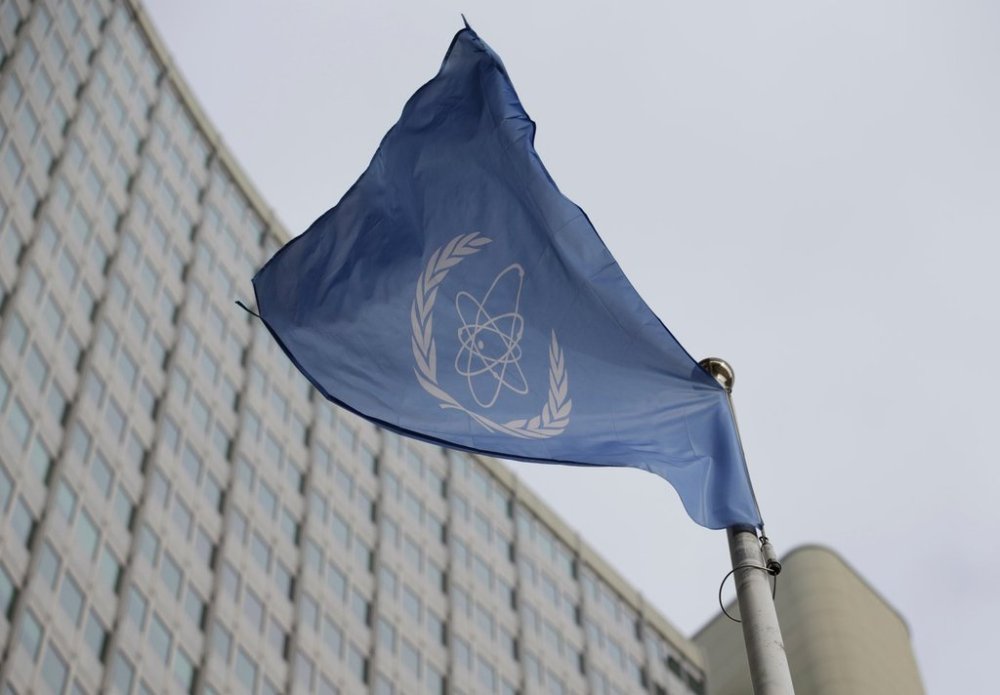
VIENNA (AP) — Iran has not allowed the United Nations nuclear agency access to its nuclear facilities bombed by Iran and the United States during a 12-day war in June, according to a confidential report by the watchdog circulated to member states and seen Friday by The Associated Press.
The report from the International Atomic Energy Agency stressed that it “cannot verify whether Iran has suspended all enrichment-related activities,” or the “size of Iran’s uranium stockpile at the affected nuclear facilities.”
Iran has four declared enrichment facilities, but the report warned that because of the lack of access, the IAEA “cannot provide any information on the current size, composition or whereabouts of the stockpile of enriched uranium in Iran.”
The report stressed that the “loss of continuity of knowledge … needs to be addressed with the utmost urgency.”
Iran has long insisted its program is peaceful, but the IAEA and Western nations say Tehran had an organized nuclear weapons program up until 2003. The U.S. is seeking a deal to limit Iran’s nuclear program and ensure it does not develop nuclear weapons.
Highly enriched material should be verified regularly
The IAEA reported that Iran had informed the agency in a letter dated Feb. 2 that normal safeguards were “legally untenable and materially impracticable,” as a result of threats and ”acts of aggression.”
The confidential report also said Friday that Iran did provide access to IAEA inspectors “to each of the unaffected nuclear facilities at least once” since June 2025, with the exception of a power plant at Karun that is under construction.
Iran is legally obliged to cooperate with the IAEA under the Treaty on the Non-Proliferation of Nuclear Weapons, but suspended all cooperation after the war with Israel.
According to the IAEA, Iran maintains a stockpile of 440.9 kilograms (972 pounds) of uranium enriched up to 60% purity — a short, technical step away from weapons-grade levels of 90%.
That stockpile could allow Iran to build as many as 10 nuclear bombs, should it decide to weaponize its program, IAEA director general Rafael Grossi warned in a recent interview with the AP. He added that it doesn’t mean that Iran has such a weapon.
Such highly enriched nuclear material should normally be verified every month, according to the IAEA’s guidelines.
IAEA observes activity around nuclear sites
In the absence of direct access to the nuclear sites, the IAEA turned to commercially available satellite imagery.
Observation of the Isfahan facility, some 350 kilometers (215 miles) southeast of Tehran, showed “regular vehicular activity” around the entrance to a tunnel complex used to store enriched material, the report said.
Isfahan was struck by both Israel and the United States in June.
The IAEA said it also observed activity at the enrichment sites in Natanz and Fordow, but added that “without access to these facilities it is not possible for the Agency to confirm the nature and the purpose of the activities.”
IAEA joined Geneva talks
The IAEA reported on Friday that Grossi attended negotiations between the U.S. and Iran on Feb. 17 and Feb. 26 in Geneva at which he “provided advice” on the verification of Iran’s nuclear program. The report said that those negotiations are “ongoing.”
Thursday’s talks, the third round this year under Omani mediation, ended without a deal, leaving the danger of another Mideast war on the table as the U.S. has gathered a massive fleet of aircraft and warships in the region.
An Omani official said lower-level technical talks would continue next week in Vienna, the home of the IAEA. The agency is likely to be critical in any deal.
Iran says it is not pursuing weapons and has so far resisted demands that it halt uranium enrichment on its soil or hand over its stockpile of highly enriched uranium.
Similar talks last year between the U.S. and Iran about Iran’s nuclear program broke down after the start of the war in June. Before then, Iran had been enriching uranium up to 60% purity.
———
The Associated Press receives support for nuclear security coverage from the Carnegie Corporation of New York and Outrider Foundation. The AP is solely responsible for all content. ___ Additional AP coverage of the nuclear landscape: https://apnews.com/projects/the-new-nuclear-landscape/