
Paramedic drop creates ‘horrendous’ waits
Advertisement
Read this article for free:
or
Already have an account? Log in here »
We need your support!
Local journalism needs your support!
As we navigate through unprecedented times, our journalists are working harder than ever to bring you the latest local updates to keep you safe and informed.
Now, more than ever, we need your support.
Starting at $15.99 plus taxes every four weeks you can access your Brandon Sun online and full access to all content as it appears on our website.
Subscribe Nowor call circulation directly at (204) 727-0527.
Your pledge helps to ensure we provide the news that matters most to your community!
To continue reading, please subscribe:
Add Brandon Sun access to your Free Press subscription for only an additional
$1 for the first 4 weeks*
*Your next subscription payment will increase by $1.00 and you will be charged $20.00 plus GST for four weeks. After four weeks, your payment will increase to $24.00 plus GST every four weeks.
Read unlimited articles for free today:
or
Already have an account? Log in here »
A shrinking number of paramedics in southwestern Manitoba has created “horrendous” wait times for patients and families in rural areas, says a Virden paramedic.
Wayne Chacun says the staff shortage has also left paramedics feeling frustrated and burnt out.
“It’s difficult for the medics, who then respond, knowing that somebody is waiting and needing their care and it’s going to take them a long time to get there,” said Chacun, an intermediate care paramedic.
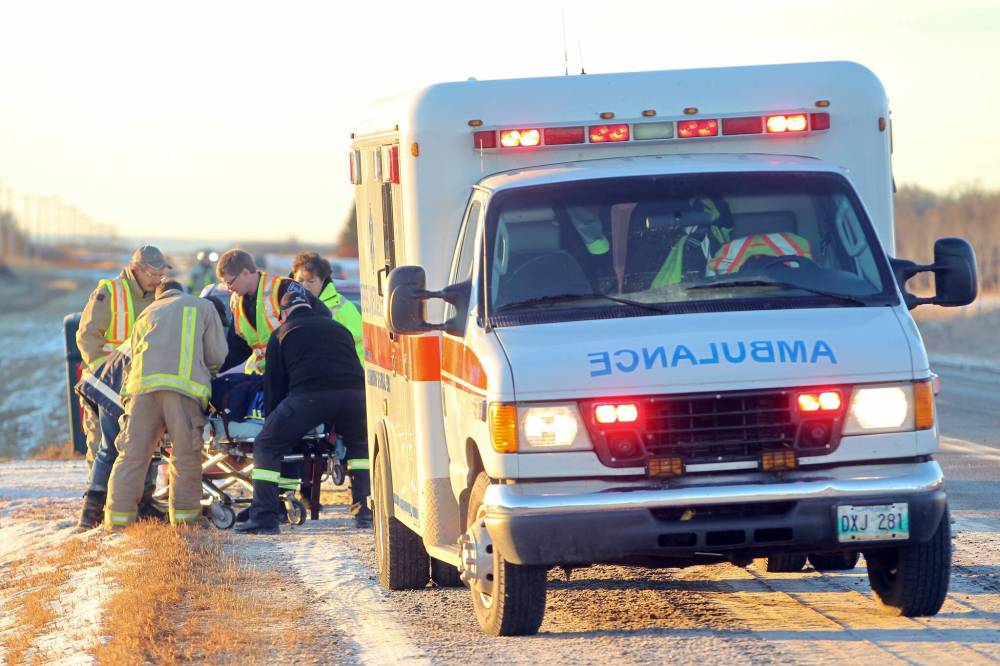
Paramedics strap a patient to a stretcher after a single-vehicle rollover on Highway 10 south of the Rapid City turnoff in this file photo. The vacancy rate for primary care paramedics in rural Westman rose from 19.1 per cent in December 2023 to 28 per cent in December 2025, according to data from Shared Health. (Tim Smith/Brandon Sun files)
Data from Shared Health show there were 25 fewer full-time-equivalent primary-care paramedics working in rural Westman in December 2025 than in December 2023, according to a freedom of information request filed by the Sun.
The number of primary-care paramedics dropped from about 149 to 124 during that period.
Within the same period, Shared Health cut about 12 full-time equivalents and the vacancy rate rose from 19.1 per cent to 28 per cent, the data show.
Chacun, who has worked with Virden emergency medical services for 39 years, said he starts and ends his shift at the station, but he’s responding to calls all over Westman to ensure areas with higher vacancies such as Melita, Deloraine, Shoal Lake and Russell have coverage.
“We may be responding into Brandon because there’s not a Brandon ambulance available. Meanwhile, Brandon is responding to Rivers because there wasn’t an ambulance out that way,” he said.
“It really just depends on who’s available at the time and who’s closest.”
He said people can wait for up to an hour for an ambulance to arrive.
It’s rare for paramedics in Virden to solely provide service in the community of about 3,100 people during a shift, Chacun said, adding that Virden might not have any ambulances on a given day because EMS have been sent to other areas.
“Many of them are working overtime because there’s so many vacant shifts. Many of them are discouraged by the state of the system, but they’re still there to help people and provide care,” he said.
People should still call 911 in an emergency, he said.
Staffing shortages are the most prevalent in the western and northern parts of Manitoba, but “vacancy rates are awful across the board,” said Rebecca Clifton, administrative director for the Paramedic Association of Manitoba.
“Constantly, paramedics are expressing their frustration, their burnout, their exhaustion, every single day. It’s a hard job to do on a good day, never mind when you are doing the work of five other paramedics,” said Clifton, who’s an intermediate care paramedic in the east zone.
She said Shared Health doesn’t always post positions for primary-care paramedics online for areas surrounding Winnipeg as a way to urge people to take jobs in zones with higher vacancy rates.
This becomes a retention issue when new paramedics say they “would rather be jobless than trapped” taking positions in zones that may be three to five hours from where they want to live, Clifton said.
“They’re not retaining anyone, and most likely, they’re just frustrating the paramedics to the point where they are resigning,” she said.
Clifton said Shared Health should be continuously reviewing the system and recruiting more primary-care paramedics instead of reducing funds for existing services in areas that are heavily reliant on emergency medical services.
Shared Health did not respond to multiple requests for comment.
The NDP government promised to add 200 new paramedics in its first term, but only 18 net new paramedics have been employed by Shared Health since October 2023.
Health Minister Uzoma Asagwara acknowledged Manitoba needs a more reliable pipeline of primary-care paramedics in rural communities and said the province is focused on strengthening that workforce.
“Unlike the previous government, which reduced services and strained the health-care workforce, we are not cutting paramedic positions, we are actively working to add them and rebuild the workforce communities rely on,” Asagwara said in a statement.
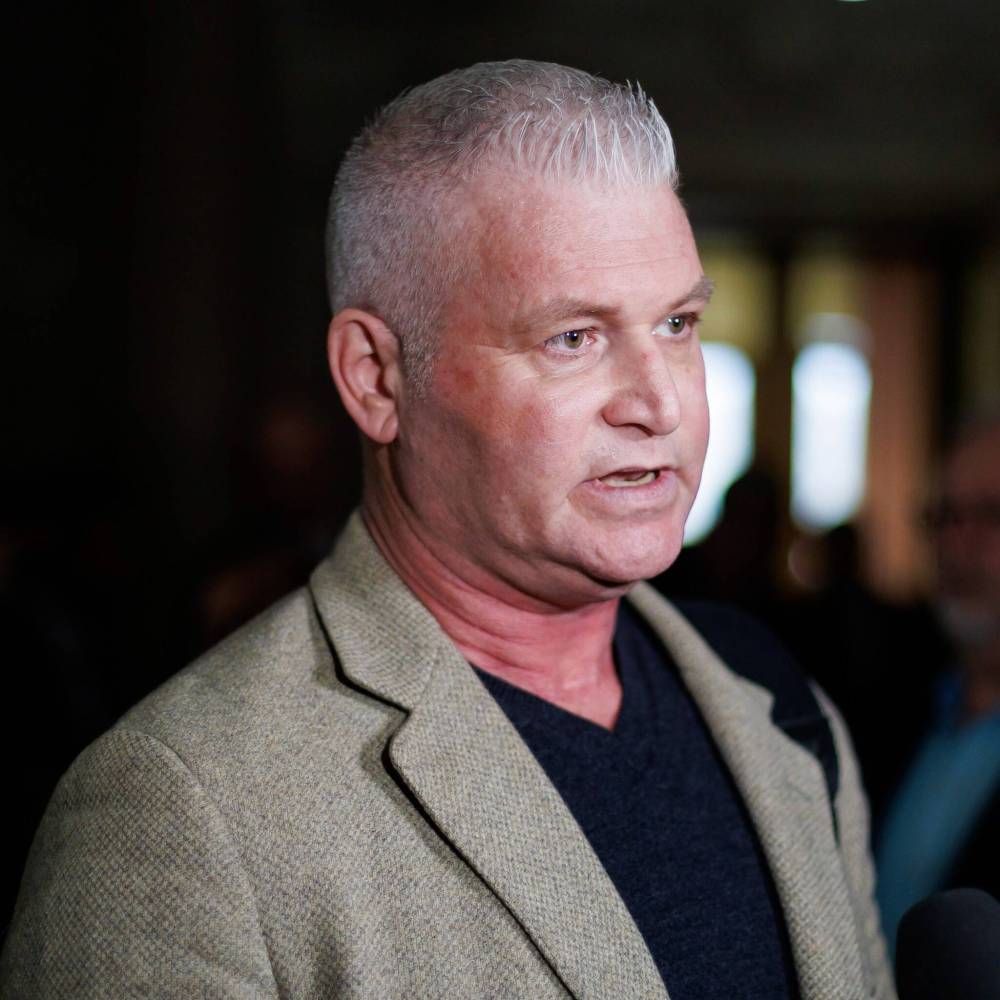
Jason Linklater, president of the Manitoba Association of Health Care Professionals, which represents 700 paramedics across the province. (Mike Deal/Winnipeg Free Press files)
Vacancy rates can fluctuate over time due to recruitment, leaves, retirements and operational changes, the minister said, adding that changes in full-time equivalent counts can happen for many reasons, including service planning or position restructuring.
The Manitoba Association of Health Care Professionals, which represents 700 paramedics across the province, said the NDP government needs to do more to address the staffing crisis in the Westman region.
“When rural emergency rooms close, and they are closing regularly, paramedics become the only emergency medical safety net for those communities, and you cannot have a safety net with a 28 per cent vacancy rate,” said MAHCP president Jason Linklater.
He said the province’s push to recruit more emergency medical responders with bursaries and in-community training programs to support rural areas provides a reduced level of care compared to primary-care paramedics, who have a higher scope of training.
“We don’t want to see people remain EMRs, and we know that in rural Manitoba, it’s primary-care paramedics that are needed to answer those calls,” Linklater said.
Asagwara said training emergency medical responders is an “entry point that helps stabilize local response capacity” and offers a laddered pathway that helps them advance into primary-care paramedic roles.
Linklater would like the province to provide financial incentives for paramedics in hard-to-fill positions, covering any travel and accommodation costs, tuition coverage in exchange for service commitment and expanded training opportunities in rural areas.
He would also like the province to implement an “earn as you learn” framework that allows emergency medical responders to continue working part-time while they complete training to become a paramedic.
“We know that the people most likely to stay and work in rural Manitoba are the people who are already there,” he said.
Right now, rural emergency medical responders must leave their jobs to take paramedic training through Red River College Polytechnic (40 seats), University College of the North in Thompson and The Pas (32 seats) or privately through Elite Safety Services in Brandon, which takes around eight students, or at Criti Care EMS in Winnipeg, which takes on about 35 students.
“That’s not a workforce strategy, that is an obstacle,” Linklater said.
Chacun said he’s not seeing as many people in Westman take their primary-care paramedic training compared to the numbers he’s seen in the past.
“We need education seats available out here because sometimes you have people from high school going to take their PCP education, but a lot of times it’s someone who’s older and they’ve started to establish roots, and they can’t just up themselves and go to Winnipeg for two years,” he said.
Chacun hopes any emergency medical responders in Virden will eventually take their paramedic training.
Asagwara said the province is open to ideas that support recruitment and retention and will continue to work with training institutions, front-line professionals and service providers to strengthen the paramedic workforce.
» tadamski@brandonsun.com