
Rising fuel prices squeeze businesses
Advertisement
Read this article for free:
or
Already have an account? Log in here »
We need your support!
Local journalism needs your support!
As we navigate through unprecedented times, our journalists are working harder than ever to bring you the latest local updates to keep you safe and informed.
Now, more than ever, we need your support.
Starting at $15.99 plus taxes every four weeks you can access your Brandon Sun online and full access to all content as it appears on our website.
Subscribe Nowor call circulation directly at (204) 727-0527.
Your pledge helps to ensure we provide the news that matters most to your community!
To continue reading, please subscribe:
Add Brandon Sun access to your Free Press subscription for only an additional
$1 for the first 4 weeks*
*Your next subscription payment will increase by $1.00 and you will be charged $20.00 plus GST for four weeks. After four weeks, your payment will increase to $24.00 plus GST every four weeks.
Read unlimited articles for free today:
or
Already have an account? Log in here »
Local businesses are feeling the strain as fuel prices continue to climb, driving up their operating costs.
The hike is forcing them to take difficult decisions about pricing, service delivery and long-term planning.
For businesses heavily dependent on transportation, the impact has been immediate, said Abramson International Services Inc. co-owner Bankole Abejide, who also co-owns 5IVE Point Auto Inc., a national logistics and shipping firm.

“Shipping our container was about $5,400 USD a few months back, but when I went to pay last week, it had increased to $5,600, almost a $200 jump immediately,” he told the Sun on Friday. “The price of diesel is really affecting business, for sure.”
The cost pressures extend beyond international shipping.
“Transporting vehicles within Manitoba has also become more expensive, with rates jumping from about $550 to $750 to move a vehicle from Dauphin to Brandon,” he said. “In some cases, we had to delay moving inventory, leading to additional storage costs.”
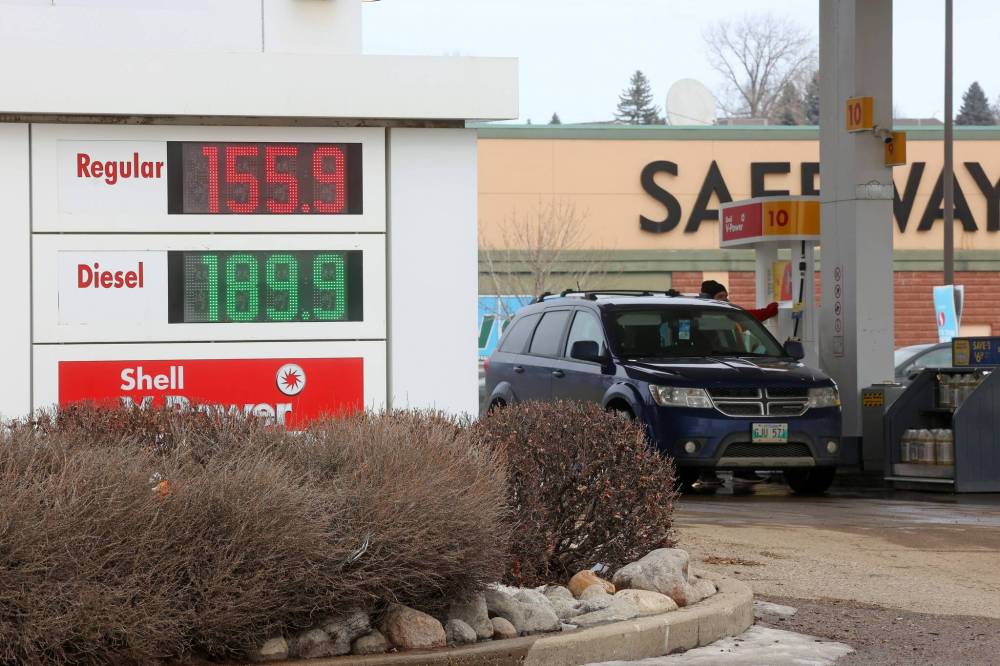
Diesel prices in Brandon reached as high as 189.9 cents per litre on Friday, while some stations listed regular gasoline at 155.9 cents per litre.
The increase marks a sharp jump from January, when diesel averaged about 146.3 cents per litre and regular fuel sat at roughly 119 cents, according to Statistics Canada.
The taxi side of Abejide’s business is facing its own challenges. While fuel prices have risen sharply, fares remain fixed under City of Brandon regulations, leaving operators unable to pass costs on to customers.
“When you work eight hours driving taxis, you might make about $250. But once you deduct fuel, your income is reduced,” Abejide said. “Drivers are now parking more and waiting for calls instead of driving around, just to save gas.”
For now, the shipping company is absorbing much of the added cost, though Abejide said that may not be sustainable.
“We’re trying to transfer it to customers, but they can’t easily accept the increase,” he said. “So the company is bearing it for now. If this continues, we will have to increase prices.”
Industry-wide, the story is similar.

Rising diesel prices are affecting every carrier in the province, Manitoba Trucking Association communication manager Susan Green told the Sun.
“Fuel is one of the largest operating costs for any trucking company, so when diesel prices rise, it affects every carrier, regardless of size, fleet type or the freight they haul,” she said.
“Fuel price increases are the major consideration right now; however, there are other cost increases, such as insurance and equipment maintenance, that also layer into the expenses of operating a trucking company.”
While some companies use fuel surcharges to offset increases, she said higher transportation costs typically move through the supply chain and ultimately reach consumers.
“The main ripple effect we would see from increased fuel costs would be cost increases passed through the supply chain,” she said.
Not all sectors are feeling the impact equally.
Brandon School Division Supt. Mathew Gustafson said the immediate effect has been limited, largely due to the division’s reliance on alternative sources.
“The majority of our fleet is propane buses, which have not experienced the same increase,” Gustafson tod the Sun Friday. “Carbon tax reductions have helped offset rising fuel costs.”
As a result, the division does not expect major budget impacts this year.
However, Gustafson said sustained high prices could pose challenges in the future.
“If prices remain elevated for an extended period, that may have implications for next school year,” he said. “We would have to redistribute funds within our budget to cover any shortfalls.”
For many businesses, the uncertainty is the biggest concern.
Abejide called for government intervention to help stabilize fuel prices and ease the burden on both businesses and consumers.
“There is a way government can step in, maybe through some form of subsidy,” he said. “Customers are already under pressure. Increasing prices on them will create more problems.”
» aodutola@brandonsun.com
» X: @AbiolaOdutola