
Stab wound to chest caused Beaulieu’s death, court hears
Advertisement
Read this article for free:
or
Already have an account? Log in here »
We need your support!
Local journalism needs your support!
As we navigate through unprecedented times, our journalists are working harder than ever to bring you the latest local updates to keep you safe and informed.
Now, more than ever, we need your support.
Starting at $15.99 plus taxes every four weeks you can access your Brandon Sun online and full access to all content as it appears on our website.
Subscribe Nowor call circulation directly at (204) 727-0527.
Your pledge helps to ensure we provide the news that matters most to your community!
To continue reading, please subscribe:
Add Brandon Sun access to your Free Press subscription for only an additional
$1 for the first 4 weeks*
- Enjoy unlimited reading on brandonsun.com
- Read the Brandon Sun E-Edition, our digital replica newspaper
*Your next Free Press subscription payment will increase by $1.00 and you will be charged $20.95 plus GST for four weeks. After four weeks, your payment will increase to $24.95 plus GST every four weeks.
Read unlimited articles for free today:
or
Already have an account? Log in here »
A stab wound to the left side of Tristin Beaulieu’s chest caused his death in 2023, a forensic pathologist testified during a manslaughter trial in Brandon’s Court of King’s Bench.
“It’s really the only thing in my mind that would cause his death,” Dr. Linnea Duke testified on Monday.
Talisa Brandon, 27, is on trial for manslaughter and aggravated assault after she allegedly killed Beaulieu, 23, and injured another man during the same fight in Waywayseecappo First Nation.
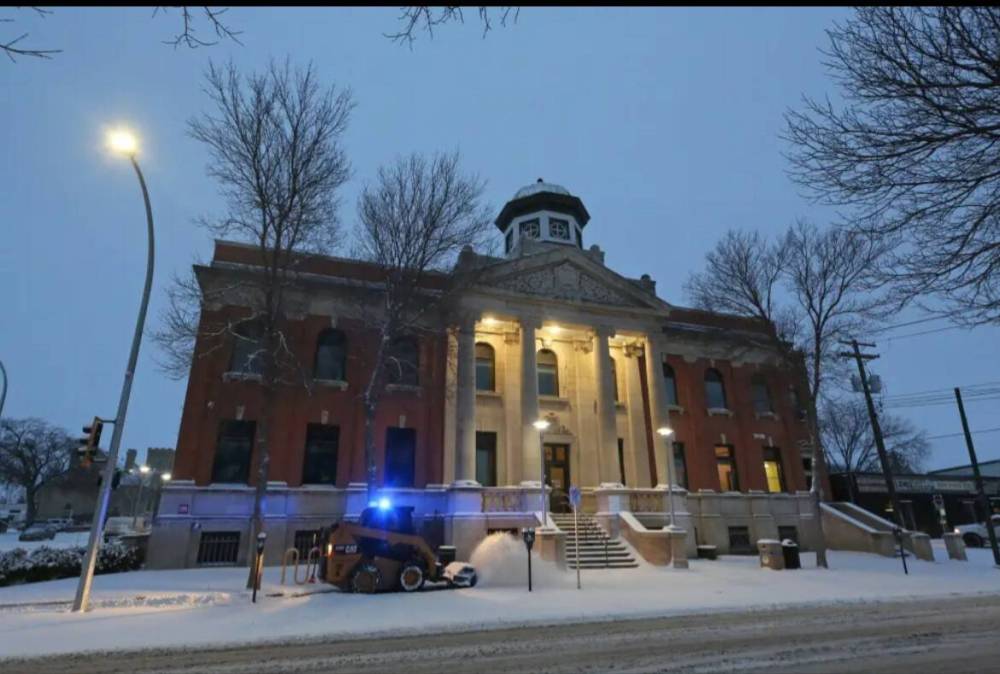
The Brandon courthouse. (File)
Duke performed an autopsy on Beaulieu on July 7, 2023 — the day after he was pronounced dead. Duke estimated that since her residency, she has performed around 800 autopsies.
Crown attorney Nikki Boggs questioned Duke about the injuries Beaulieu sustained, including several stab wounds, incised wounds, abrasions, scabs and bruises.
Duke said there was a stab wound on the left side of Beaulieu’s chest, which was roughly 2.5 centimetres in length on the surface and at least 10 cm deep.
The object that was used went into the skin, the subcutaneous tissue, the interior costal cartilage of the left fourth rib, the lower lobe of the left lung, the sac around the heart and the anterior wall of the left ventricle of the heart.
“The defect in the ventricle itself was broken as it went all the way through,” Duke testified.
Boggs asked Duke if she was able to tell what could have been used to create the wound. Duke said it would have to be “something sharp.”
“Is it fair that it would have to be something that was fairly sturdy?” Boggs asked.
“Yes,” Duke responded.
When asked if there was anything else she could tell from the stab wound, Duke said that while the object didn’t have to be 10 cm long, it had to be long enough to get to the heart.
Duke testified that roughly 1,500 millilitres of blood had gathered in Beaulieu’s chest as a result of the stab wound. She said that while it depends on the weight of the person, people have at least four litres of blood in their body.
The possible mechanism of Beaulieu’s death was blood loss, Duke said.
While Beaulieu had several other injuries, including a tangential stab wound and another stab wound to his back, neither of those would have been “immediately” fatal on their own, Duke testified.
The tangential stab wound, which is when the object enters the skin at an angle rather than straight on, was roughly 2.6 cm in length on the surface and almost 14 cm deep, Duke said.
The other stab wound to his back was less than one cm in length on the surface.
“Is there any type of time that you would be able to determine how long it would be before he would have ultimately succumbed to his injuries?” Boggs asked.
“You’re looking at something in the minutes, not hours,” without immediate and advanced medical treatment, Duke responded.
Defence lawyer Jonathan Richert questioned Duke about the size of Beaulieu, confirming that he was around six-foot-three and weighed a little more than 300 pounds.
He asked if the object used to create the fatal stab wound would have to be 10 cm since that was the depth of the wound. She said the object could be longer or shorter and that the depth of the wound is how far the object went inside his body.
Richert also questioned her about whether she had any knowledge of the items police seized during their investigation. She said she didn’t recall.
The trial continues.
» sanderson@brandonsun.com