
BU students ‘far from optimistic’ about tuition hike
Advertisement
Read this article for free:
or
Already have an account? Log in here »
We need your support!
Local journalism needs your support!
As we navigate through unprecedented times, our journalists are working harder than ever to bring you the latest local updates to keep you safe and informed.
Now, more than ever, we need your support.
Starting at $15.99 plus taxes every four weeks you can access your Brandon Sun online and full access to all content as it appears on our website.
Subscribe Nowor call circulation directly at (204) 727-0527.
Your pledge helps to ensure we provide the news that matters most to your community!
To continue reading, please subscribe:
Add Brandon Sun access to your Free Press subscription for only an additional
$1 for the first 4 weeks*
- Enjoy unlimited reading on brandonsun.com
- Read the Brandon Sun E-Edition, our digital replica newspaper
*Your next Free Press subscription payment will increase by $1.00 and you will be charged $20.95 plus GST for four weeks. After four weeks, your payment will increase to $24.95 plus GST every four weeks.
Read unlimited articles for free today:
or
Already have an account? Log in here »
The Brandon University Students’ Union is raising concerns after the province allowed post-secondary institutions to increase tuition by up to four per cent, the highest jump in nearly a decade.
The university and Assiniboine College have not finalized decisions for 2026-27, but the union said the potential hike is already causing student anxiety.
BUSU vice-president of operations Michelle Williams Joel said feedback from students is still coming in, but the mood is far from optimistic.
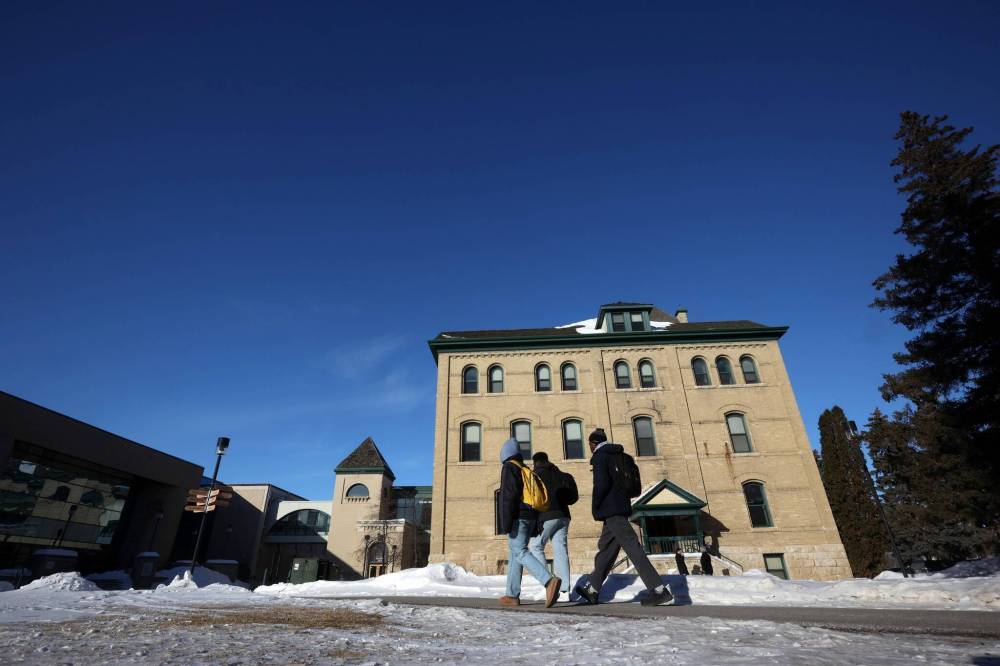
Students walk through the courtyard at Brandon University. The university and Assiniboine College have not finalized decisions on tuitions for 2026-27, but the BU students' union says the potential hike is already causing anxiety among students. (Tim Smith/The Brandon Sun files)
“There’s a lot happening in society beyond school,” she told the Sun. “We have seen increases in rent, food prices and fuel costs. Adding a tuition increase on top of that is just going to make things worse for students.”
The province’s decision allows institutions flexibility, though it does not require them to implement the full increase, but the mere possibility of a four per cent hike is “troubling,” she said.
One of the biggest worries raised is the potential impact on student mental health.
Joel said the demand for health and dental services, particularly mental health supports, has been rising over the past two years.
“Students are already going through difficult situations,” she said in an interview. “With this increase, it’s going to be worse — more pressure, more anxiety.”
The impact may extend beyond tuition itself, affecting other campus-related costs, Joel said.
“You might see students take a break just to save money,” she said. “It’s not just tuition; everything around it becomes more expensive.”
Assiniboine College Students’ Association president Alec Walters declined to comment.
The college administration confirms the issue is under review, with its board of governors expected to consider tuition adjustments at an April meeting.
University and college officials said no final decisions have been made, but said affordability will be a key factor.
Peter Hickey, BU’s vice-president for administration and finance, said an internal review is underway, with proposals to be presented later this spring.
He said any increase must balance student affordability with growing financial pressures, including inflation, staffing, maintenance and program delivery costs.
“Balancing these realities responsibly is necessary to ensure we can continue providing a strong educational experience while remaining accessible,” Hickey told the Sun.
Assiniboine College spokesperson Anya McNabb said tuition in Manitoba remains among the lowest in the country.
“In Manitoba, geography is the biggest barrier to accessibility, not tuition fees,” she said in an email. “Student aid is the primary vehicle for assisting low-income students. Our collective agreement settlement is three per cent … Our grant increase is two per cent. The tuition increase will only partially offset this difference.”
Living costs and forgone income are much bigger factors in education decisions than tuition fees, McNabb said.
“In the context of the overall provincial budget situation, we were pleased to see a two per cent increase. Obviously, there are lots of rising costs which cause the college to be judicious about its expenditures and be entrepreneurial in seeking out alternate forms of revenue,” she said.
Advanced Education and Training Minister Renée Cable defended the move, describing it as a modest adjustment from last year’s cap of 3.5 per cent.
She said the province has increased operating funding to post-secondary institutions to a record $882.6 million and remains committed to affordability.
“We have some of the lowest tuition in Canada, and that’s not by accident,” Cable told the Sun. “We are intentional about keeping education affordable while ensuring quality.”
Cable said institutions ultimately decide whether to implement increases, and the province continues to support students through measures such as interest-free loans, bursaries and broader affordability initiatives.
External pressures, including federal limits on international students, are part of the challenges affecting post-secondary finances across the country, the minister said.
Despite those assurances, Joel said, the increase as an option sends the wrong message at a time when many students’ finances are already stretched thin.
“This isn’t the students’ fault,” she said. “We shouldn’t be the ones carrying the burden.”
» aodutola@brandonsun.com
» X: @AbiolaOdutola