
Former Supreme Court Justice Louise Arbour named as next governor general
Advertisement
Read this article for free:
or
Already have an account? Log in here »
We need your support!
Local journalism needs your support!
As we navigate through unprecedented times, our journalists are working harder than ever to bring you the latest local updates to keep you safe and informed.
Now, more than ever, we need your support.
Starting at $15.99 plus taxes every four weeks you can access your Brandon Sun online and full access to all content as it appears on our website.
Subscribe Nowor call circulation directly at (204) 727-0527.
Your pledge helps to ensure we provide the news that matters most to your community!
To continue reading, please subscribe:
Add Brandon Sun access to your Free Press subscription for only an additional
$1 for the first 4 weeks*
- Enjoy unlimited reading on brandonsun.com
- Read the Brandon Sun E-Edition, our digital replica newspaper
*Your next Free Press subscription payment will increase by $1.00 and you will be charged $20.95 plus GST for four weeks. After four weeks, your payment will increase to $24.95 plus GST every four weeks.
Read unlimited articles for free today:
or
Already have an account? Log in here »
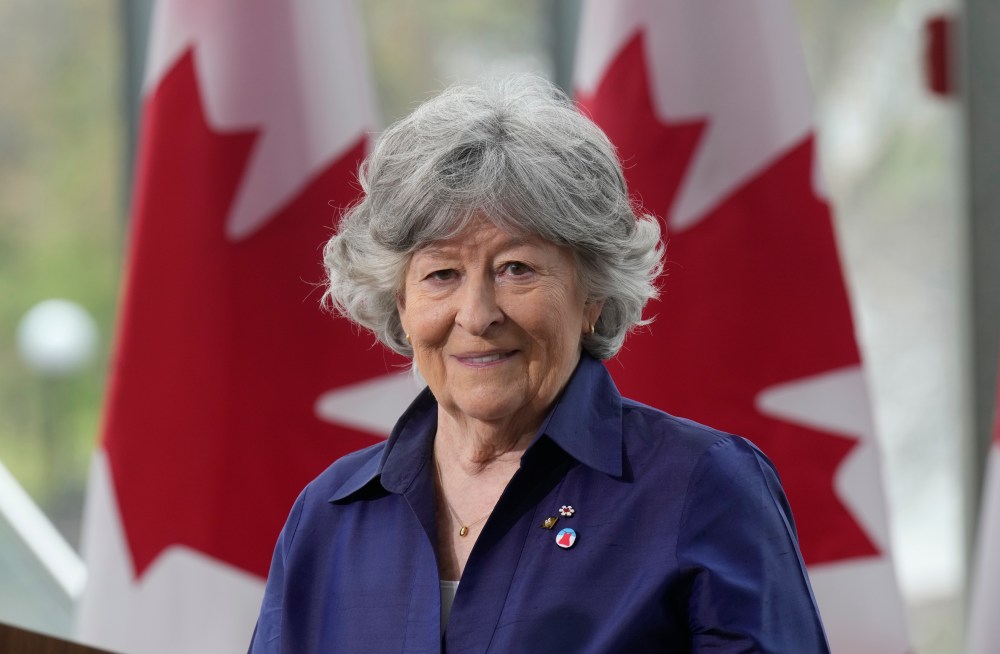
OTTAWA – Prime Minister Mark Carney named retired Supreme Court justice Louise Arbour as Canada’s next governor general on Tuesday, hailing her as a storied defender of human rights.
The celebrated jurist is fluently bilingual, and has served as UN human rights commissioner and chief prosecutor at The Hague.
Carney said Arbour gave voice to the powerless and “those whose dignity was denied, in places where the powerful preferred silence.”
“Across more than five decades, in every role she has held, the honourable Louise Arbour has carried the same conviction: That a free society depends on institutions being properly held to account,” Carney said at an announcement at the National Gallery of Canada in Ottawa.
He said Arbour will bring to Rideau Hall sound judgment and the conviction that institutions are the “load-bearing walls of a civil society” and that they remain “trustworthy only as long as someone is willing to hold them accountable.”
Arbour, 79, was chief prosecutor for the International Criminal Tribunals for the former Yugoslavia and Rwanda, and made history when she became the first to indict a sitting head of state, president Slobodan Milosevic, for crimes against humanity.
The Montreal native also secured the first conviction for genocide since the establishment of the 1948 Genocide Convention, and became first to prosecute sexual assaults as crimes against humanity.
Errol Mendes, a law professor at the University of Ottawa who counts Arbour as a mentor, said she has “produced incredibly landmark and impactful decisions and outcomes.”
That includes her indictment of Milosevic, which set a major precedent still discussed today. Mendes said people wonder whether that same “sort of courage” should be taken against leaders such as Russian President Vladimir Putin.
While the office of governor general is viewed as ceremonial, it’s one Mendes said carries “immense moral authority.”
He said given increasing economic inequality, where the rich “either stay the same or even get richer, where the poor get poorer — it’s exactly the type of moral authority that’s needed to warn people about not understanding the dangers of those sort of tensions which could arise.”
Arbour said she acknowledges she is accepting a profound responsibility by stepping into the role.
“Canada is a wonderful country shaped by its diversity of people of perspectives and experiences, but I think shaped also mostly by a common respect for strong public institutions and for the rule of law,” Arbour said Tuesday.
Asked by reporters about how she would respond to Alberta and Quebec sovereigntists pressing their cases, she said there is a “space” for the viceregal to be “conducive of Canadian dialogue.”
Bloc Québécois Leader Yves-François Blanchet said he has “the utmost respect” for Arbour, although his party has long disputed the symbol of the British monarchy.
“I believe the symbol and itself carries the idea of Canadian unity, but democracy in Quebec also carries the idea of Quebec independence,” Blanchet told reporters on Parliament Hill.
“If there’s anybody that wants to debate the issue of national unity and Quebec independence, they all know where to find me.”
The governor general is appointed by the sovereign on the advice of the prime minister and represents the Crown in Canada. The role is non-partisan and carries many responsibilities, some largely ceremonial while others are core constitutional functions.
Her official duties include swearing cabinet ministers into office, proroguing and dissolving Parliament, making appointments on the prime minister’s advice, and granting Royal Assent to turn bills into law. The governor general also serves as commander-in-chief.
Arbour is expected to be installed as Canada’s 31st governor general in early June.
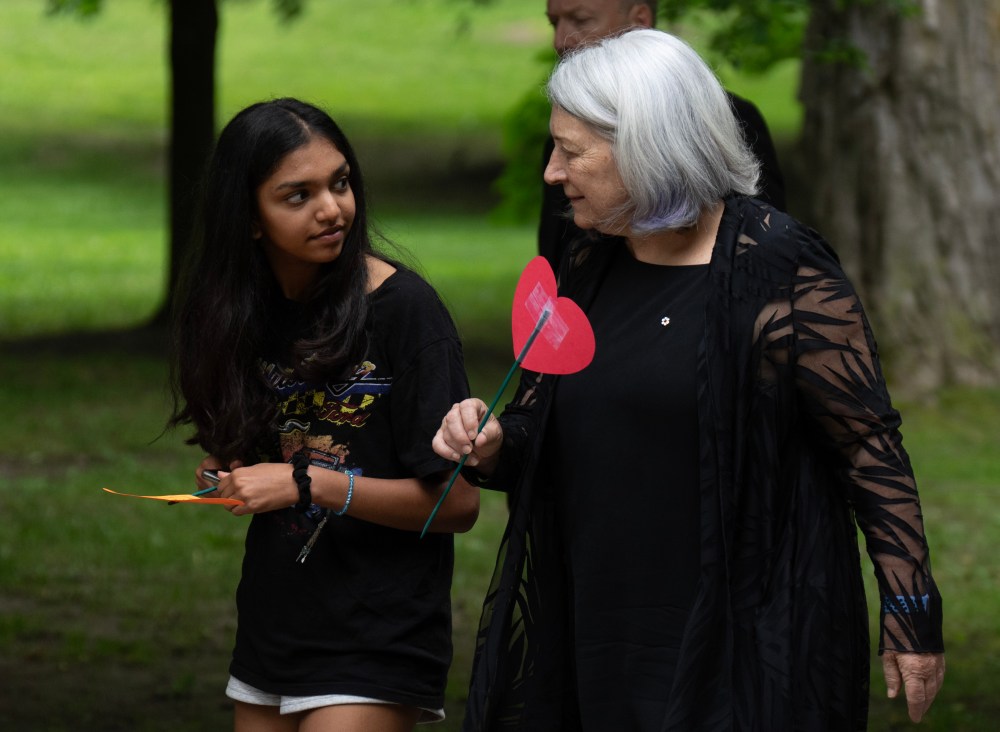
She will replace Mary Simon, who became Canada’s first Indigenous governor general when former prime minister Justin Trudeau tapped her for the role in 2021.
Governors general typically only hold office for five years, and Simon would reach the five-year mark of her tenure in July.
Simon speaks English and Inuktitut but attracted controversy for not being fluent in French. Carney had promised the next governor general would speak both official languages.
Carney spoke to Simon’s legacy on Tuesday as well, calling her a “steadfast representative of Canada and our institutions at home and around the world.”
This report by The Canadian Press was first published May 5, 2026.