
Local charity rep visits Kenya to witness project impacts
Advertisement
Read this article for free:
or
Already have an account? Log in here »
We need your support!
Local journalism needs your support!
As we navigate through unprecedented times, our journalists are working harder than ever to bring you the latest local updates to keep you safe and informed.
Now, more than ever, we need your support.
Starting at $15.99 plus taxes every four weeks you can access your Brandon Sun online and full access to all content as it appears on our website.
Subscribe Nowor call circulation directly at (204) 727-0527.
Your pledge helps to ensure we provide the news that matters most to your community!
To continue reading, please subscribe:
Add Brandon Sun access to your Free Press subscription for only an additional
$1 for the first 4 weeks*
- Enjoy unlimited reading on brandonsun.com
- Read the Brandon Sun E-Edition, our digital replica newspaper
*Your next Free Press subscription payment will increase by $1.00 and you will be charged $20.95 plus GST for four weeks. After four weeks, your payment will increase to $24.95 plus GST every four weeks.
Read unlimited articles for free today:
or
Already have an account? Log in here »
A recent trip to Kenya showed how donations are making an impact through the Canadian Foodgrains Bank, a representative of the charity said during a meeting in Brandon.
Dale Friesen, Manitoba and northwestern Ontario representative for the charity, hosted a meeting at the McDiarmid Drive Alliance Church following his return from a two-week learning tour to Kenya earlier this year. Friesen shared stories about projects that are underway in Kenya ,thanks to the charity and donations from Canadians.
Friesen said the trip served to put faces and names to the international efforts, which can sometimes be hard to grasp.
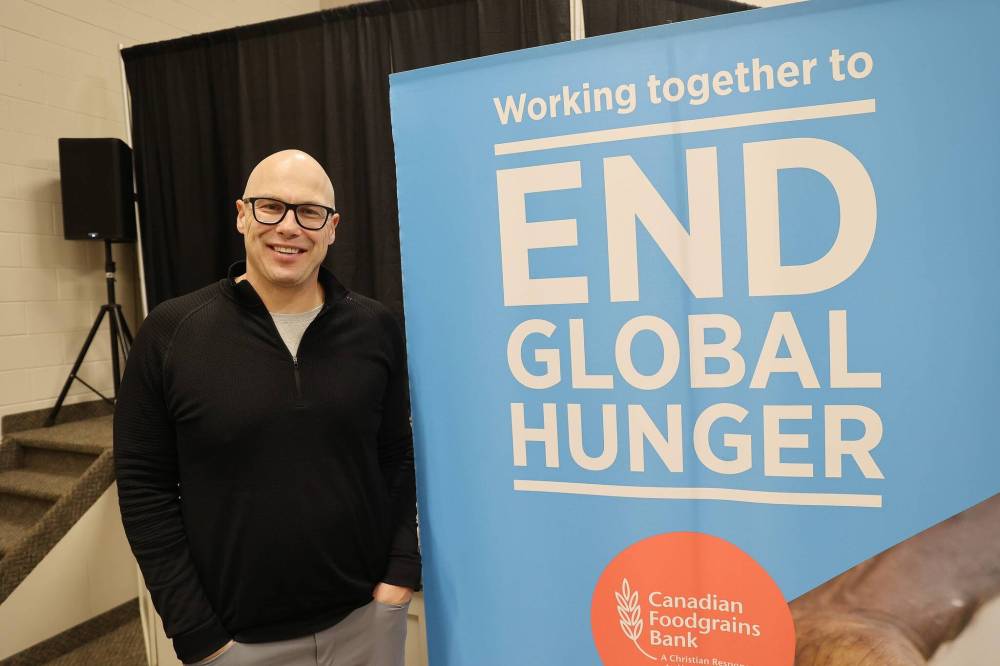
Dale Friesen, the regional representative for Manitoba and northwest Ontario at the Canada Foodgrains Bank, is seen after a meeting at the McDiarmid Drive Alliance Church in Brandon last week. Friesen presented on his trip to Kenya in February, where he met people who are benefitting from projects that the bank supports. (Connor McDowell/The Brandon Sun)
“One of the things I’m really stuck with is, these are real people in real places,” Friesen said. “These are very real people in very real places.”
Several photos of projects in the town of Marsabit, Kenya, were part of his presentation. The presentation included the story of a Kenyan couple who had increased their chicken farm, a charity project, from two to 200, thus being able to sell eggs, provide food and generate business.
Friesen also showcased a list of other projects supported through the foodgrains bank, such as agriculture education that led a Kenyan farmer to double her crop yield, a community’s savings and loans program built from the community’s own income pool, and kitchen gardens and beekeeping.
“It’s inspiring. It’s nice to know that when we donate money, it’s actually going to a good cause,” Friesen said. “It’s nice to see some of the empowerment of this work, and how it can have life-changing impacts.”
The Canadian Foodgrains Bank is a Canadian charity that works with organizations in developing countries to meet emergency food needs and build long-term solutions to hunger. The charity’s annual report states that it helped more than a million people across 37 countries in 2024-25.
Projects took place in Africa, the Americas, Asia, the Middle East and Europe. In Kenya alone, there were 12 projects that totalled a budget of roughly $9.1 million, serving more than 80,000 people, the foodgrain bank’s annual report says.
To fund these efforts, farming fundraisers are held in Canada, where foodgrains are sowed, harvested and sold in partnership between citizens and the charity. Monetary donations are also collected from citizens, businesses and corporations. The Canadian government backs the fundraising, with a commitment to donate four-times as much as was fundraised for food assistance projects up to a maximum contribution of $25 million a year.
Manitoba posted the biggest total donation stemming from growing and community projects last year across all Canadian provinces, with more than $2.2 million raised by growing and selling crops to fundraise for the charity. There are roughly 40 farming projects in Manitoba, amounting to roughly 5,000 acres today, Friesen said. Rivers and Boissevain are both home to farming projects that contribute to the charity.
While Manitoba showed up in terms of farming projects, citizens did not show up at Friesen’s meeting last week. Just one person attended — Andrew Lortie, a pastor from First Baptist Church.
Lortie told the Sun he wanted to learn more about where the charity’s fundraisings were going. His church supports the Foodgrains Bank, and he was interested to learn about what impact they were having.
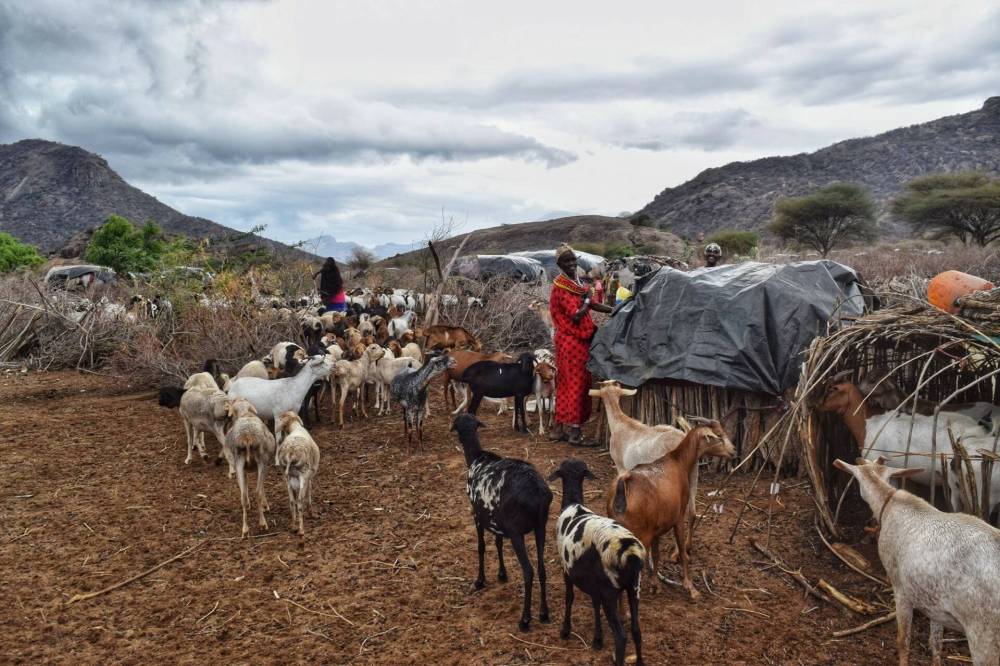
Dale Friesen’s trip to Kenya included visits to several communities that benefit from projects the charity supports. (Submitted)
Following the meeting, Lortie said he was pleased to learn about the burgeoning chicken farm project in Kenya because he had hoped to see money go towards sustainability.
“The renewable ag projects have always been the ones that excited us,” Lortie said. “Giving people the opportunity” for years and years of support, and to “help people get and stay on” their feet.
The Marsabit community had zero days of rain over four years between 2021 and 2024, contributing to very difficult food conditions, according to Friesen. He said that support from Canadian Foodgrains Bank relieves some pressure and helps teach farmers how to make the most of what they have — including by introducing drought resistant crops.
The Canadian Foodgrains Bank’s next learning tour is being planned for sometime in January in Bangladesh, Friesen said. It will continue the effort to show the real conditions on the ground of people in hunger-stricken areas benefiting from the charity, he said.
The charity is a partnership between 15 churches in Canada; the total revenues for 2024-25 were over $75 million. Friesen said the 15 churches that fund the program can disagree on religious ideas, but still come together for the mission to end global hunger.
According to the charity, 757 million people around the globe are experiencing hunger, and one in 11 continue to be impacted by hunger. Friesen said across the world, war is the biggest driver of that problem.
»cmcdowell@brandonsun.com