
Pink wave surges for breast cancer awareness
Advertisement
Read this article for free:
or
Already have an account? Log in here »
We need your support!
Local journalism needs your support!
As we navigate through unprecedented times, our journalists are working harder than ever to bring you the latest local updates to keep you safe and informed.
Now, more than ever, we need your support.
Starting at $15.99 plus taxes every four weeks you can access your Brandon Sun online and full access to all content as it appears on our website.
Subscribe Nowor call circulation directly at (204) 727-0527.
Your pledge helps to ensure we provide the news that matters most to your community!
To continue reading, please subscribe:
Add Brandon Sun access to your Free Press subscription for only an additional
$1 for the first 4 weeks*
- Enjoy unlimited reading on brandonsun.com
- Read the Brandon Sun E-Edition, our digital replica newspaper
*Your next Free Press subscription payment will increase by $1.00 and you will be charged $20.95 plus GST for four weeks. After four weeks, your payment will increase to $24.95 plus GST every four weeks.
Read unlimited articles for free today:
or
Already have an account? Log in here »
A breast cancer survivor advocating for early detection and awareness says she’s grateful to be alive after finding a lump in her 30s — almost a decade before Manitoba’s current self-referral screening age.
Elizabeth Glaseman was 37 when she was diagnosed with a form of breast cancer in February 2023 — “nowhere near” Manitoba’s then-screening age of 50, she said.
“The very most important thing that we can do is to know our own bodies and to make sure that we are also doing self-checks every month.”
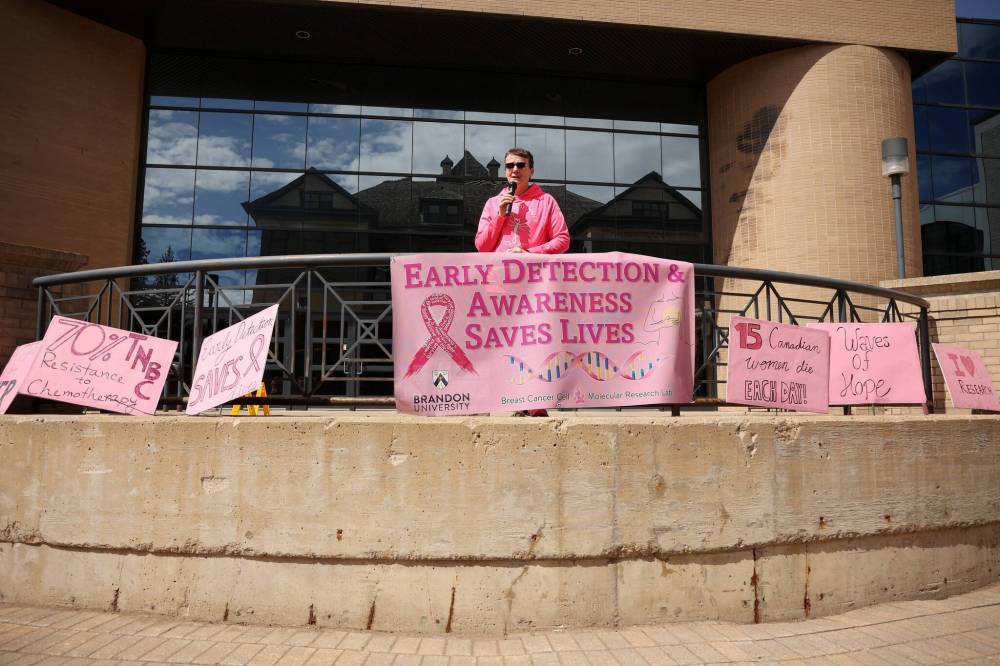
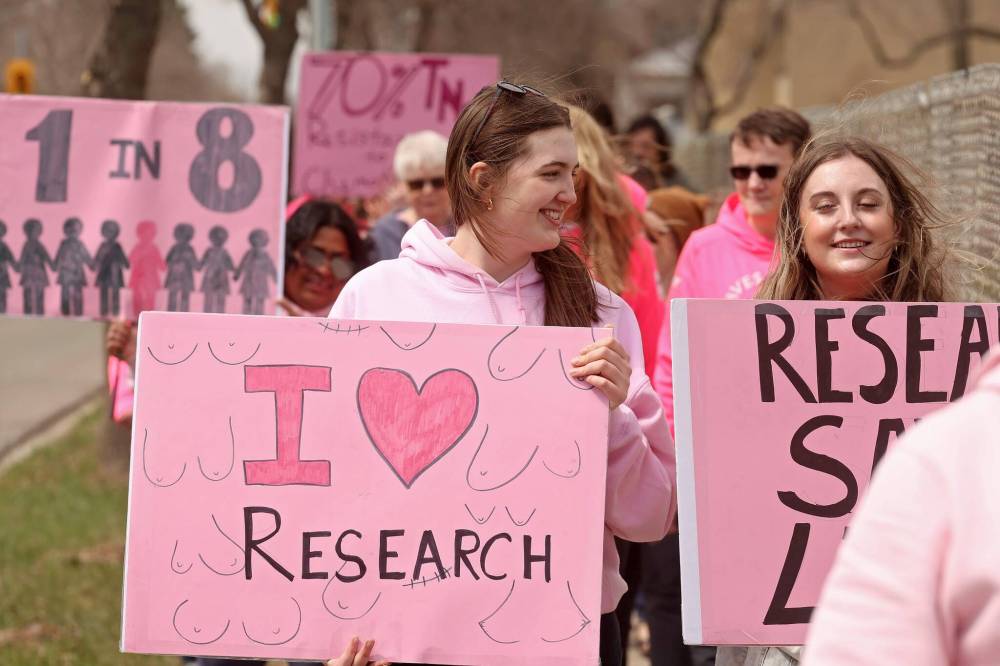
Glaseman joined about 100 breast cancer survivors and community supporters dressed in pink at Brandon University’s second annual walk to raise awareness on Friday afternoon.
People held signs that said, “Early Detection Saves Lives” and “Never Too Young to Get Breast Cancer.”
Glaseman said she has no medical history of breast cancer in her family, and she had been doing frequent self-exams prior to her diagnosis. Her doctor didn’t find any abnormalities during an appointment in October 2022.
When the new, four-centimetre lump was removed from her left breast, she asked the surgeon to check a lump on her right side that had previously been found non-cancerous. An updated biopsy found that had changed, so she had surgery to remove it.
Glaseman said doctors had her follow a harsh cancer treatment plan because she was young.
“I just decided from the beginning ‘This is not how we’re going to go out; we have way too much life to live,’ and I just wanted to fight,” she said.
“Fight for me but fight for everyone else too and fight for people who we’ve already lost who can’t fight for themselves anymore.”
Michelle Gerrard, who was diagnosed with breast cancer at 34, wiped tears from her face as she spoke about being a 23-year triple negative breast cancer survivor at the awareness walk.
After feeling a “sharp stabbing” and lump in her breast, Gerrard said she was very fortunate that her doctor was a surgeon and acted quickly to remove the lump, knowing that waiting for scans or tests meant the cancer could spread.
Triple negative is one of the most aggressive, fast-growing and deadliest types of breast cancer there is, she said.
“Between the time I found my lump, I went to see him, and I was on the operating table, was six days,” Gerrard said.
“That saved my life.”
The Manitoba government increased access to early breast cancer detection by lowering the screening age for mammograms from 50 to 45 in December last year, with the promise to expand eligibility to age 40 by the end of 2026.
Mousumi Majumder, BU’s tier II Canada research chair in genotoxicology, said she thinks the self-referral screening age should be lowered to 35.
“The data clearly shows that we have really a younger population having more and more cancer incidences,” she said.
In 2019, the federal government reported 42.4 cases per 100,000 women ages 30 to 39 years had breast cancer compared to 36.6 cases per 100,000 women in 2009.
Majumder said she hopes her research can inform policymakers to make decisions that benefit the community.
“We are trying to do our best to improve the quality of life,” she said.
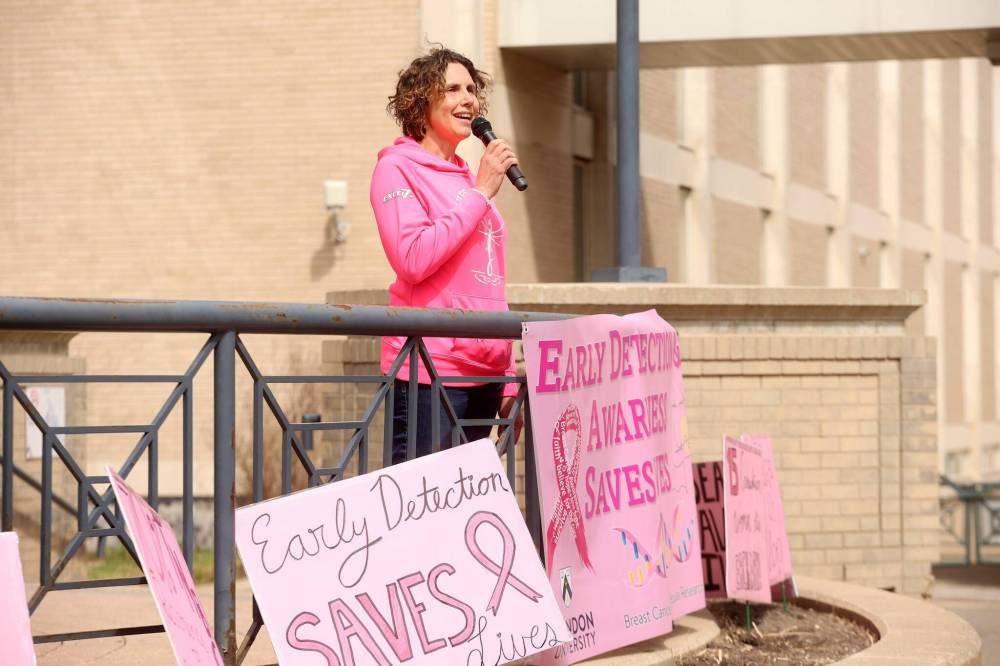
“I hope and wish everyone can see the necessity of research dollar spending towards research, you know, for discovery, for innovation.”
Majumder founded BU’s Breast Cancer Cell and Molecular Research Laboratory in 2023. It focuses on identifying biomarkers in blood tests that may lead to earlier and more accurate detection, particularly in aggressive or difficult-to-diagnose subtypes.
The lab is also studying whether the biomarkers can predict how a patient will respond to cancer treatment.
The latest supporters of the lab are Westman’s Waves of Hope dragon boat team, who launched a multi-year Hope in Our Backyard campaign in April to fundraise $150,000 by 2029 in support of Majumder’s work.
The boat team — made up of breast cancer survivors and supporters — has raised a total of $37,000 so far, said Gerrard, who manages the team that practises on Minnedosa Lake.
“We are pretty confident that we’re going to be able to reach our goal,” she said.
“What she’s doing really aligns with our mission of early detection, of spreading support for women who have had breast cancer and allowing them to thrive through physical activity,” Gerrard said.
Glaseman and Marcy Goetz, a breast cancer survivor who also shared her story at BU on Friday, are both a part of Waves of Hope.
Goetz said she was diagnosed with ductal carcinoma at age 45 in January 2024 after she felt a burning sensation and pain in her breast.
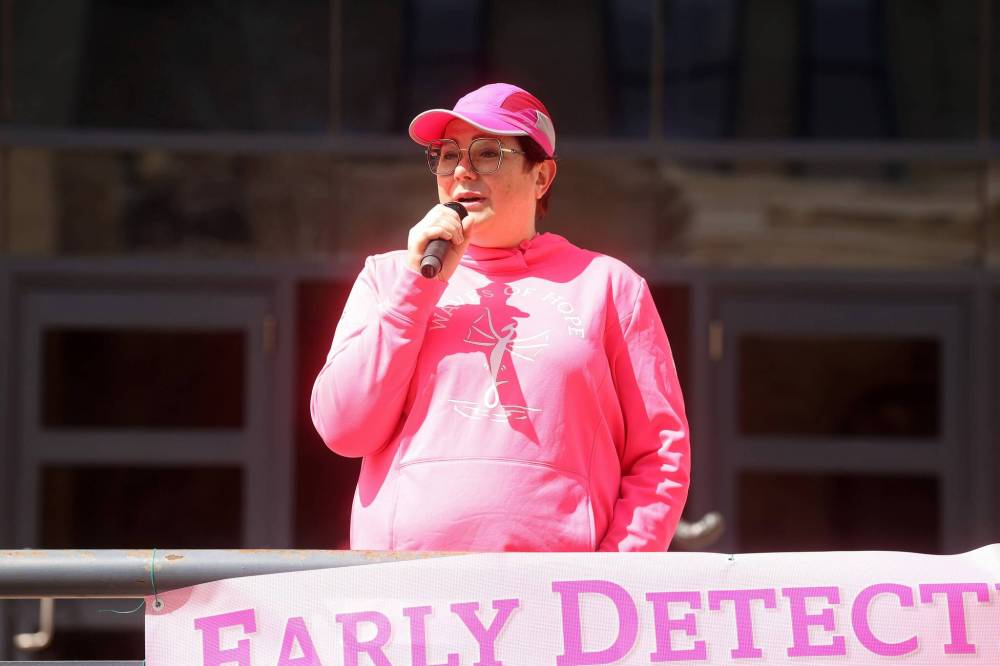
“The thing that I really want people to remember is trusting their own instincts and knowing their own body, so that when something is not quite right and they’re questioning that, that they do get that investigated,” she said.
In the moments when Goetz felt scared during treatment, she focused on needing to be there for her two daughters, she said.
Her family, friends and the boat team have been an incredible support team.
Having breast cancer is a club that no one should ever be a part of, but if you are, “it’s a pretty good one because the sistership is incredible,” Glaseman said.
“Cancer tries to make us all feel really alone and tries to keep us in the dark, and I think that when we talk about it, when we have fellow breast cancer survivors around us, we start to realize that we are not alone … and we can rely on other people to help us through arguably some of the darkest times in our life.”
» tadamski@brandonsun.com