
Labour council seeks employment insurance reforms
Advertisement
Read this article for free:
or
Already have an account? Log in here »
We need your support!
Local journalism needs your support!
As we navigate through unprecedented times, our journalists are working harder than ever to bring you the latest local updates to keep you safe and informed.
Now, more than ever, we need your support.
Starting at $15.99 plus taxes every four weeks you can access your Brandon Sun online and full access to all content as it appears on our website.
Subscribe Nowor call circulation directly at (204) 727-0527.
Your pledge helps to ensure we provide the news that matters most to your community!
To continue reading, please subscribe:
Add Brandon Sun access to your Free Press subscription for only an additional
$1 for the first 4 weeks*
- Enjoy unlimited reading on brandonsun.com
- Read the Brandon Sun E-Edition, our digital replica newspaper
*Your next Free Press subscription payment will increase by $1.00 and you will be charged $20.95 plus GST for four weeks. After four weeks, your payment will increase to $24.95 plus GST every four weeks.
Read unlimited articles for free today:
or
Already have an account? Log in here »
The Brandon and District Labour Council is calling for changes to Canada’s Employment Insurance system.
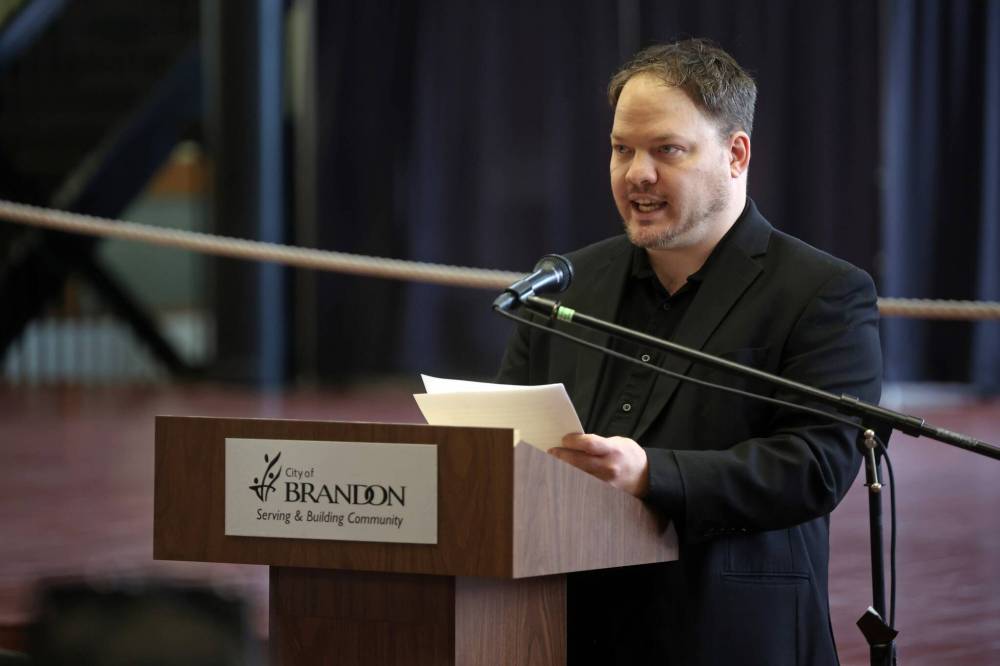
President Kirk Carr said the program is increasingly out of step with a workforce shaped by part-time, casual and contract work.
“There’s a need for reforms and a modernization of the process,” Carr told the Sun on Monday. “I think the EI process was made on a past where everyone had full-time work, and that isn’t the reality of a lot of workers, especially those who would be utilizing the EI resource.”
He called for changes that would make it easier for workers to qualify for benefits, including allowing hours worked across multiple employers to count toward eligibility.
“As long as you’ve been in EI-qualifying jobs, all those hours should count. It shouldn’t be just from one employer,” Carr said. “It should be easier to access the money that we’re essentially investing in. We’re the ones paying for this insurance as workers, and it should be accessible for when we need it.”
The concerns come as more Brandon workers are shifting into part-time and casual employment, particularly in sectors such as restaurants and construction, where schedules are often inconsistent, he said.
Carr said the issue is not limited to layoffs or seasonal work but also affects people trying to qualify for specific EI programs, including maternity leave.
“There is a concern about our recently pregnant women that I’ve noticed,” Carr said. “They’re making sure that they get their hours before they get even their maternity leave through EI, and if they don’t have the hours there, they’re not covered.”
Carr said workers in restaurants, construction and other part-time or gig-based roles are among those most affected.
The concerns in Brandon reflect broader national warnings from Food Banks Canada, which says Canada’s employment insurance system is no longer aligned with today’s labour market.
In its latest poverty report card, the organization said EI was designed for a workforce dominated by stable, full-time employment under a single employer, while today’s labour market increasingly relies on part-time, temporary and contract work.
Food Banks Canada also warned that eligibility rules requiring workers to accumulate a set number of insurable hours within a fixed period can exclude those with irregular or multiple jobs, even if they work consistently.
The organization’s chief executive officer Kirstin Beardsley said the outdated system poses a serious risk as households struggle with rising costs and employment remains unstable.
EI currently pays eligible unemployed workers about 55 per cent of their average insurable weekly earnings, but advocates argue many who contribute to the program are unable to access it when needed.
As labour patterns continue to shift, Carr said reforms are necessary to ensure the system reflects how Canadians now work.
» aodutola@brandonsun.com
» X: @AbiolaOdutola