
Assiniboine increases tuition fees by 4%
Advertisement
Read this article for free:
or
Already have an account? Log in here »
We need your support!
Local journalism needs your support!
As we navigate through unprecedented times, our journalists are working harder than ever to bring you the latest local updates to keep you safe and informed.
Now, more than ever, we need your support.
Starting at $15.99 plus taxes every four weeks you can access your Brandon Sun online and full access to all content as it appears on our website.
Subscribe Nowor call circulation directly at (204) 727-0527.
Your pledge helps to ensure we provide the news that matters most to your community!
To continue reading, please subscribe:
Add Brandon Sun access to your Free Press subscription for only an additional
$1 for the first 4 weeks*
- Enjoy unlimited reading on brandonsun.com
- Read the Brandon Sun E-Edition, our digital replica newspaper
*Your next Free Press subscription payment will increase by $1.00 and you will be charged $20.95 plus GST for four weeks. After four weeks, your payment will increase to $24.95 plus GST every four weeks.
Read unlimited articles for free today:
or
Already have an account? Log in here »
Assiniboine College has increased tuition for the 2026-27 academic year by four per cent.
Domestic students will pay four per cent more, while international students will also pay about four per cent more because their tuition continues to be calculated at 4.4 times the domestic rate.
The decision, approved by the college’s Board of Governors last April, took effect July 1 and also includes a four per cent increase to technology fees, a 2.6 per cent increase to course fees and a 5.25 per cent increase to mature student high school tuition.
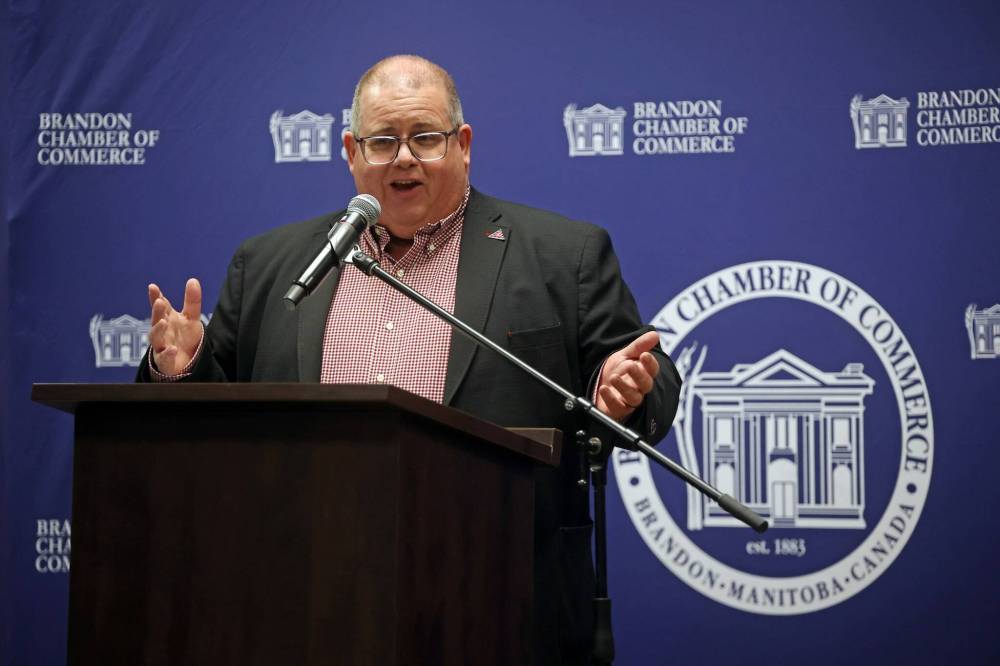
Mark Frison
Assiniboine president Mark Frison said the increase will apply broadly across programs, although the exact dollar amount varies depending on the program.
“Our tuition rates differ program to program, so this is not a defined number, but broadly across programs, whether a student is international or domestic, tuition will go up by four per cent,” Frison told the Sun.
The board also voted to maintain the international tuition multiplier at 4.4 times the domestic rate despite projections that international enrolment will continue to decline because of tighter federal immigration policies and lower study permit approval rates.
Frison said the multiplier reflects how international education is funded in Manitoba.
“The 4.4-times multiplier is representative of the policy environment for international students,” he said. “International students accessing post-secondary studies are full cost-recovery and are not subsidized in the way domestic students are in Manitoba.”
Although the multiplier remains unchanged this year, Frison said the college hopes to reduce it over time if the broader tuition environment changes.
“The college has been gradually reducing the tuition multiplier from five times tuition a few years ago,” he said. “In the last few years, when tuition fees were prescribed by the government, we paused at 4.4. Should the larger tuition environment change, we will continue to examine the multiplier with a hope of moving towards a four-times tuition multiplier.”
Board documents presented during the April meeting show the college is forecasting lower international enrolment in 2026-27, with federal study permit approval rates remaining a significant concern. While the number of accepted international applicants is slightly higher than the previous year, tuition deposits and returning international student numbers are expected to decline, contributing to a projected net operating deficit of $2.1 million.
The college has partnered with BorderPass to assist accepted international students with the federal study permit process in an effort to improve enrolment outcomes.
At the same time, domestic enrolment remains a mixed picture. Internal projections indicate the college is on track to meet its domestic enrolment targets, but the document stated some programs continue to see declining numbers and that tuition deposits from domestic students are “softer” than anticipated.
Frison said affordability is not the primary obstacle preventing Manitobans from pursuing post-secondary education.
“The single largest barrier to access to post-secondary study in Manitoba is geography, not tuition fees,” he said. “The college currently offers programs in 25 communities across Manitoba, with our hope to expand to 30 communities by 2030. Manitoba students continue to have among the lowest tuition fees in Canada.”
The tuition increase comes as post-secondary institutions across Manitoba adjust fees amid rising operating costs and changing enrolment patterns.
Assiniboine College Students’ Association president Arianne Monroy said students are likely to feel the impact.
She said she only recently assumed her role on the council and will officially begin serving on the Board of Governors in July — after the tuition decision had already been approved.
“I was not aware of the increase,” Monroy told the Sun. “The impact, well, it’s obvious that it will impact a lot of international students.”
Monroy said tuition increases are becoming common across post-secondary institutions and international students generally understand they must plan for rising education costs.
“It’s something that happens in every school,” she said. “Of course it will affect us. It’s not easy, especially when you come from another country and you have to pay a lot of other things.”
She said that while the increase presents an added financial burden, international students are expected to demonstrate financial capacity before arriving in Canada.
“It’s something that you have to expect and have to be prepared for,” Monroy said. “Of course it’s not easy, and it’s not something that we would like to happen.”
» aodutola@brandonsun.com
» X: @AbiolaOdutola