‘Gargantuan’ cleanup ahead Kinew calls for military aid in flood zone
Read this article for free:
or
Already have an account? Log in here »
We need your support!
Local journalism needs your support!
As we navigate through unprecedented times, our journalists are working harder than ever to bring you the latest local updates to keep you safe and informed.
Now, more than ever, we need your support.
Starting at $15.99 plus taxes every four weeks you can access your Brandon Sun online and full access to all content as it appears on our website.
Subscribe Nowor call circulation directly at (204) 727-0527.
Your pledge helps to ensure we provide the news that matters most to your community!
To continue reading, please subscribe:
Add Brandon Sun access to your Free Press subscription for only an additional
$1 for the first 4 weeks*
- Enjoy unlimited reading on brandonsun.com
- Read the Brandon Sun E-Edition, our digital replica newspaper
*Your next Free Press subscription payment will increase by $1.00 and you will be charged $20.95 plus GST for four weeks. After four weeks, your payment will increase to $24.95 plus GST every four weeks.
Read unlimited articles for free today:
or
Already have an account? Log in here »
DAUPHIN — Premier Wab Kinew has called for military aid to help with the devastation caused by flooding in the Parkland region.
Kinew said he made the request to federal Emergency Management Minister Eleanor Olszewski, and that a response would be likely “in the next day or two.”
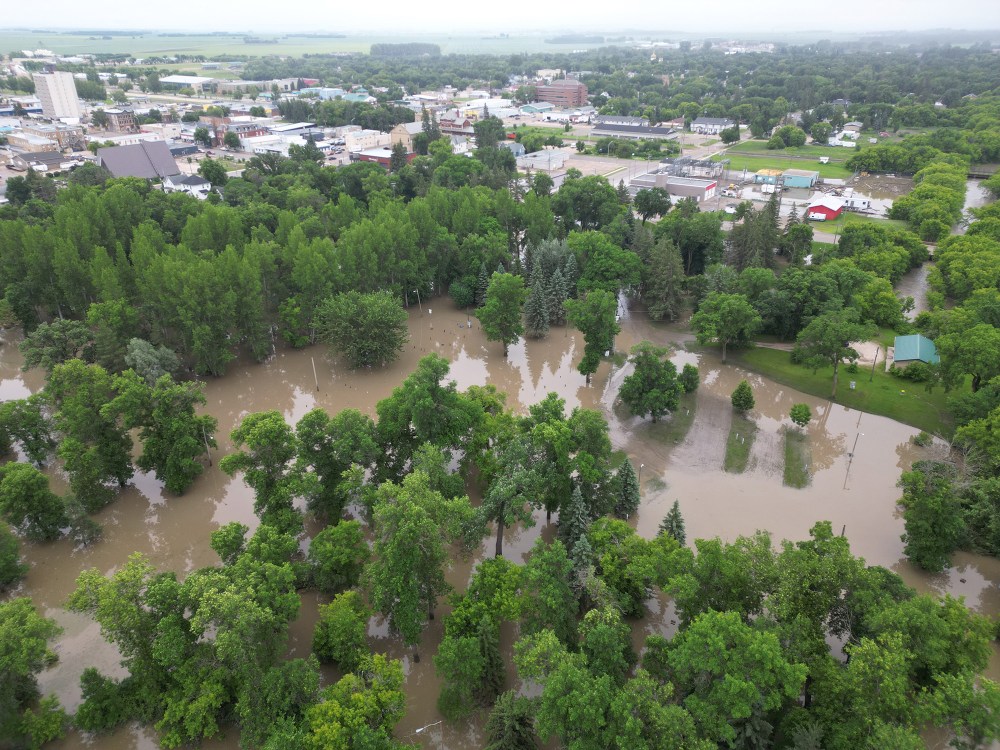
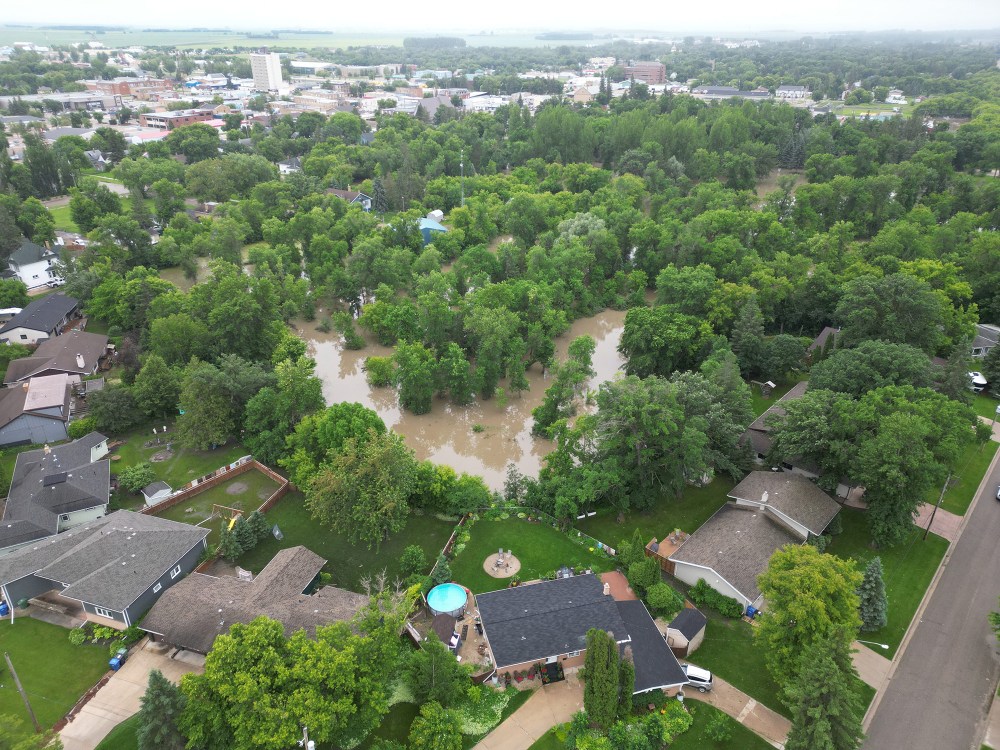
Residents in Dauphin on Thursday were recovering from flooding earlier this week, while people in Swan River continued to battle high water levels as parts of the community were under mandatory evacuation on Thursday.
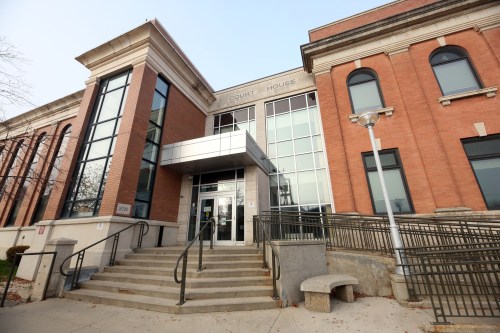
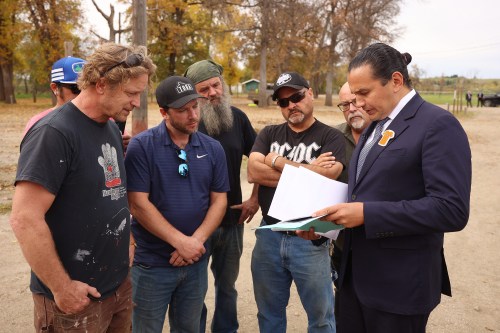
“Folks in the Parkland have seen flooding before, but not like this, not to this extent, not to this scale, not hitting this many areas of the region at the same time,” Kinew told reporters outside Dauphin City Hall Thursday morning.
A military response wouldn’t just be for additional help for the ongoing work in Swan River, but also for the cleanup afterward, he said.
“The cleanup operation is going to be gargantuan, it’s going to be momentous … and people are already tired,” he said.
Having additional hands ready to help would stop volunteers from continuing to pull all-nighters and would give peoplea chance to recuperate.
Firefighters who were facing blazes in northern Manitoba were also in the Parkland to help with flooding while away from the fires, and a federal response would help those workers as well.
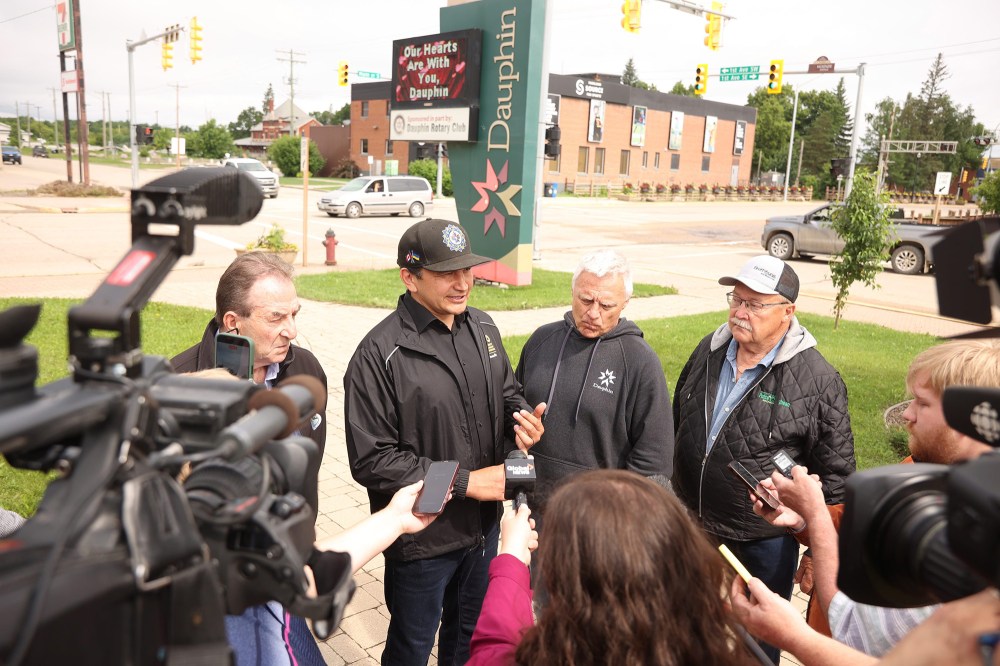
“If the federal government can bring in some of their resources, it just helps to ease the burden on those who’ve already been shouldering it,” Kinew said.
Kinew said the provincial government is also making $5 million available for the municipalities hit by flooding that largely started late Tuesday and continued into the Canada Day holiday on Wednesday.
He said financial assistance will help with repairs to roads and bridges, and that questions for municipalities on finances should not be an issue they have to deal with after a disaster.
Water on Dauphin Lake was at the “flood stage” as of Thursday morning, Kinew said, and it is predicted to rise by a foot or two more, which would mean more flooding. That flooding , however, would be “perhaps not the worst flooding that folks along the lake have seen before.”
Kinew said as the province and municipal officials rebuild, they want to “build resilient infrastructure.”
“It’s not just about building back the same thing that we had before. Now that we’ve seen what can happen with a change in climate, we need to build infrastructure that’s going to meet that need,” the premier said.
He pointed to the cut crews made along Highway 10 east of Swan River. Officials cut the highway by the Tamarack Creek early last month after the water — which typically flows at more of a trickle several metres beneath the roadway — started gushing overtop the highway and washed away some of the land nearby.
Swan River Mayor Lance Jacobson said the new flooding started Monday and into Tuesday in the south portion of town, which prompted provincial and rail officials to cut the highway and rail line bed, respectively.
A separate bout of flooding from a different source caused more damage in another section of town on Wednesday, he said.
Jacobson said he lives near a park and can normally see baseball diamonds, but now he’s seeing about eight feet of water overtop the land. A number of homes have also been flooded, he said.

“It’s unreal, I can’t even describe it,” Jacobson said.
He couldn’t say how many homes might be damaged, noting that an assessment will be necessary in the coming weeks.
“It’s going to take a lot of help and volunteers to help start cleaning out people’s basements,” Jacobson said. “This is the reason why I said to the premier that we should have military help here to come and help these people, because this job is just too big.”
The $5 million the province is opening to municipalities isn’t enough, he said, and he estimated that the flooding this year in Manitoba “might be in the billions.”
Swan Valley West Reeve Bill Gade said this round of flooding is “a lot worse” than what happened about three weeks ago.
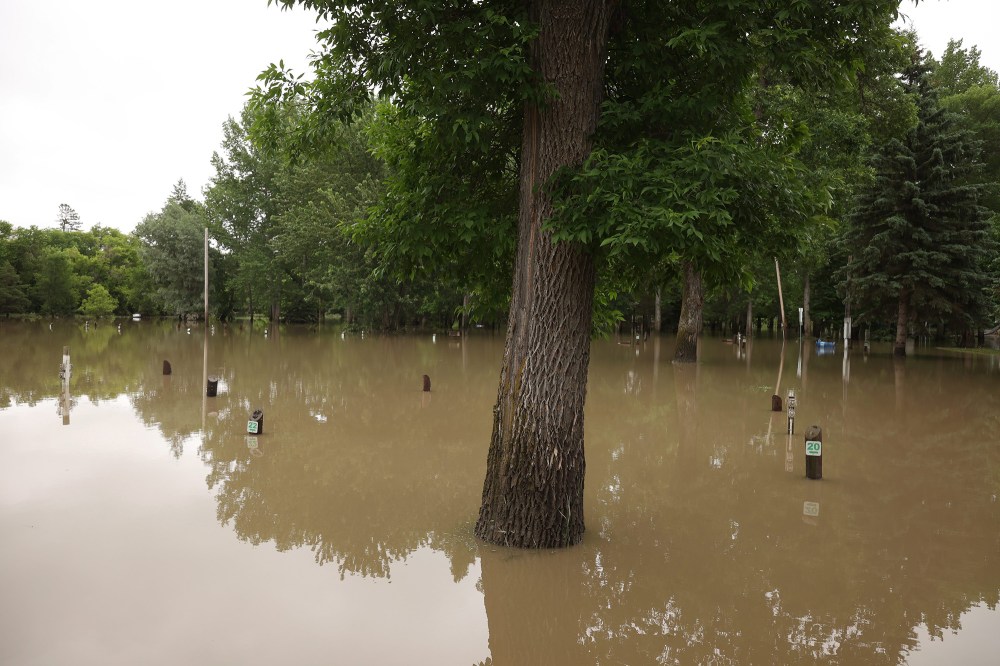
“It’s wider spread, the water was higher, the areas flooded the first time were a little higher this time,” Gade said. “Instead of just the one river flooding, we had the secondary river flood as well, which has caused most of that destruction in the town,” he added. “Things are not good here.”
As of Thursday morning, the water was still high in the municipality, he said. Crews were working to repair roads again, many of which had already been repaired since the flooding in early June. Officials are also figuring out which residents are stranded and how to get to them.
“We’re going to start fixing those roads to get back into the homes,” he said. “We’ve got some 80-year-old people that are stranded, and they’re OK for a day or two, but we need to get access in there as soon as we can in case something happens.
The situation, he said, is “absolutely heartbreaking.”
“It’s just kind of like ‘Groundhog Day,’ because we did this three weeks ago, where we went through these roads and made these maps of everything that was out, and we’re now starting all over again with a blank map, and again just marking off almost every single road as an issue.”

Environment and Climate Change Canada meteorologist Terri Lang said Swan River received 106.8 millimetres of rain since June 28, and a combined 269.5 mm for all of June. That compares to an average of 84.8 mm it typically receives over that month.
“This is the wettest June since 1976,” she said about Swan River.
Meanwhile, Dauphin received 118.9 mm of rain since June 28 and a combined 211.3 mm for the entire month. The average for Dauphin is 80.7 mm. That makes this June the third wettest on record, behind 1944 and 1953, she said.
That much precipitation can be a problem, Lang said, as the soil’s ability to absorb moisture is reduced, especially after a wet winter and spring. There also hasn’t been enough hot days to dry the soil.
ECCC isn’t sure why this June has been so wet, she said, but added that “wetness begets wetness.”

The department is forecasting a few more stormy days ahead, followed by warmer weather, Lang said. While that is overall a positive, the warmer weather does increase the likelihood of thunder showers, she said.
Over in Dauphin, Mayor David Bosiak said he believes officials have gotten things under control for the most part. Most of the work is now focussed on cleaning.
Rural Municipality of Dauphin Reeve Ernie Sirski said cleanup is underway in his municipality, but that there are some area residents who are landlocked.
He said he last heard of about 200 washouts in the RM, but that the real number is likely double that.
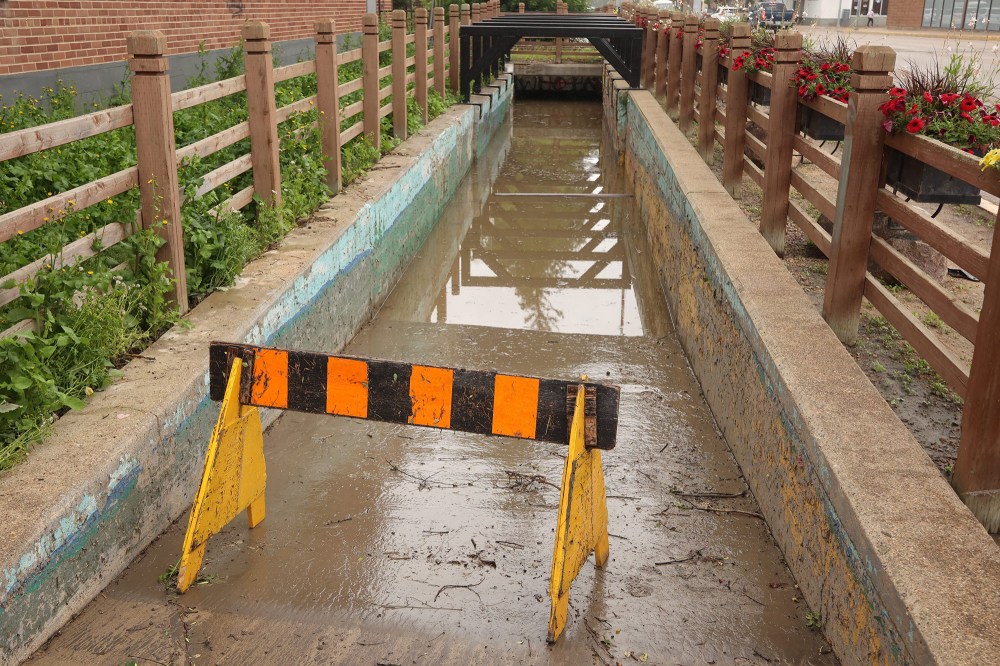
Multiple residents in Dauphin described how river water rose above the banks, into properties and rushing over the road more than a foot high. A video shown by a resident pictured fast moving water moving across MacLeod Avenue, a road perpendicular to the river.
Another resident described how fast the situation changed on Tuesday evening.
“Eleven o’clock there was no water in our back yard, and 11:30 … somebody’s banging on our door saying ‘your yard’s flooded,’” Patti Korney said. “We got up and it was like a castle, a moat all the way around the whole front yard, everything,” she said.
The water was about hip-deep in her back yard, she said.
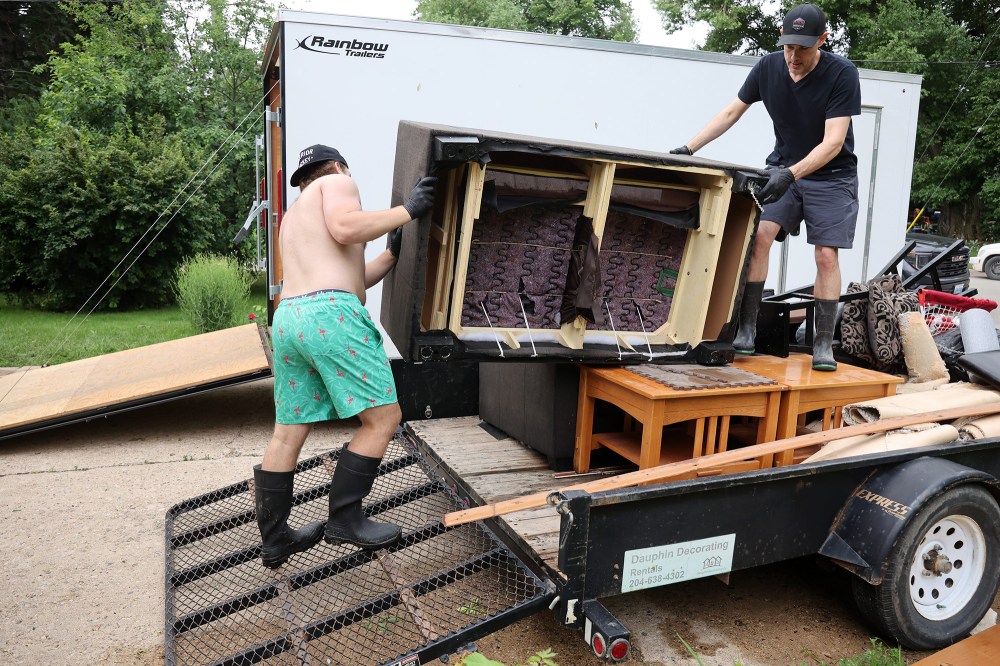
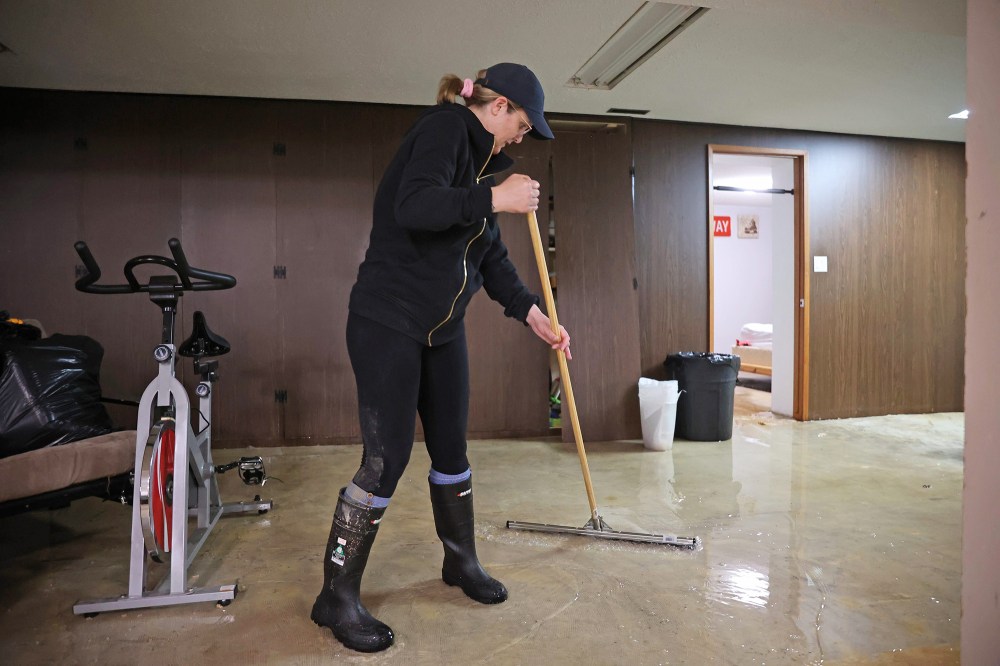
Korney and others were clearing out items onto their yard on Thursday afternoon. She said she doesn’t know what will be salvageable, but that her furnace, hot water tank, air conditioner, heater and dehumidifier all need to be replaced.
Some of her other furniture and full paint cans were floating in the water at one point.
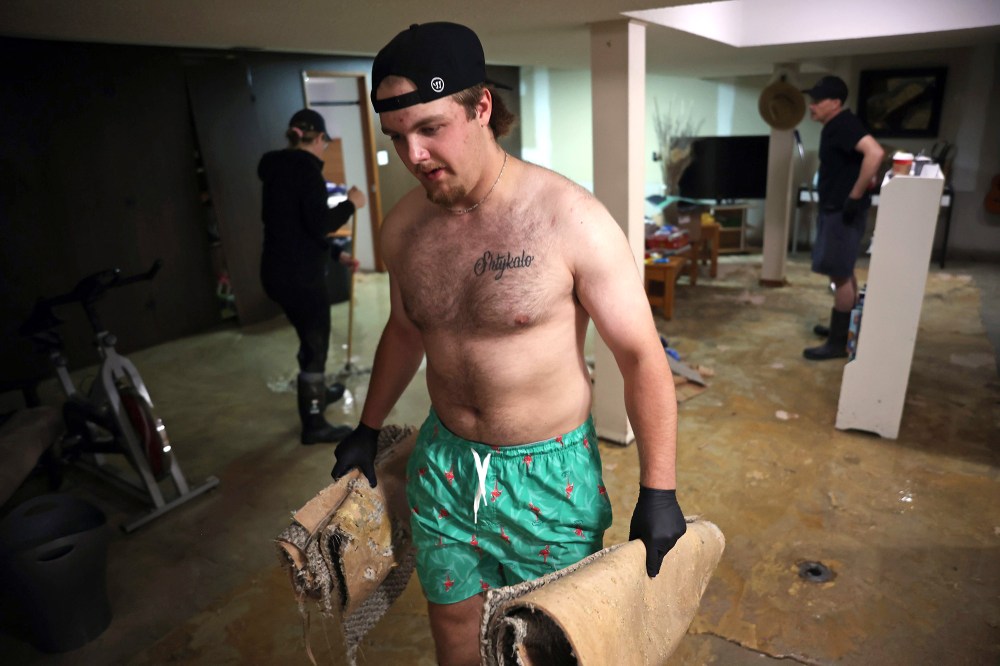
Down the street, Marnie Shumanski was helping clear out soaked carpet from her parents’ home. She said she had been at the lake when the flooding started.
“Then when we came into town, the roads were completely covered down the street,” she said. “It was just free flowing, like you can put a canoe down here.”
A few hours later, the roads were clear again, but the basements had flooded, Shumanski said.
The cleanup effort is tough, she said, as all the carpets are dirty and heavy when wet.
Dauphin fire Chief Cameron Abrey said fewer than 12 people were evacuated from their homes in Dauphin, on top of the 54 people moved out of the city’s hospital.
Abrey said the last few days have been hectic for crews, after they responded to a structure fire Tuesday afternoon before responding to calls involving trees and powerlines and — ultimately — over the flood.
Crews turned Credit Union Place into a staging area for volunteers, with water, coffee, Powerade and food.
He thanked the 60 volunteers from out of town who helped out with the evacuations and efforts.
» alambert@brandonsun.com