
Westman communities gear up for AIS season
Advertisement
Read this article for free:
or
Already have an account? Log in here »
We need your support!
Local journalism needs your support!
As we navigate through unprecedented times, our journalists are working harder than ever to bring you the latest local updates to keep you safe and informed.
Now, more than ever, we need your support.
Starting at $15.99 plus taxes every four weeks you can access your Brandon Sun online and full access to all content as it appears on our website.
Subscribe Nowor call circulation directly at (204) 727-0527.
Your pledge helps to ensure we provide the news that matters most to your community!
To continue reading, please subscribe:
Add Brandon Sun access to your Free Press subscription for only an additional
$1 for the first 4 weeks*
- Enjoy unlimited reading on brandonsun.com
- Read the Brandon Sun E-Edition, our digital replica newspaper
*Your next Free Press subscription payment will increase by $1.00 and you will be charged $20.95 plus GST for four weeks. After four weeks, your payment will increase to $24.95 plus GST every four weeks.
Read unlimited articles for free today:
or
Already have an account? Log in here »
The peak season for boating has brought back efforts against aquatic invasive species in several Westman communities.
The municipalities of Rossburn, Harrison Park and the Rural Municipality of Prairie Lakes are advancing programs this year to prevent AIS from entering lakes following funding from the Manitoba government in June. The communities are using volunteers, staff and equipment in unique ways to protect lakes they say are vital to their tourism season.
Rossburn Municipality
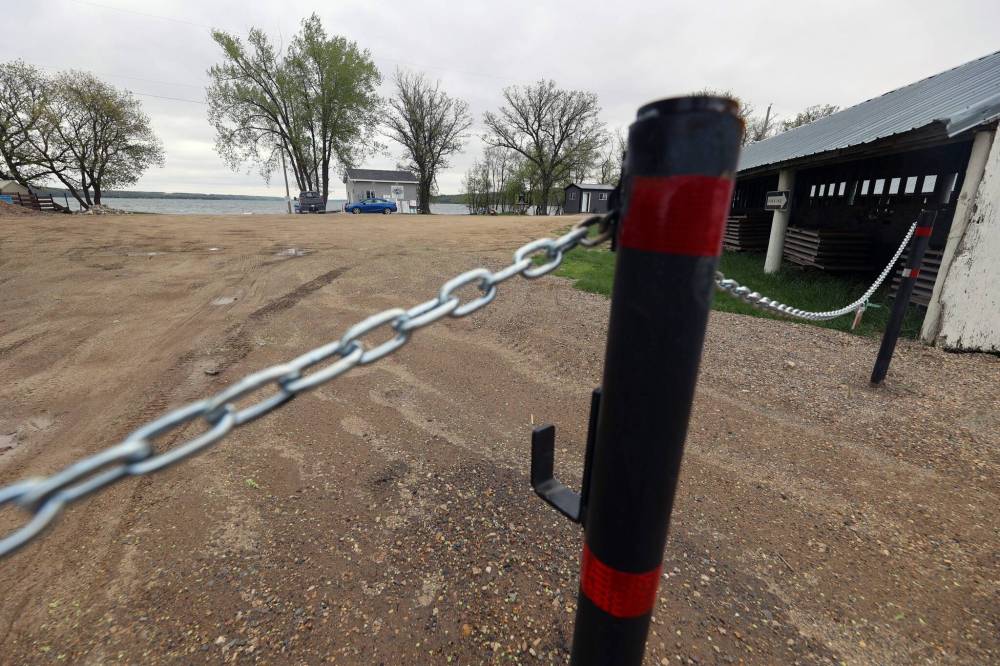
Chained gates stand in Ninette outside the boat launch onto Pelican Lake in 2025. The Rural Municipality of Prairie Lakes installed the gates as part of an effort to prevent AIS from entering the lake, and is continuing the effort this year with some adjustments following provincial government funding. (Connor McDowell/Brandon Sun)
For the first time, Rossburn Municipality has introduced a physical wash and inspection station in the community.
The equipment is located on Centennial Avenue next to the Rossburn Fire Department, and is staffed by a mix of eight people, some full-time, part-time and casual, CAO Emily Sawchuk said.
The community launched an initiative called Together for Clean Lakes, which is meant to be a collaborative effort. Rossburn Municipality partnered with the Rossburn Collegiate, Rossburn Game & Fish, and the Rossburn Community Development Corporation to provide the AIS service.
“Together for Clean Lakes is a whole joint effort to make sure that any folks using any of our lakes are just being aware of ‘clean, drain, dry,’ and wanting to decontaminate,” Sawchuk said. “It’s just trying to create a space of community collaboration and showing that when we have a joint effort together, we can look after our lakes and look after our community.”
The municipality looks to each group to contribute differently, she said.
“So part of that is getting our students to go out and deliver pamphlets to the lake. Some of that is getting our community development corporation to integrate this into our tourism: ‘When you’re coming to Rossburn, for please be aware there’s a watercraft inspection station, come and visit it if you’re going out onto the water.”
Volunteers are also helping through “ambassador” positions that visit lakes and educate lake users, and spread information about the wash station. Sawchuk said outreach is important because it’s the first year the municipality has had a physical decontamination program running.
A biology teacher is also involved, conducting monitoring of the lake for signs of early stage zebra mussels, she said.
The wash station is planned to be open seven days a week, and while hours had not been confirmed as of last week, the plan is for the wash station to be open 8 a.m. to 8 p.m. every day during peak tourism season during July and August, Sawchuk said. Up to date information will be provided on the Rossburn Municipality page on Facebook.
The location was chosen for its centrality among lakes in the area. The list of lakes of interest include Rossman Lake, Arrow Lake, Gundy Lake, Patterson Lake, and Tokaryk Lake. The municipality is using new signage to direct visitors from inbound highways to the central station for inspections.
The Manitoba government was key to making this AIS program happen with support, Sawchuk said. The government “basically lent” the washing equipment, a Hotsy heated washer, to the municipality for use this season, and provided funding for staffing as well as maintenance and operational costs.
Rossburn Municipality received $53,000 in funding this year. The majority, $39,000, will go towards seasonal staff.
The Rossburn Game and Fish organization has had AIS on their radar for years and has been instrumental in spearheading a local effort, she said. The Together for Clean Lakes group is also consulting Indigenous knowledge keepers.
The Municipality of Harrison Park
The Municipality of Harrison Park is expanding its AIS prevention efforts with the introduction of a decontamination system at Sandy Lake this year.
The new washing equipment comes as the municipality received support from the provincial government in the form of $52,000 in June for its AIS program.
The wash station will be installed at the Sandy Lake Rec Centre said Daryl Kines, president of Sandy Lake Water Protection Working Group. The hope is to have the equipment ready by mid July and to operate it for the summer tourism season — but the Hotsy wash station had not been activated as of late June.
Six watercraft inspectors have been hired to staff the inspection station at the main boat launch at Sandy Lake this year. Though trained by the provincial government, they will not be decontaminating “complicated” watercraft such as wake boats at the community station, but will instead direct those watercraft to provincial stations, Kines said. The decontaminations done locally will consist mostly of kayaks and canoes.
The municipality’s efforts against AIS go back to 2017, and the community group started inspecting watercraft in 2018, he said.
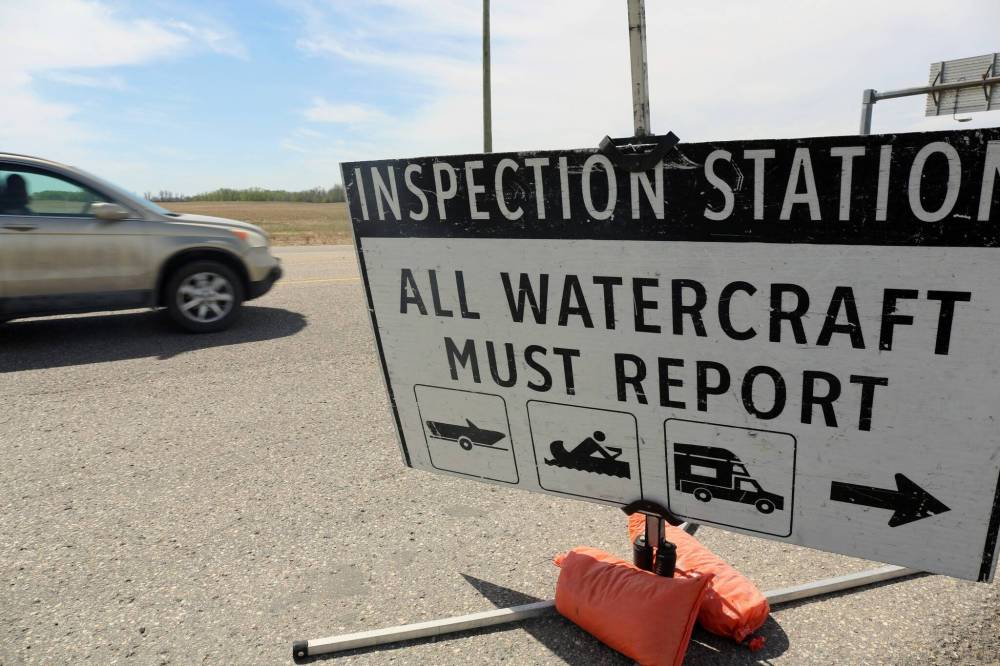
A sign is erected outside Minnedosa directing boaters to report to a watercraft inspection station. As the summer tourism season kicks off, aquatic invasive species prevention efforts are ramping up across Westman, with some communites introducing their own programs backed by provincial dollars. (Connor McDowell/Brandon Sun)
Harrison Park Reeve Ian Drul said that the program helps to protect the “economic engine” of Harrison Park.
“Tourism is a big thing for our area, so we have a lot of people that come for fishing and boating and such, and we are just trying to protect all the lakes in the area,” Drul said. “To me it makes sense because the lake is our economic engine of our community and our municipality.”
The municipality introduced watercraft tagging and a “one boat, one lake” program last year, Drul said. Boaters now can have their watercraft attached to its trailer in between launches in order to comply with the one boat, one lake program.
The municipality is focusing efforts at Sandy Lake because otherwise the efforts would be spread too thin if staff tried to conduct inspections and decontaminations across the region, he said. But the municipality has put up signage at boat launches across several lakes in the area noting provincial AIS regulations.
At Sandy Lake, several launches are closed around the waterfront so that boats funnel through the main launch where inspections take place, he said. This ensures that boats are double checked for the clean, drain and dry protocol, he said.
The municipality received $51,000 last year year when the province announced its first recipients of the AIS prevention fund.
The Rural Municipality of Prairie Lakes
The Rural Municipality of Prairie Lakes received $100,000 in funding this year, which will go towards staffing the municipality’s watercraft inspection station in Ninette, as well as a funding a newly added role where a staff member patrols launches around the lake, Reeve Darren Seymour told the Sun.
The RM introduced the patrolling staff member this year in order to ensure that regulated boat launches around the lake are being used properly. Seymour said in June that the roving role was brought on to address rumours that people had been launching their watercraft in Pelican Lake without adhering to the one boat, one lake policy that was introduced last year. The patrolling staff member will also spread information about the AIS program and report any misuse to the municipality.
The RM launched its pilot AIS program in 2025, blocking access to boat launches around Pelican Lake, and directing visitors to launch through a single boat ramp in Ninette, where boat inspections take place. Locals were allowed to use the closed launches if they committed to using their watercraft only in Pelican Lake — in that case they were given the key code to the padlocked boat launches.
The RM applied for less funding from the Manitoba government this year because infrastructure costs were lower compared with the first year, when barriers, gates and padlocks were installed for the first time. The RM of Prairie Lakes received $120,278 in funding last year from the province.
The grant money received this year will go primarily towards staff costs, Seymour said.
The three Westman communities are among a list of seven groups in Manitoba that received provincial funding to support community AIS initiatives. The province committed a total of $410,000 across all its grants for the year. The goal, said Environment and Climate Change Minister Mike Moyes, is to be co-operative and protect the resources in the province.
“Manitobans care deeply about the province’s beautiful lakes and rivers, and working with communities is a great way to protect the waters we cherish from aquatic invasive species,” Moyes said. “Our government’s aquatic Invasive Species Prevention Fund helps deliver AIS prevention resources to partners across the province, extending the reach of AIS prevention through intergovernmental and community collaboration.”
The receipients of the funding include $116,106 for Norway House Cree Nation, $100,000 for the Rural Municipality of Prairie Lakes, $53,500 for Rossburn Municipality, $52,000 for the Municipality of Harrison Park, $48,500 for Hillside Beach Community Association Inc., $32,073 for Gull Lake Basin Management Board Inc. and $7,820 for Citizens for Protecting Our Northern Waterways Inc.
» cmcdowell@brandonsun.com