
Mosquito counts still too low for fogging
But trap numbers could ‘possibly’ be high enough by next week, city official says
Advertisement
Read this article for free:
or
Already have an account? Log in here »
We need your support!
Local journalism needs your support!
As we navigate through unprecedented times, our journalists are working harder than ever to bring you the latest local updates to keep you safe and informed.
Now, more than ever, we need your support.
Starting at $15.99 plus taxes every four weeks you can access your Brandon Sun online and full access to all content as it appears on our website.
Subscribe Nowor call circulation directly at (204) 727-0527.
Your pledge helps to ensure we provide the news that matters most to your community!
To continue reading, please subscribe:
Add Brandon Sun access to your Free Press subscription for only an additional
$1 for the first 4 weeks*
- Enjoy unlimited reading on brandonsun.com
- Read the Brandon Sun E-Edition, our digital replica newspaper
*Your next Free Press subscription payment will increase by $1.00 and you will be charged $20.95 plus GST for four weeks. After four weeks, your payment will increase to $24.95 plus GST every four weeks.
Read unlimited articles for free today:
or
Already have an account? Log in here »
City of Brandon parks crews are ready to go if mosquito fogging is required — and the measure could come as early as next week.
Trap counts by then will “possibly” be high enough for fogging to start, following a heavy downpour late last month and sweltering heat last weekend, the city’s parks manager, Bryce Wilson, said Tuesday.
“It’s good weather for producing mosquitoes,” Wilson said.

Coun. Shawn Berry (Ward 7) last week called for the city to look at fogging for mosquitoes right away, describing trap counts as "way out of line." (Alex Lambert/The Brandon Sun files)
“All our foggers are calibrated and ready to go. We have the product on hand. We have the staff ready to go.”
Wilson said he expects the city’s trap counts will be “relatively low” this week.
“But next weekend, when we do our traps, the numbers could be a little different and tell us a different story.”
If fogging becomes necessary, Wilson said, the city would need to give residents 12 hours’ notice and there would have to be proper weather conditions.
The city hasn’t fogged for mosquitoes since 2022, when it did so twice, as the larviciding program it runs has worked well, Wilson said.
The four most recent trap counts show a daily average of between 71 and 157 mosquitoes, all in the “medium” range for mosquito control. Each count has five traps.
Wilson said fogging would happen if the trap counts were in the “high” category for two consecutive counts, if the average for any daily count is more than 1,000 mosquitoes or if any single trap has more than 2,000 mosquitoes.
The highest single trap count since June 22 was 620 mosquitoes but the overall daily figure was offset by a different trap the same day that had only six mosquitoes.
“We’re not close yet, but those numbers will increase kind of in July, and then August they usually jump,” Wilson said.
The city won’t know if fogging will be necessary until it actually sees the trap counts next Tuesday and Wednesday.
Coun. Shawn Berry at last week’s council meeting called for the city to look at fogging before the trap count thresholds are met, as the amount of sitting water will make for a brutal mosquito season.
“The trap counts are so high, it’s unbearable by the time we reach them to start fogging, and I’m asking that we start looking at doing it right away,” Berry (Ward 7) said.
“It does get unbearable; our trap counts are way out of line.”
He said if the city isn’t proactive, council members will be inundated with phone calls and emails once the mosquitoes get worse.
“We can’t wait for trap counts to hit that magic 1,000.”
Under the current bylaw, the proactive measures the city can take are to be as ready as possible for when it’s deemed that trap counts are high enough, city manager Dave Wardrop said.
On Tuesday, Berry told the Sun that the city’s current bylaw for fogging isn’t necessarily wrong, but that it is a little hard to understand.
“The perfect system for me, honestly … is you step outside 15 minutes to see how badly you get zipped,” Berry said.
“If the mosquitoes are bugging the heck out of you in 15 minutes when you’re outside, then we’ve got a problem.”
He said he doesn’t currently intend to propose a change to the bylaw, but that it is always something he and other members would have in the back of their minds.
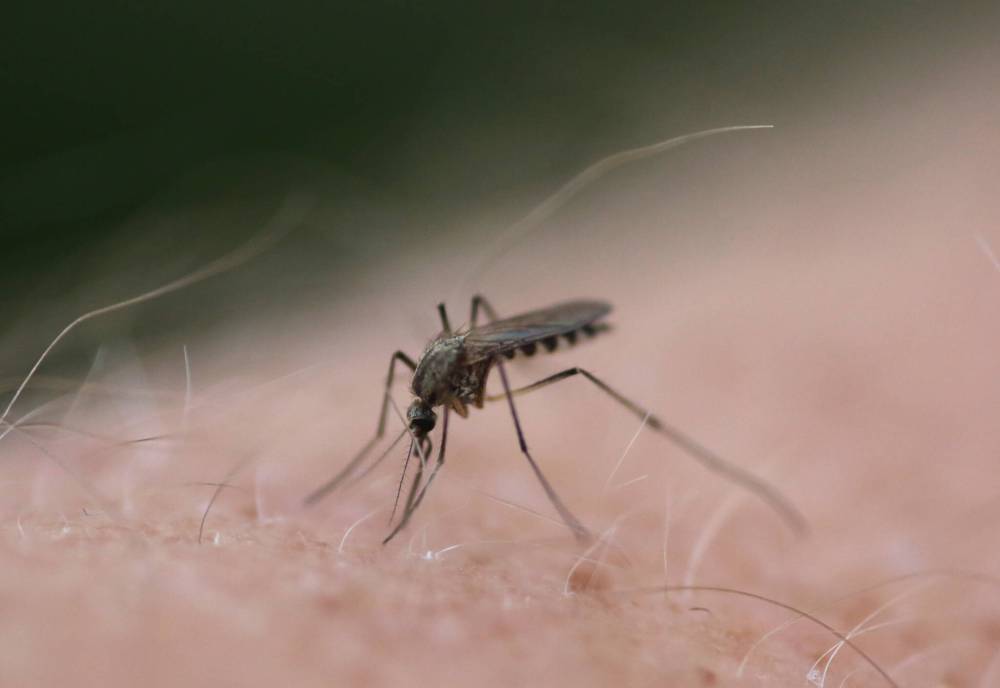
The city hasn't fogged for mosquitoes since 2022. (The Brandon Sun files)
Berry has registered to run in the next municipal election this October.
While the city prepares to potentially go out fogging, a search continues for the product the city uses. The city currently uses DeltaGuard to fog, but the pesticide stopped being sold in Canada in 2023 and there are no new products available.
Wilson told the Sun last September that Brandon and Winnipeg, along with the provincial government and Health Canada, are trying to find a solution to the shortage.
Brandon currently has only enough DeltaGuard to fog citywide two or three times.
“We have been working with the City of Winnipeg and the province as well to find a different supplier, but nothing has come to fruition since last year,” he said Tuesday. “So we are stuck with the same amount of product we have.”
The city is trying to talk with chemical companies and potentially trying to get some product in from the Unted States.
The shortage is “somewhat” of a concern, Wilson said.
“If we do meet our factor analysis to go out and spray, we’re obviously dipping into that product.”
City council can also vote for crews to go out and spray without the count requirements being met, he said.
“We only have a certain amount of litres of this product, and then we are done, and then we’d have to find another alternative. But there is nothing on the market as we say right now,” he said.
The city doesn’t currently have a plan in place if another busy mosquito season is around the corner, but Wilson said he hopes the larviciding program continues to be successful.
He said the program’s success is the reason the city hasn’t had to fog in recent years.
Larviciding crews started going out in the middle of May, which stops the eggs before they hatch.
The program is targeted to stop mosquitoes infected with West Nile virus.
“We’ve been very happy with it, and I think that’s why we haven’t had to spray in the last number of years. It’s helped keep our trap counts lower than in previous years,” Wilson said.
The city has also upped its roster to five staff who are out larviciding five days a week.
» alambert@brandonsun.com