
Drug treatment court targets root causes
Advertisement
Read this article for free:
or
Already have an account? Log in here »
We need your support!
Local journalism needs your support!
As we navigate through unprecedented times, our journalists are working harder than ever to bring you the latest local updates to keep you safe and informed.
Now, more than ever, we need your support.
Starting at $15.99 plus taxes every four weeks you can access your Brandon Sun online and full access to all content as it appears on our website.
Subscribe Nowor call circulation directly at (204) 727-0527.
Your pledge helps to ensure we provide the news that matters most to your community!
To continue reading, please subscribe:
Add Brandon Sun access to your Free Press subscription for only an additional
$1 for the first 4 weeks*
- Enjoy unlimited reading on brandonsun.com
- Read the Brandon Sun E-Edition, our digital replica newspaper
*Your next Free Press subscription payment will increase by $1.00 and you will be charged $20.95 plus GST for four weeks. After four weeks, your payment will increase to $24.95 plus GST every four weeks.
Read unlimited articles for free today:
or
Already have an account? Log in here »
Judge Shauna Hewitt-Michta often finds herself scanning the court docket to see who may be a candidate for Westman drug treatment court.
“We have quite a revolving door in terms of substance abuse and addiction, criminal behaviour, incarceration and then the cycle repeats,” Hewitt-Michta said.
Westman drug treatment court aims to break that cycle.
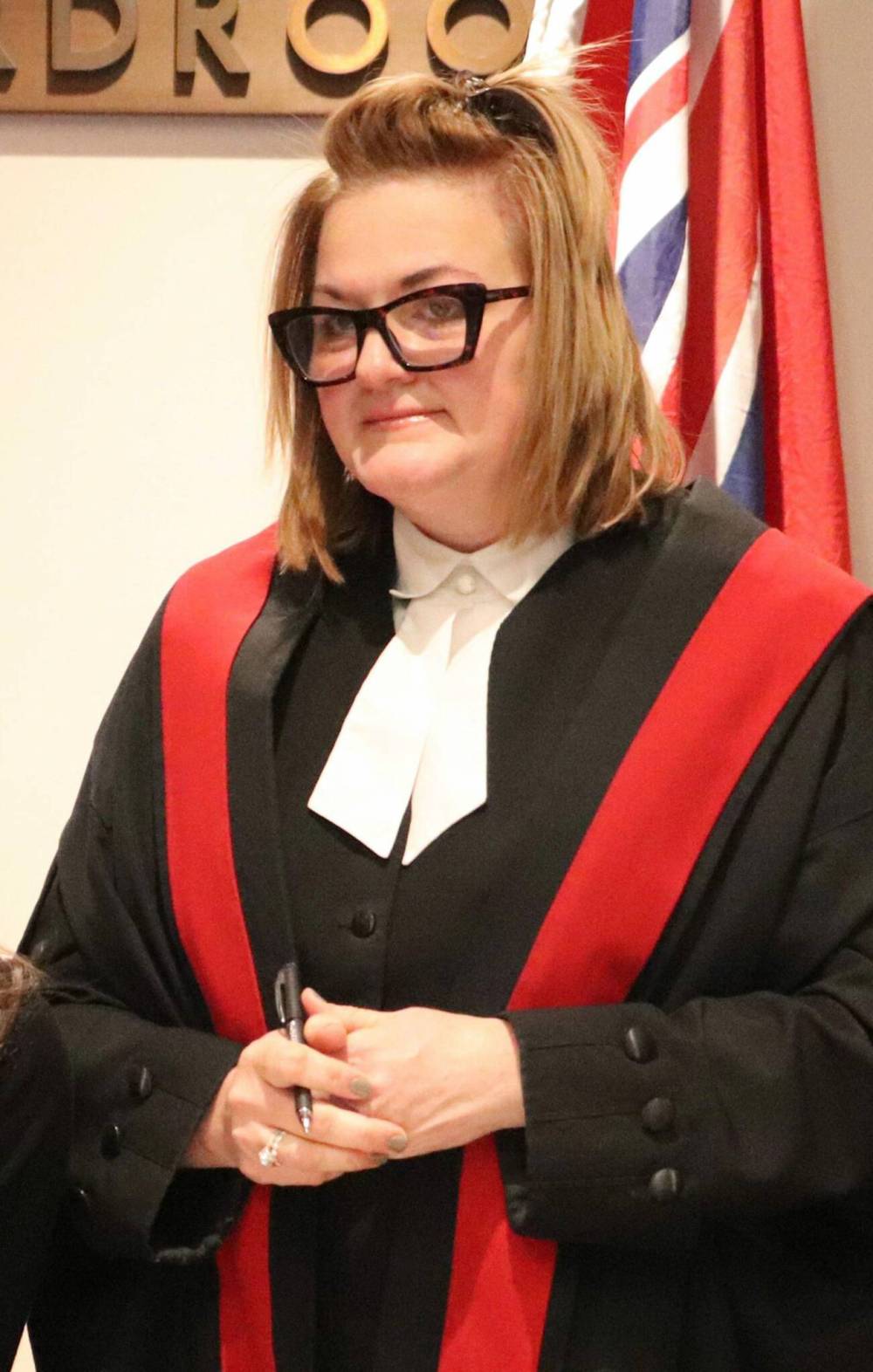
Judge Shauna Hewitt-Michta presides over a drug treatment court docket in Brandon provincial court each Tuesday, speaking to each participant directly to see how they are doing and progressing. (Kyle Darbyson/The Brandon Sun files)
“The best chance of long-term protection of the public is the rehabilitation of offenders, and at the end of the day, I think that’s what this is all about — trying to get down to those root causes of crime and hopefully helping people break the cycle,” she said.
“At the end of the day, hopefully the community is safer for it.”
Westman drug treatment court started in 2019 and has had a total of 36 participants with an average of two graduations per year, according to a Manitoba provincial courts spokesperson.
Each Thursday, Hewitt-Michta presides over a drug treatment court docket in Brandon provincial court, where she speaks to each participant directly to see how they are doing and progressing.
Anyone who is interested in the program can apply with their lawyer and go through a screening process to determine if they are eligible, Hewitt-Michta said.
Whether a person is eligible depends on a variety of things, including the nature of their offence and if their offending was the result of some sort of addiction, whether it be drugs or alcohol, she said.
She said there isn’t a list of eligible offences, but the program deals with non-violent offences for the most part.
If the provincial Crown, federal Crown and drug treatment program staff determine that someone is an appropriate fit and they are accepted into the program, there is a 30-day introductory period.
The participant will plead guilty to their charges, and if they are in custody, they will be released on a bail plan with a “long, comprehensive” list of conditions, Hewitt-Michta said.
After the introductory month, participants are asked if they want to opt into the program. If they do decide to go ahead with it, which Hewitt-Michta said most people do at this stage, they will move on to the second phase, which is stabilization.
She said this phase usually lasts at least six months.
Phase 3 is the intensive phase, and there are more expectations, including specific programs, counselling, volunteering or looking for employment.
The last phase is the maintenance phase, where Hewitt-Michta said the team starts to “take our hands off just a little bit” and reduce participants’ court appearances to every second week.
“It’s an opportunity for them to sort of demonstrate that they’re maintaining sobriety, they’re maintaining a healthy lifestyle and meeting all the expectations of their program, and when they successfully pass the maintenance phase, then they graduate from the program,” she said.
The average time it takes a participant to complete the program is around 12 to 24 months.
If the participant graduates, they will usually receive a community-based sentence, like a period of probation, or their charges will be stayed.
“Jail is expensive and not terribly effective. So, we’re really trying to reduce the reliance of the court on jail for non-violent offenders whose crimes are committed as a result of an addiction,” Hewitt-Michta said.
Katy Brydon has been the Westman drug treatment court case manager for about five years, and her job is to be “all up in” the participant’s business almost every day of the week, she said with a laugh.
“I build a really good relationship and rapport with them, because I mean I’ve even had clients in the past say, ‘You’re the only one I can trust and talk to,’” she said.
Brydon runs several group sessions a week. On Mondays and Tuesdays, she runs a psychoeducational group for the participants, which is focused on criminal an addictive thinking patterns, emotions, values and core beliefs.
On Wednesdays and Thursdays, she runs a therapeutic group. On Fridays, she said she focuses on life skills, so the group might go on a hike or a walk. Sometimes people come in to help the participants learn about budgeting or sexual health.
On top of these group sessions, Brydon said the participants will meet with her one-on-one up to five times per week to dig deeper into areas they need to work through.
She also makes sure participants get to their appointments and grocery shopping or helps them with medical needs. Brydon ensures they are doing their drug screenings, which are three to five times per week, and if they relapse, they will create an appropriate plan to work through it.
“I think that support is absolutely vital for a person’s success,” she said. “I’ve went to a client’s house and pulled them out of bed to make sure they get to group because I noticed that they’re starting to withdraw … I’m literally like a mom and worker all in one.”
Brydon said the program meets participants where they’re at and they don’t have to be sober to start.
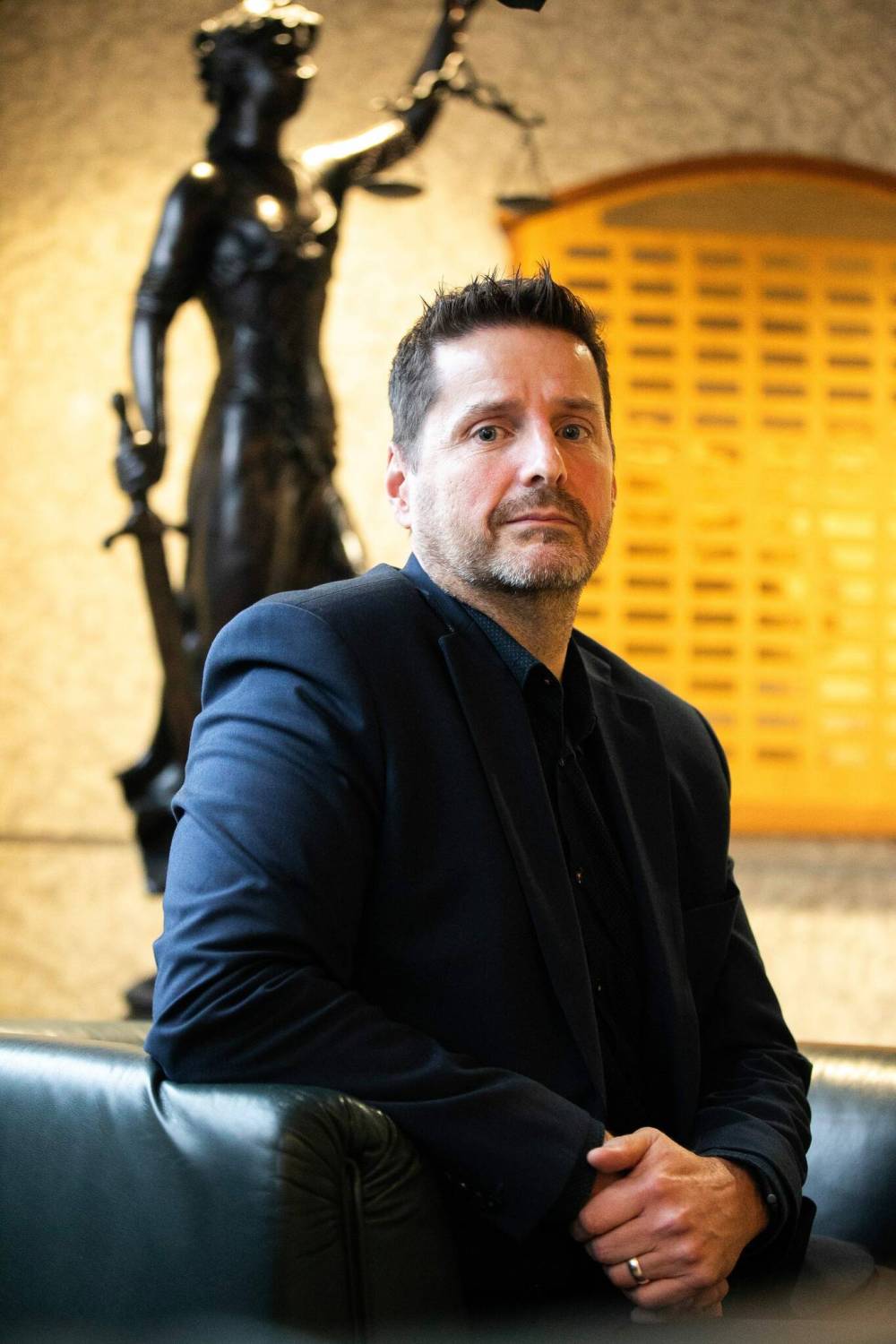
“We definitely do harm reduction. Our goal is abstinence, so I just work with them on what that looks like for them,” she said. “It’s very individualized based on the person and kind of what their level of use is at the time.”
When someone has been using substances for a long period of time, she said they can’t be expected to immediately quit, as there is much more below the addiction that needs to be addressed, including basic needs like food, clothing and shelter.
She said the program has some of the lowest recidivism rates. As per the last evaluation in 2022, there was a zero per cent recidivism rate for graduates and a 17 per cent recidivism rate for non-graduates in both the Westman and Winnipeg drug treatment court programs, a provincial courts spokesperson told the Sun.
“This is probably one of the most holistic programs that I’ve ever come across … I’m blessed to be able to walk alongside them during this journey and watch them flourish,” Brydon said.
Legal Aid defence lawyer Wendy Stewart represents the participants during their weekly court appearance on the drug treatment court docket.
She said it’s very easy for people to dismiss people with addictions and only see them as a “drug user.”
“With a program like this, you can really see how untrue that is. As the drug user recedes and the person kind of re-emerges, it’s just such a reminder every time that every one of these people … right within, there is somebody who, if you treated that illness, would have value,” she said.
Stewart said the program gives people a chance to treat the underlying issues rather than losing a period of their life to jail.
“I could send you to jail for two years as a drug addict, and two years from now, you’re still a drug addict,” she said. “So, two years of your life are gone, but not much has really changed.
“Rather than warehousing them, we’re going to really help them, which then helps everybody.”
While some people go through the program smoothly, she said there are still setbacks with some people not finishing the program or being discharged for various reasons, including if someone can’t or won’t recover from a relapse, if they don’t follow certain rules or get charged with a new serious offence.
Thirty-seven per cent of participants, between both Winnipeg and Brandon, don’t graduate from the program.
Provincial court Chief Judge Ryan Rolston said judges often see vulnerable people with addictions in a cycle, and they often have mental health issues as well.
“Sometimes their use of substances, whether it be alcohol or drugs, leads to cognitive issues, and as a result of that cycle … (they’re) digging themselves into economic and legal issues, often going to jail, then being released and having to start over again,” he said.
He said people often look at jail as the only way to achieve deterrence, but that’s not the case.
Therapeutic courts like drug treatment court and mental health court are designed to “wrap services” around people who are in the justice system, recognizing that the traditional justice system isn’t going to get them out of that cycle, Rolston said.
In drug treatment court, participants learn about what they are going through and the damage they may have done to victims or family members and loved ones, he said.
Rolston said it also allows the participants to learn how to pick themselves up and carry on with their rehabilitation when there is a slip.
“It just builds in a mechanism to help them deal with those barriers and those struggles.”
Winnipeg’s drug treatment court, which started in 2005, has had a total of 530 participants, with an average of 10 graduates every year, a Manitoba provincial court spokesperson said.
» sanderson@brandonsun.com